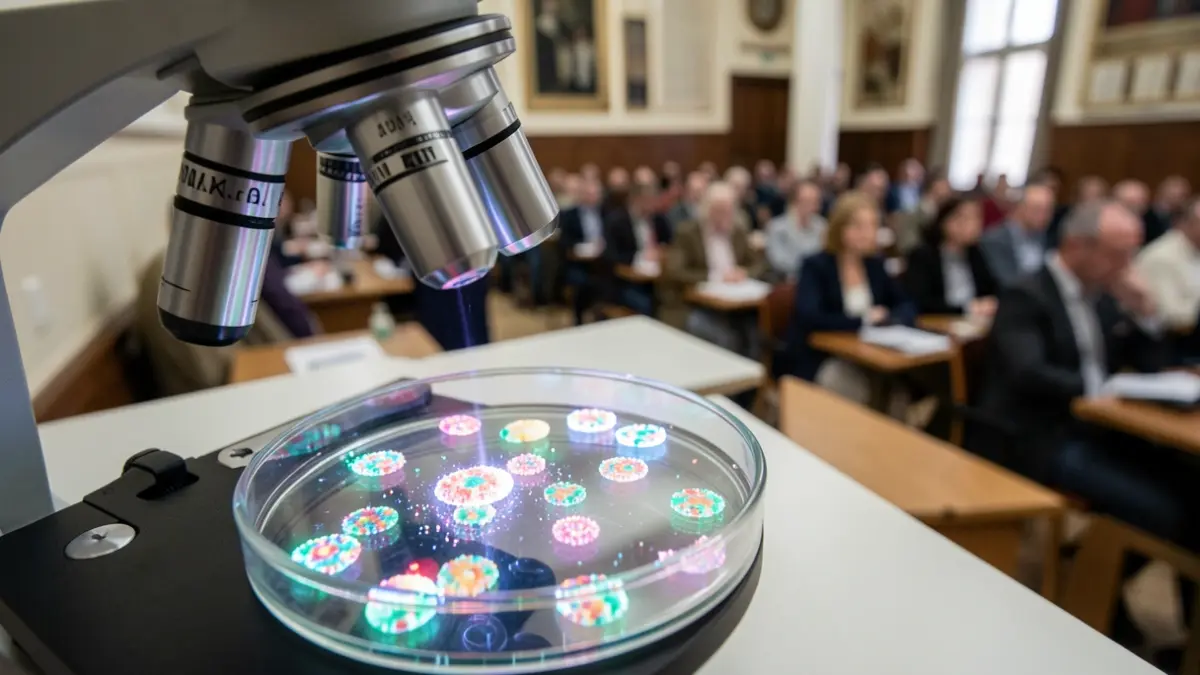
Veterinary doctor and Food Safety Officer at the Food and Agriculture Organization of the United Nations (FAO), Jorge Pinto Ferreira, a native of Porto, was among the guests for International Microorganism Day, celebrated on September 17th at the Faculty of Nutrition and Food Sciences of the University of Porto (FCNAUP).
A graduate in Veterinary Medicine from ICBAS at U.Porto, Pinto Ferreira is one of the few Portuguese individuals at the UN agency's headquarters in Rome, where he specializes in food safety and antimicrobial resistance. In an interview, he stated: “It’s easier to make laws in my office in Rome than for a veterinarian to change behavior in the field.”
Addressing Portugal's challenges regarding antimicrobial resistance (AMR), Pinto Ferreira explained that while it is a global issue, the evolution has been positive. He highlighted increased environmental concern and growing care in the use of antimicrobials in animals, which have led to a slow decrease in resistance. However, the main challenge lies in changing individual and collective behaviors.
The specialist emphasized the importance of reducing the use and consumption of antimicrobials in both humans and animals, and the complexity of making food production systems more robust and healthy. He noted that organic or biological production is not always superior and that defining sustainable production is a complex practical matter.
Regarding advancements in food manufacturing, Pinto Ferreira mentioned FAO's work and discussions on artificial intelligence and 3D printing. He gave the example of restaurants potentially printing cheese on demand to reduce food waste, while acknowledging that the costs of such technologies might be prohibitive for many countries.
FAO analyzes ultra-processed foods from two perspectives: in many populations, they are the only accessible option, and while their healthiness is debatable, they cannot be demonized as they ensure sustenance in scarcity. The careful distribution of milk in schools, for instance, can reduce waste and environmental contamination.
FAO's latest report indicates a decrease in global hunger, although too many people still go hungry. Pinto Ferreira stressed the importance of presenting these figures with different perspectives, balancing hunger reduction with the nutritional quality of available foods.
Working with the concept of global common good, Jorge Pinto Ferreira values the opportunity to discuss these topics at universities, believing his work contributes to the legacy for future generations, ensuring antimicrobials remain effective and society benefits from advancements.
The specialist expressed his appreciation for living and working in Rome, for the global scope of his work, and for the opportunities to travel and experience different realities across continents.