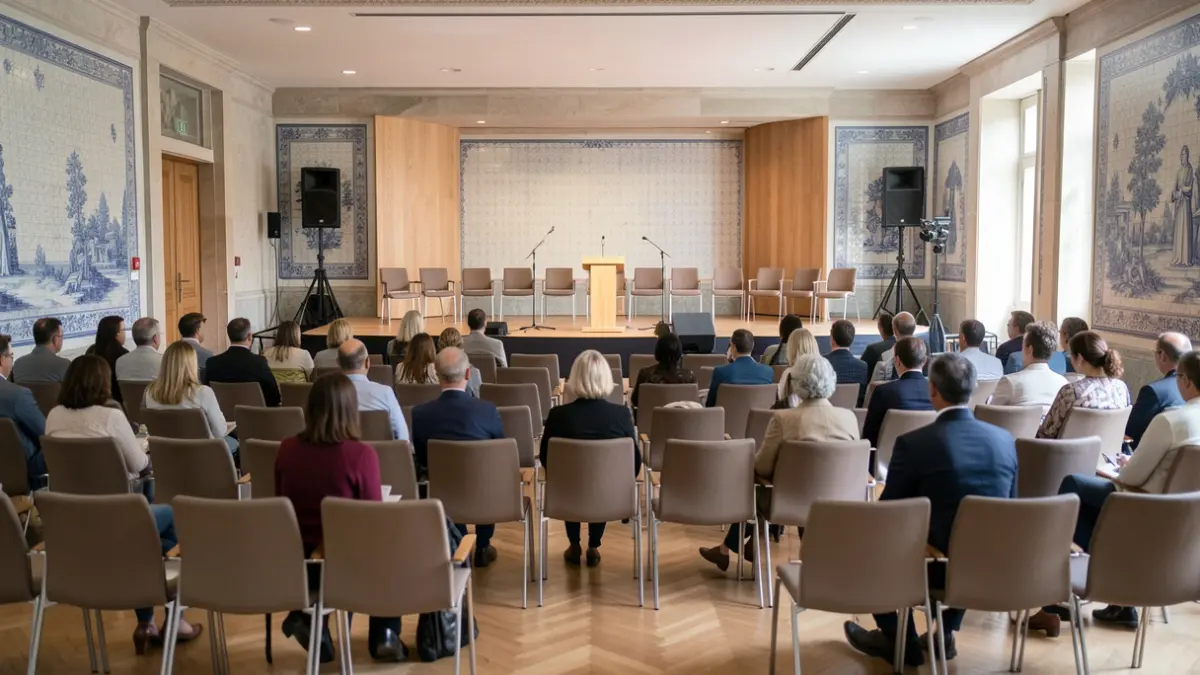
The session, held on October 29th, highlighted how data sharing can make public transport more attractive and promote more accessible and sustainable journeys. The European project DeployEMDS facilitates access, sharing, and interoperability of mobility information while respecting data sovereignty.
Carlos Humberto de Carvalho, president of TML, emphasized the cooperation between TML and EMEL and the importance of collaboratively built projects. He stressed that the real challenge lies in implementing the presented solutions, also highlighting TML's GO platform.
Carlos Silva, president of EMEL, pointed out data sharing as essential for improving mobility, noting that EMEL possesses around 300 data sources about the city of Lisbon. He advocated for the use of well-founded information and verifiable sources to make mobility simple, safe, sustainable, and shared.
Sofia Taborda, Director of Innovation and Mobility Solutions at EMEL, presented DeployEMDS and the three use cases developed in Lisbon. The project involves 45 European partners, nine cities, and 16 use cases, aiming to create conditions for more efficient use of mobility information.
One use case, developed by TML, focuses on identifying critical points in the Carris Metropolitana network to enhance operational efficiency and speed. Bernardo Alves from the Department of Studies and Planning (DEP) presented the tool that visualizes and analyzes disruptions, supporting decision-making for measures like schedule adjustments or BUS lane implementation. Access to the tool will be available via a public link on the TML website.
EMEL's two use cases address urban mobility. Maria Zuzarte, market analyst, presented a solution to encourage more sustainable commuter travel for businesses, offering an integrated service. Hugo Costa, project manager, presented a use case for planning interruption-free routes, aimed at individuals with reduced mobility, by improving the availability of information on equipment and obstacles.
The session concluded with discussions on integrating mobility solutions and platforms, including the potential integration of the Empresas navigator into the EMEL app and making TML's open data available. Luísa Ferreira, administrator of TML, highlighted the positive outcome of the initiative, which aims to build a common vision of mobility through data normalization and sharing.