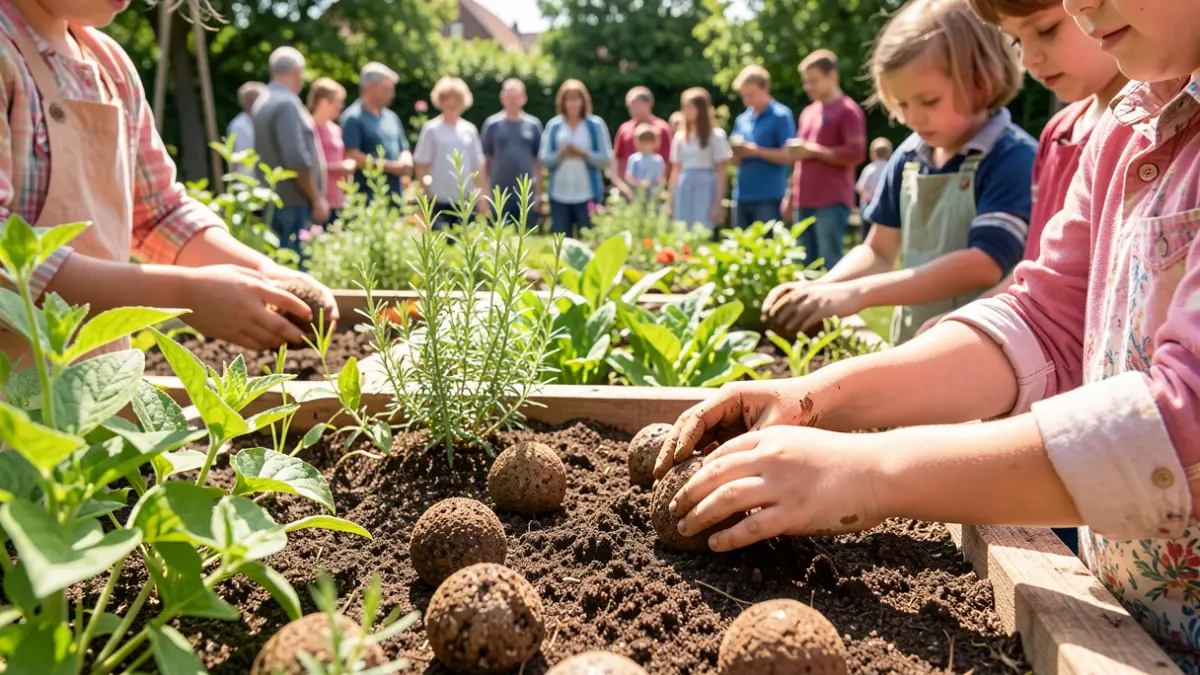
Collecting seeds, identifying vegetables and aromatic herbs, and understanding the importance of pollinators were among the discoveries made by 222 children at the Alpouvar Community Gardens. The activity, which took place over 10 sessions, allowed primary school students to explore the cultivation spaces and the relationship between plants, insects, and the food on our tables. The role of pollinators in plant reproduction and food production was explained, along with organic farming practices.
Using seeds, compost, and clay, the children prepared small earth balls, known as “seed bombs,” which can promote germination. The seeds were collected by the students themselves from the surrounding grounds, enabling them to distinguish native plants from invasive species and understand why the latter's seeds should not be used.
The aim was to help children better understand the nature around them and how they can care for it, learning to identify plants and which seeds to collect.
“"We want children to have opportunities to leave the classroom, get their hands dirty, and understand where food comes from. Knowing the plants and animals around us helps us understand why we need to protect them."
The councillor of the Albufeira Municipal Council, Maria Cristina Corado, attended the activity and highlighted the importance of learning through contact with nature. The initiative was part of the Albufeira Municipal Council's programming for the Algarvensis UNESCO Global Geopark, linking environmental education with the valorization of the municipality's natural heritage. The protection of native flora, vegetation recovery, and the capacity of ecosystems to face climate change were among the topics addressed.