The team, named ROCSAR (ROtation Compensated Synthetic Aperture Radar), was selected by ESA and is dedicated to finalizing the project's development. The mission involves performing Synthetic Aperture Radar (SAR) measurements with stabilization of the radio frequency antennas to observe areas surrounding the balloon's flight path.
Participation in REXUS/BEXUS continues a path that FEUP has been charting since 2016, with previous participation in BEXUS and REXUS editions. ROCSAR was born from the need to address challenges identified in the previous SARIA project, strengthening expertise in software, signal processing, electronics, mechanics, and aerospace.
“The team was formed according to the project's challenges, combining experience gained in previous editions with new skills and members,” explains Pedro Cunha, Team Leader and member of the Software and Electronic Systems team, a first-year Master's student in Electrical and Computer Engineering.
The selection by ESA was a significant moment, met with “great enthusiasm” by the students. The development of ROCSAR follows a process close to the lifecycle of a real space project, organized by subsystems for hardware, software, mechanics, communication, and management.
One of the technological challenges was controlling the residual rotation of the REXUS/BEXUS gondola, optimizing the resolution of the SAR images. This journey allows students to apply academic knowledge and deal with unexpected problems, learning to engineer methodically.
The team highlights trips to ESRANGE in the Netherlands and Kiruna in Sweden for the Student Training Week, as well as work in FEUP's laboratories. The project is supervised by Sérgio Reis Cunha, a lecturer at FEUP, with collaboration from Nuno Barros and Mafalda Santos.
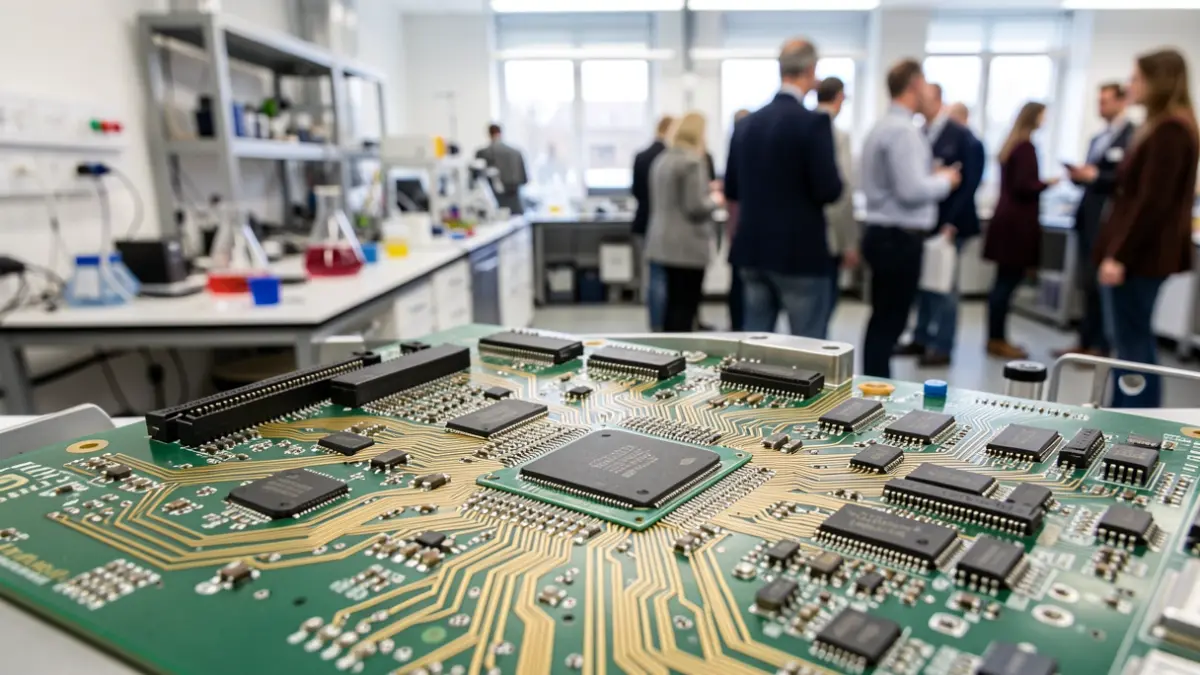
The presence of ESA specialists at FEUP during development provided close interaction, allowing students to showcase components, facilities, and receive direct feedback, reinforcing the link between academic training and the reality of space projects.
The next major challenge will be the experiment's launch in Kiruna, between October 9th and 19th. The team is focused on qualification tests and preparing operational procedures. “We are all very excited about the launch. We know it will be a more demanding phase, but we are also very confident in the work we have developed,” states Pedro Cunha.