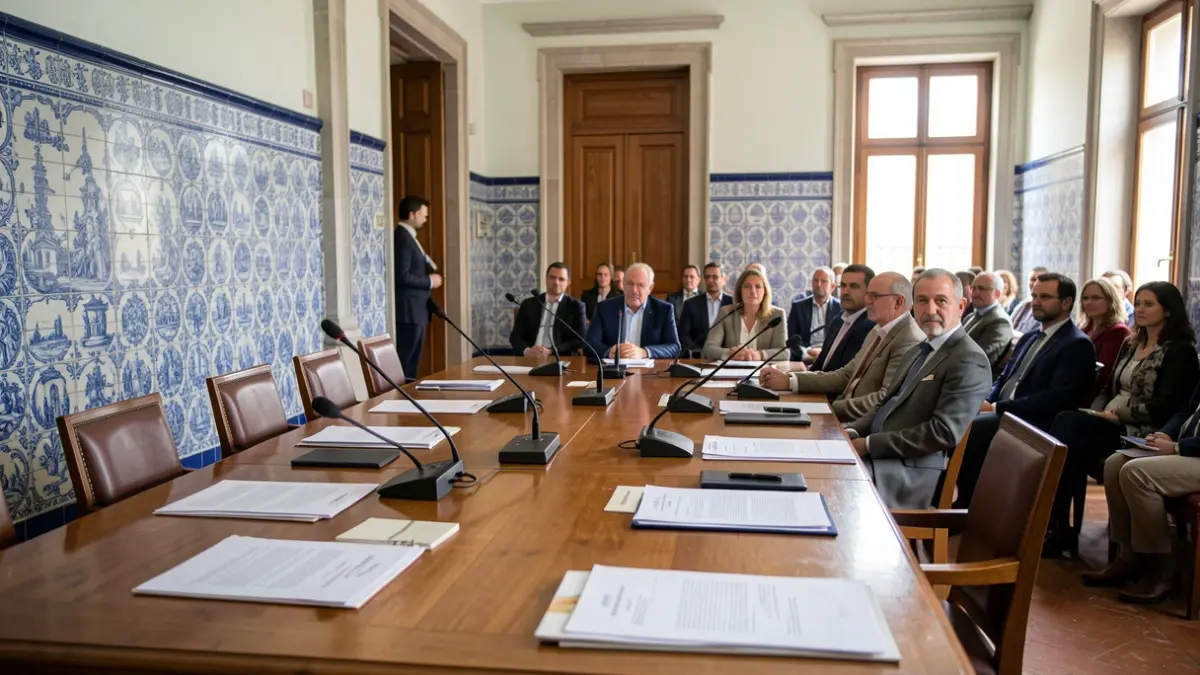
Paulo Ferrão, a professor at Instituto Superior Técnico (IST), Universidade de Lisboa, and president of the Center for Innovation, Technology and Policy Development Studies (IN+), now also serves as co-chair of the Steering Panel on Energy for the European Academies Science Advisory Council (EASAC). This body provides independent scientific advice to policymakers, aiming to ensure that European institutions' policies and decisions are based on the best available scientific evidence.
Appointed by the Lisbon Academy of Sciences to join this Steering Panel in 2024, Paulo Ferrão succeeds Neven Duić from Croatia and Hanna-Leena Pesonen from Finland, the previous co-chairs, alongside Paula Kivimaa from the Federation of Finnish Academies of Sciences and Letters.
The EASAC Steering Panel on Energy monitors key scientific, technological, and public policy developments in the energy sector, identifying priority themes and advising EASAC's other bodies on studies and initiatives to undertake. Its impact is felt at two main levels: European, by informing policies and debates within EU institutions, and national, through the academies that constitute EASAC and their interaction with respective policymakers.
Among the most relevant themes for his mandate, Paulo Ferrão identifies the contribution of electrification to the energy transition. "The electrification of transport, buildings, and an increasing part of industry creates significant decarbonization opportunities, but also important challenges for grids, storage, flexibility, and supply security," explained the IST professor. Another topic the researcher calls "central" is how to reconcile decarbonization, energy security, energy costs, and the competitiveness of European industry.
"Europe is undertaking this transition in a complex international context, with growing technological and industrial competition and external dependencies – it is therefore essential to analyze the energy system in an integrated way and understand how the transition can contribute not only to climate objectives but also to a more competitive and resilient European economy," clarified Ferrão.
In this regard, Paulo Ferrão emphasizes the significant relevance of IST in the energy field, due to the diversity and quality of its expertise, ranging from energy systems and electricity grids to mobility, industry, buildings, environment, and public policy. The institution has the capacity to combine excellent science and engineering with an understanding of the economic, environmental, and social impacts of developed solutions. Ferrão outlines three fundamental roles for the School: "to produce knowledge and develop solutions, train the people who will lead the energy transition, and contribute to ensuring these solutions are demonstrated and effectively reach society".