These projects are intended to meet the benchmarks set by the Critical Raw Materials Act, which mandates that by 2030, the EU must satisfy at least 10% of its annual consumption through extraction, 40% through processing, and 25% through recycling of strategic raw materials. The goal is to enhance competitiveness, build resilience, and reduce dependence on any single supplier.
The selected projects are located in Belgium, Bulgaria, Estonia, Finland, France, Germany, Greece, Italy, Lithuania, the Netherlands, Poland, Portugal, Romania, Slovakia, Spain, and Sweden. They were chosen from 102 applications received.
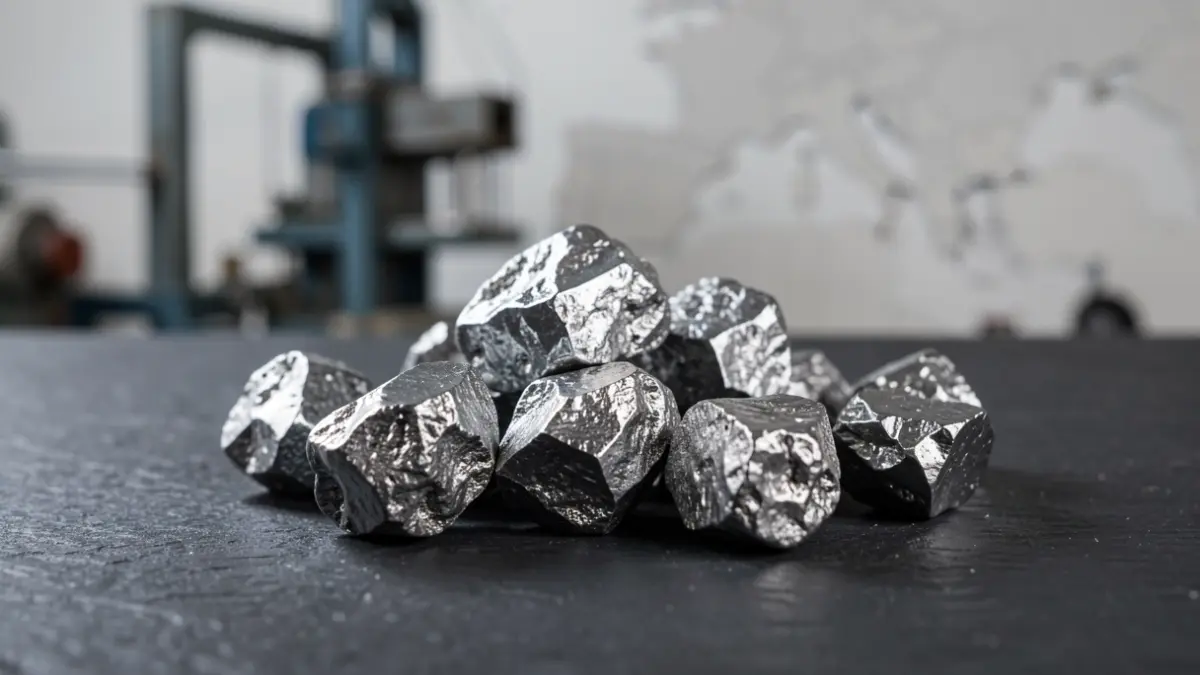
In Portugal, the Mina Borralha project, promoted by MINERALIA in Montalegre, focuses on tungsten extraction. Tungsten is a strategic raw material used in wear-resistant tools, components, and the aerospace and defense industries, potentially diversifying European supply and reducing reliance on China.
The initiative covers various stages of the raw materials value chain: 8 projects for extraction, 11 for processing, and 19 for recycling. Additionally, there are eight integrated projects, combining extraction and processing (three) or processing and recycling (five), supporting the EU's integrated value chain approach. The projects encompass 15 out of the 17 strategic raw materials.
These projects will strengthen European value chains in batteries, defense, aerospace, and permanent magnets. They include 7 projects for lithium, 12 for nickel, 10 for cobalt, 5 for manganese, and 4 for graphite, all supporting the EU's battery value chain. Projects for magnesium and tungsten will contribute to defense and aerospace, while those for rare earth elements will support the permanent magnet value chain.
These 46 projects, along with the 47 strategic projects selected in the EU and 13 in third countries last year, are expected to significantly contribute to the EU's objectives in reducing risks and diversifying the supply of essential raw materials.
The projects are likely to fully meet extraction benchmarks for lithium, nickel, rare earth elements, magnesium, and tungsten, as well as processing benchmarks for lithium and rare earth elements. They are also projected to cover 89% of the processing benchmark for cobalt and 57% and 51% for tungsten and magnesium, respectively, while fully meeting recycling benchmarks for lithium, cobalt, and rare earth elements.
Strategic projects selected in 2025 are already advancing towards operational status. To date, 25 projects have completed their environmental impact assessment, and 17 have obtained construction permits, facilitated by single points of contact in Member States that help expedite licensing procedures.
The RESourceEU communication from last December aims to accelerate these efforts. The initiative has mobilized over EUR 2 billion in financial support through the Innovation Fund, state aid, and the European Investment Bank. Several projects have made significant progress in securing offtake agreements. Furthermore, the Raw Materials Mechanism, designed to match supply and demand, has generated over 30 matches for 10 materials.
The Critical Raw Materials Act, which entered into force on May 23, 2024, establishes measures to strengthen EU value chains for critical raw materials and diversify supply sources. The Commission launched two calls for strategic projects, with deadlines in August 2024 and January 2026. For the second call, 102 applications were received and evaluated based on criteria such as security of supply, technical feasibility, and environmental, social, and governance standards.
The European Commission will soon announce a new call for strategic projects by the end of 2026.