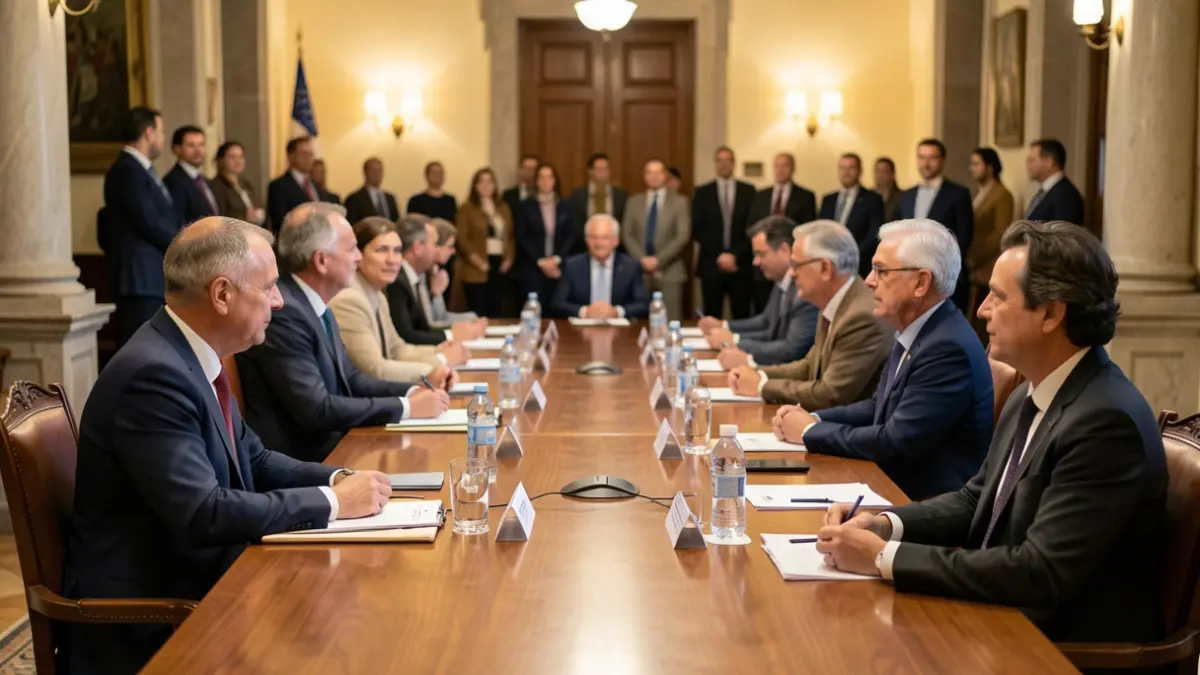
The meeting, held on Friday, October 9, aimed to identify solutions to enhance the competitiveness of these industries. It was attended by the Secretary of State for Local Administration, Silvério Regalado, the Mayor of Barcelos, Mário Constantino Lopes, and the Mayors of Guimarães, Vila Nova de Famalicão, and Viana do Castelo, along with a representative from the Municipality of Braga, highlighting inter-municipal cooperation.
Professor and researcher João Cerejeira presented an analysis of the current situation and future prospects for the textile, apparel, and footwear sectors. Mário Constantino Lopes emphasized the strategic importance of these industries for the regional and national economy, warning about challenges such as international competition, energy costs, declining consumption, and the environmental and digital transitions. He advocated for increased investment in innovation, technology, and human resource qualification.
Silvério Regalado, Secretary of State for Local Administration, stressed the importance of direct dialogue with entrepreneurs and business associations, and the need to simplify administrative procedures. The meeting also included representatives from AICEP, the Directorate-General for Economy, COMPETE 2030, and IAPMEI, who presented available support instruments.
Business owners expressed concerns regarding production costs, international competition, and the need to strengthen innovation capacity. Among the proposed solutions were leveraging financing instruments from Portugal 2030, investing in innovation and technology, and fostering cooperation between companies.
Mário Constantino Lopes deemed the meeting productive, facilitating closer ties between entrepreneurs and policymakers. He highlighted the significant concentration of these economic activities in the region, accounting for about 50% of the national textile, apparel, and footwear sector, and the importance of coordinated action among municipalities, the Government, and public entities to support businesses and safeguard the economic and social relevance of these industries.
The meeting allowed for the collection of contributions and proposals from the business community, which will be analyzed by the competent authorities, reinforcing the commitment to institutional cooperation in seeking solutions for industry modernization, valuing national production, maintaining employment, and promoting the region's economic development.