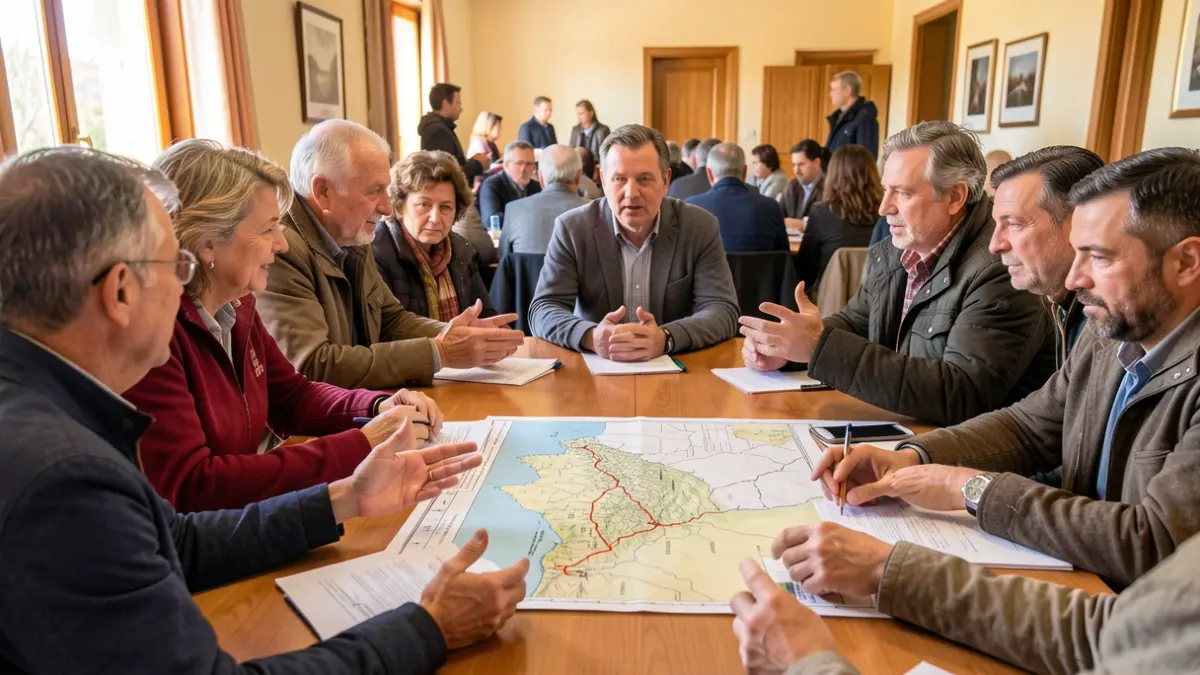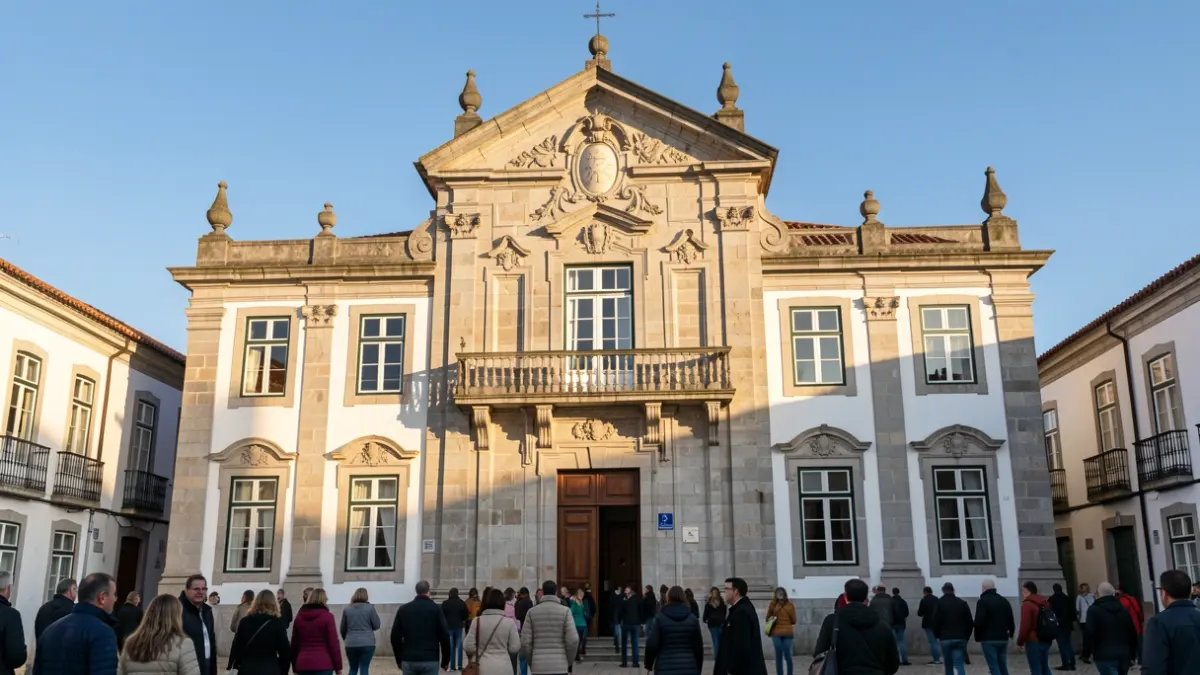
The exhibition, open to the public until the end of May 2027, offers a national and local perspective on the history of institutions, administrative structures, and the figures who shaped the political life of Vila Nova de Cerveira.
Organized in three phases, the exhibition begins by contextualizing administrative transformations in Portugal, covering the Constitutional Monarchy, the First Republic, and the Estado Novo, culminating in the construction of democratic local power.
The second part focuses specifically on Vila Nova de Cerveira, detailing the evolution of its administrative organization, institutions, and key figures. Episodes such as the suppression and restoration of the municipality in 1895 and 1898, and the contributions of personalities like Gaspar de Queirós Ribeiro de Almeida e Vasconcelos and António de Portugal Marreca are highlighted.
The exhibition also pays attention to the freguesias (parishes), tracing the transformation from the old Parish Boards and the figure of the 'Regedor' to the current Parish Boards and Unions, with a particular emphasis on the period after April 25, 1974.
The historical starting point is the Liberal Reform of 1835 and the Administrative Code of 1836, which consolidated territorial division. In Vila Nova de Cerveira, the Municipal Administration, active between 1836 and 1937, is recalled.
A central point is the 1976 Constitution, which enshrined the autonomy of local authorities. In 2026, the 50th anniversary of the Constitution and the first democratic municipal elections on December 12, 1976, are commemorated. Vila Nova de Cerveira's connection to this milestone is evidenced by the participation of António Roleira Marinho, a deputy to the Constituent Assembly.
Through documents and photographs, the exhibition aims to be a journey through collective memory, revealing the changes and continuities that have defined local power in the municipality.