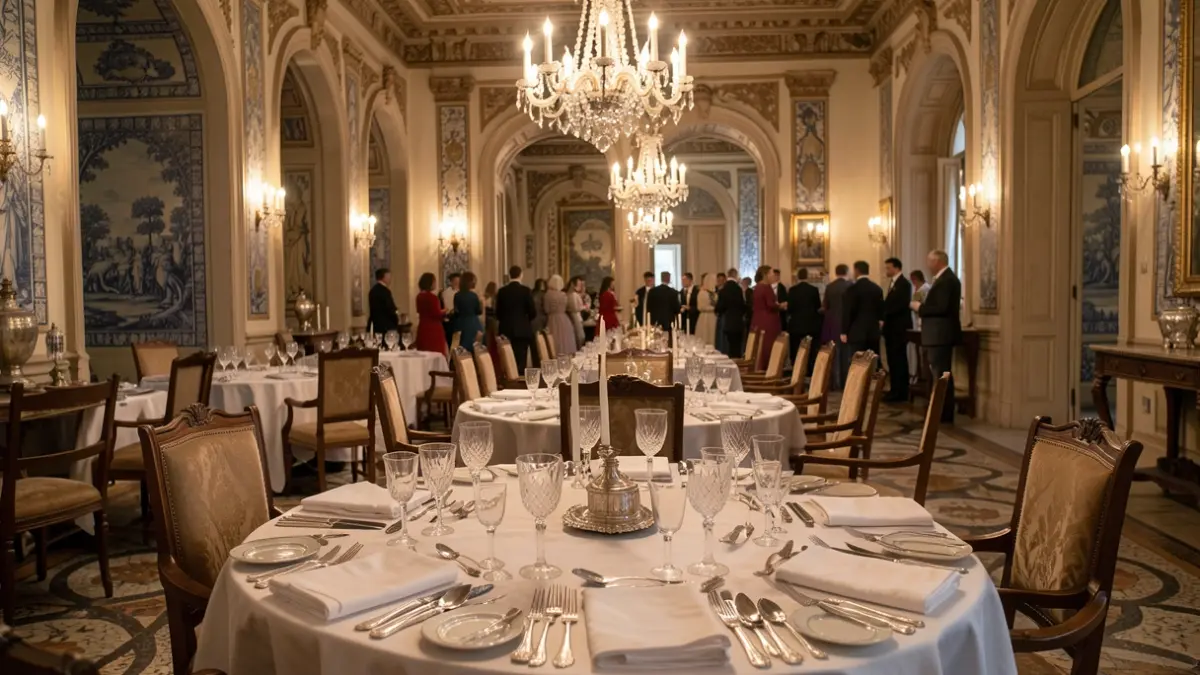
The event transformed the dining and cocktail rooms into a period setting, where guests actively participated in the narrative, reviving table rituals, codes of sociability, and the elegance associated with hosting between the late 19th century and the 1920s.
The evening began with a reception cocktail in the Luís XVI Hall, with welcomes from characters representing João Santiago de Carvalho e Sousa and Maria Carolina de Santiago, former owners of the Quinta. This was followed by dinner with dramatized interventions and the recreation of the habits of a stately home.
Each participant assumed a historical character, such as a viscount or a debutante, with costume indications and supporting materials. The period attire, mandatory, was inspired by the Belle Époque or the 1920s, featuring elements like hats and gloves.
The gastronomic component, designed by students from the Cuisine and Restoration Course at Escola Secundária Gonçalves Zarco under the guidance of Pedro Pacheco, was based on the approximately 100 menus from the exhibition. The presentation of dishes and the use of tableware contributed to recreating the historical ambiance.
The artistic program included choreographies by the Academia de Dança de Matosinhos, inspired by "The Great Gatsby", under the artistic direction of Diana Amaral, and the participation of singer Joana Nunes with the Qualis ArtEnsemble.
The exhibition “Menus and Table Arts in the Belle Époque”, curated by Professor Doctor Gonçalo de Vasconcelos e Sousa, brought together objects and documents associated with table culture, such as silverware, tableware, and crystalware, highlighting the menus as testimonies of the era's habits.