The application of Artificial Intelligence (AI) and sophisticated image processing techniques promises to enhance the evaluation of malignant wounds in advanced cancer patients, offering a complement to traditional clinical methods. This approach is at the core of an investigation conducted as part of a master's dissertation, supervised by lecturers Filipe Pereira and Joaquim Gabriel Mendes from the Department of Mechanics at FEUP.
The work, carried out by Duarte Nuno Silva Fonseca, focused on exploring the potential of AI and advanced image processing as supportive tools for assessing malignant wounds. This condition, which can affect patients with advanced cancer, presents significant challenges within the context of Palliative Care.
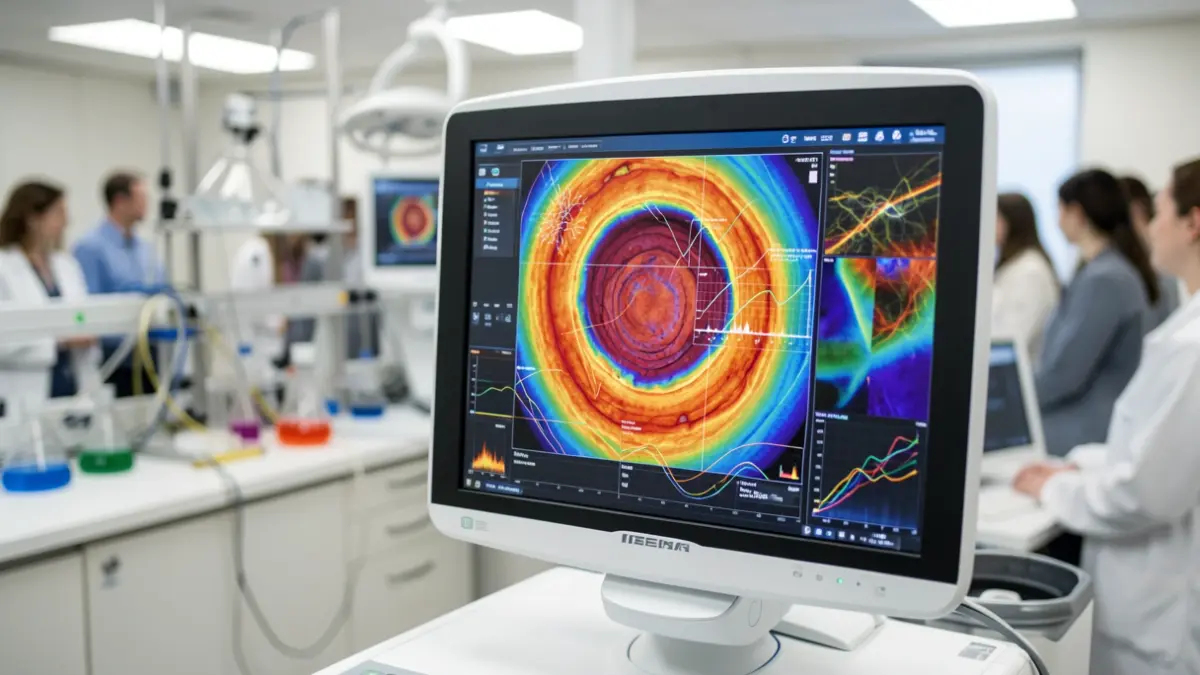
The dissertation, titled “Analysis and processing of visible and thermographic images of malignant wounds in advanced cancer patients in Palliative Care,” established a methodology for the integrated analysis of visible and thermographic images. The objective is to convert visual information into quantifiable data, thereby enriching clinical assessment.
The combination of these two information sources allows for the analysis of different wound characteristics and the identification of crucial patterns for their characterization and monitoring.
This research project was honored with the Master's Award from the Order of Engineers – Northern Region 2026, with a prize of 1,000 euros. The research also benefited from the support of Jorge Marinho and Maria Paula Costa e Silva, physicians at IPO do Porto, whose collaboration was instrumental in aligning technological development with real clinical needs.
The application of AI and image processing in the assessment of malignant wounds falls within an expanding interdisciplinary field that unites engineering, data science, and health. The development of new technological tools in this area has the potential to complement existing evaluation methods and support clinical decision-making.