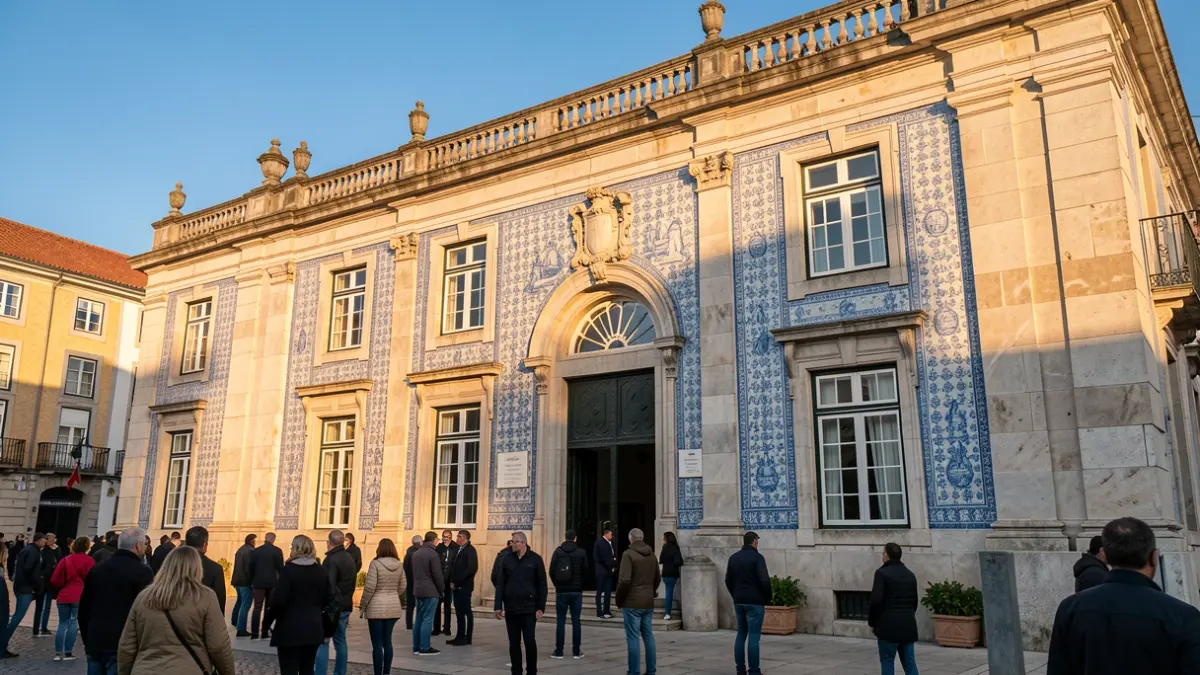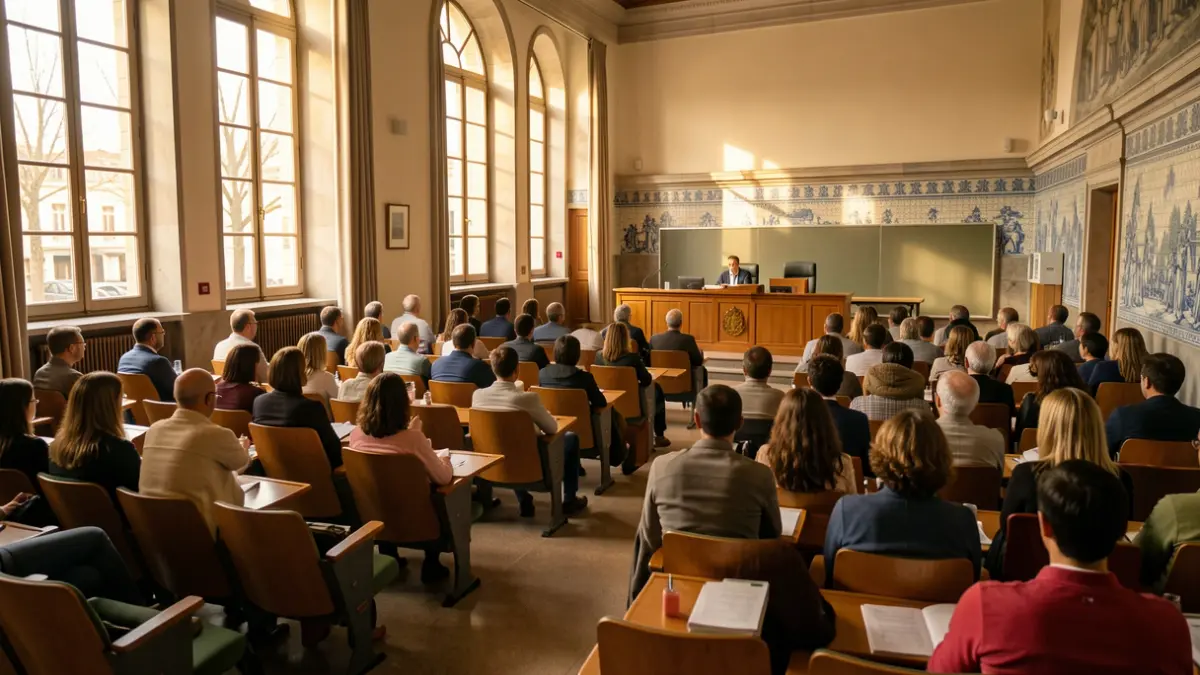
The inaugural conference of the Academic Year at the Faculty of Psychology and Educational Sciences of the University of Porto (FPCEUP), held on September 18, featured scientist Alexandre Quintanilha. The event, titled "The Construction of Knowledge," brought together students, faculty, and researchers for a reflection on curiosity, doubt, and the challenges of scientific production.
Organized by FPCEUP's doctoral programs, the initiative aimed to focus on the production of scientific knowledge. Amélia Veiga, vice-dean of FPCEUP, emphasized the importance of research oriented towards relevant problems in a context of growing challenges.
Alexandre Quintanilha stressed that "curiosity is the first step in building knowledge," describing research as a process of formulating hypotheses, confronting evidence, and accumulating knowledge, always open to new questions. He also highlighted the importance of interdisciplinary dialogue and the revision of established ideas in light of new evidence, using science, sex, and gender as examples.
The scientist also addressed the "not always predictable" consequences of applying knowledge, citing examples from the printing press and genetic engineering to antibiotics, social media, and artificial intelligence. Doubt and critical thinking were also central, with Quintanilha noting that access to more data does not guarantee greater trust, which requires time, transparency, and continuous work.
During the public debate, held in FPCEUP's Auditorium 1, discussions covered research paths and thesis topic selection, processes marked by uncertainty and the need for supervisor guidance. Quintanilha's final message focused on the "intellectual freedom" essential for research.
Alexandre Quintanilha's conference concluded the FPCEUP Welcome Week, which ran from September 14 to 18 and included various activities for new students. The initiative, under the motto "Ser FPCEUP" (Be FPCEUP), involved the Transversal Inter-peer Mentoring Program and the FPCEUP Student Association (AEFPCEUP).