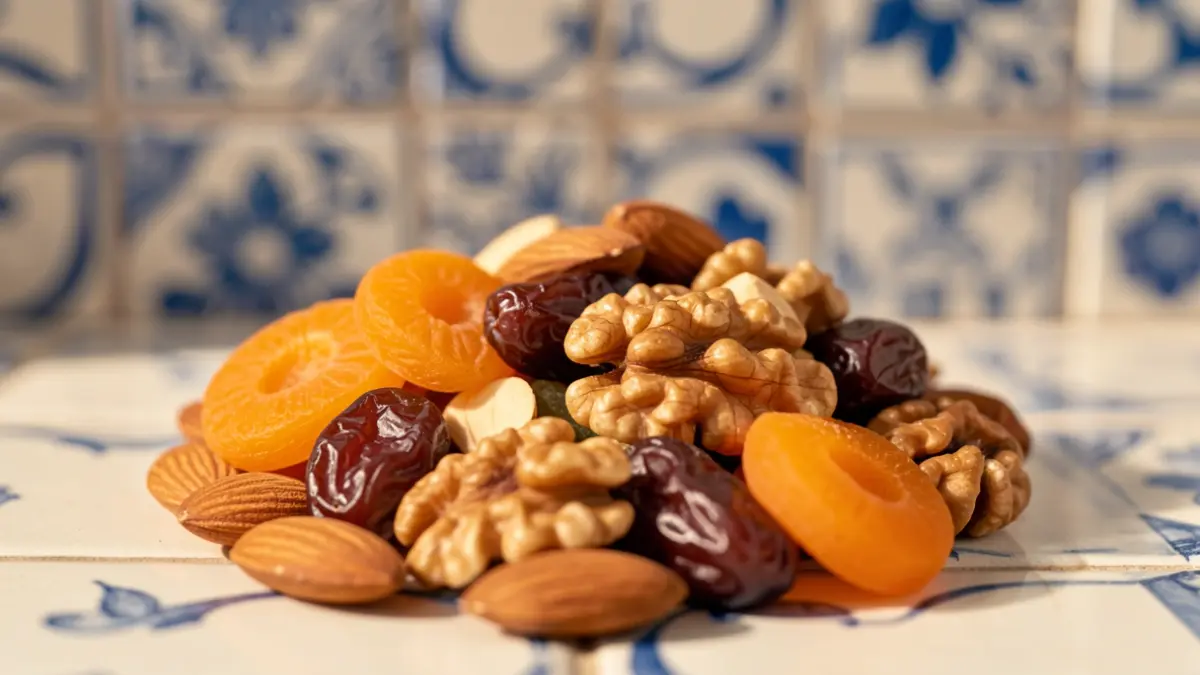
Pão por Deus, celebrated on November 1st, is a Portuguese tradition associated with sharing and solidarity. During this time, it is common to consume nuts and dried fruits, which can be part of a balanced and nutritious diet.
Nuts, such as almonds, walnuts, and chestnuts, are nutrient-dense foods, providing unsaturated fats, vegetable protein, fiber, vitamins, and minerals. Their regular consumption is associated with cardiovascular health benefits. Dried fruits, like figs and dates, are also important sources of fiber, vitamins, and minerals, offering a more nutritious alternative to high-sugar products.
Benefits include being a source of energy, contributing to satiety, providing fiber, essential minerals, and cardiovascular protection. They also serve as a healthier alternative to ultra-processed snacks.
The Regional Health Directorate recommends prioritizing nuts and dried fruits over sweets, consuming them in their natural form, in small daily portions (30-40 g), and including fresh seasonal fruit. It also advises maintaining good hydration with water, valuing tradition through healthy eating habits, and reducing the consumption of ultra-processed products.