The pioneering intervention, which initially took place in Madrid and was later replicated in Portugal, allowed Abigail, a baby born with a congenital malformation who was dependent on mechanical ventilation for over four months, to return home breathing normally.
The child's malformation compromised her respiratory capacity, causing her trachea to collapse whenever the ventilator was attempted to be removed. Faced with the increased risks of a tracheostomy, the team decided to seek an innovative alternative.
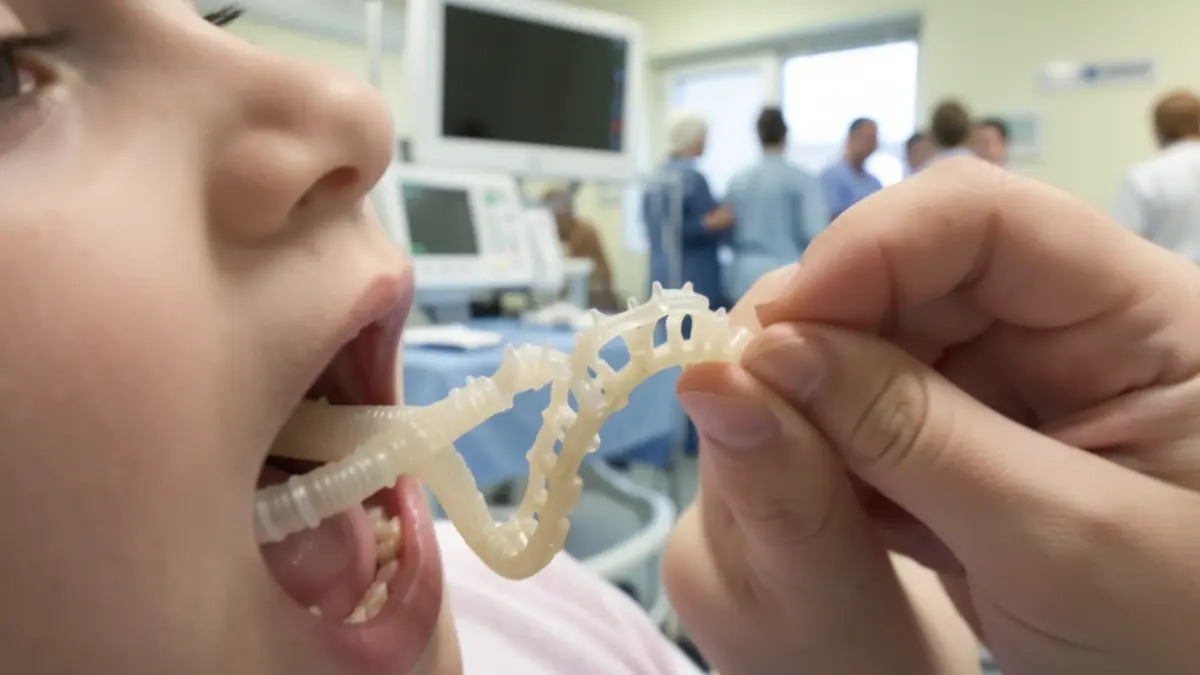
The solution emerged in Spain, where a technique using biodegradable stents was being employed. Following an initial intervention in Madrid in July, which allowed the ventilator to be removed the next day, a second placement was necessary in Portugal, at Santa Maria Hospital, with a larger stent, accompanied by Professor Carlos de la Torre, a thoracic surgeon from La Paz Hospital.
“"We hypothesized placing a biodegradable stent. An innovative technique that was showing good results in Spain."
The challenges inherent in the procedure for infants, such as the size of the instruments and the need to maintain spontaneous ventilation, were overcome by the team of Pediatrics, Pneumology, and Anesthesiology.
Abigail, now almost eight months old, has returned home to her siblings, a moment described by her parents as "a miracle" and "the best thing that could have happened to us."