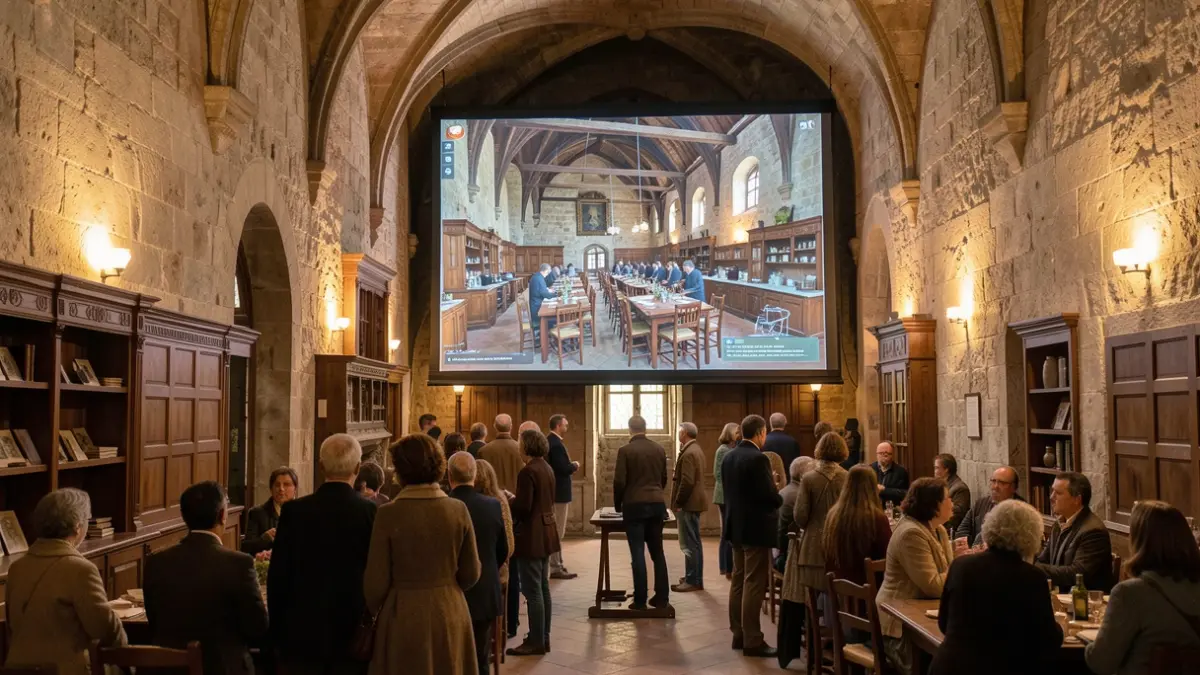
The meeting “Energy and gender equality: policies for a just transition”, promoted by ADENE and CIG – Commission for Citizenship and Gender Equality, took place on November 5. The initiative gathered representatives from public entities, companies, academia, and civil society organizations to discuss the intersection of energy, gender equality, and inclusion.
At the opening session, Vasco Marques Pinto from El Corte Inglés welcomed attendees, followed by Carina Quaresma, President of CIG. Quaresma highlighted the importance of integrating gender equality concerns into public policy planning as a condition for a fairer energy transition.
Throughout the morning, various dimensions of this relationship were addressed. In the session “Energy, energy poverty, and gender, data and emerging challenges”, Ana Margarida Vales (ADENE) and Carla Bernardo (CIG) presented data indicating a higher risk of energy poverty among women over 65 (45%), rising to 51% for single mothers with children. It was also noted that only 2 to 11 euros out of every 100 euros in development aid for energy are channeled to projects with a gender equality objective.
The representation of gender in the energy sector was analyzed by Tiago Marques (ADENE), who revealed that women constitute 23% of professionals in this field.
A round table on “Planning an inclusive energy future”, moderated by Marina Alves (ADENE), featured contributions from Islene Façanha (ZERO), Luísa Schmidt (Institute of Social Sciences, University of Lisbon), Maria João Melo (Helexia – Decarbonizing Industry for Sustainability), and Susana Escária (Agency for Climate, I.P.).
Five key ideas emerged from the debate: inequality is not marginal to the energy sector; without data, part of the problem remains invisible; the gender perspective must be integrated throughout the public policy cycle; the talent base in the sector needs to be broadened; and the implementation of these measures requires stable political commitment, resources, cooperation between energy, equality, employment, and statistics areas, clear goals, and accountability.
The sharing of experiences included presentations of best practices by Alice Khouri (Women in ESG), Carla Castelo (Coopérnico), Raquel Mendes (EDP), Ana Sousa (Mulheres na Energia), and Cláudia Horta Ferreira (ADENE).
Nelson Lage, President of ADENE, argued in his closing remarks that energy and equality cannot continue to be treated separately, emphasizing the importance of integrating the gender perspective into public policies, strengthening women's participation in the energy sector, and promoting greater equality in decision-making positions. He reaffirmed ADENE's commitment to this agenda, stating that the energy transition will only be successful if it is “decarbonized, competitive, and just”.
The meeting reinforced the importance of integrating the gender perspective into energy policies and strategies, recognizing that a truly just energy transition must consider the different realities and needs of people and promote equal opportunities.