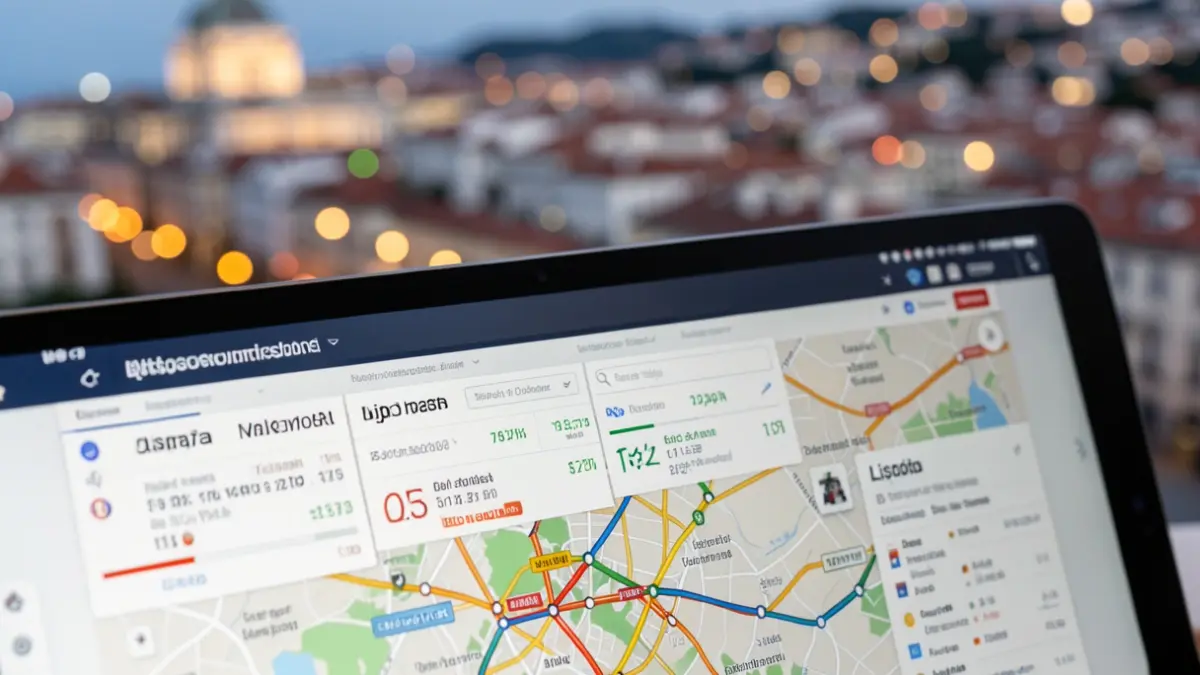
Within the scope of the European project DeployEMDS, the new tool allows for the analysis of circulation constraints for Carris Metropolitana buses and supports municipalities in territorial planning and management. The solution stems from the development potential of the TML GO platform, an infrastructure for management, planning, and monitoring that enables the creation of new analytical and decision-support tools.
The new platform, developed internally by the Intelligent Transport Systems (ITS) and ISO teams at TML, highlights the capability of TML GO to support the development of new cross-cutting solutions for mobility management. TML GO gathers relevant information for TML's activities and serves as a technological base for developing different applications.
The tool allows for the identification, visualization, and analysis of critical congestion points affecting bus circulation, helping to understand where the greatest disruptions occur and which locations might have the most significant impact on operational improvement.
The solution was presented on October 29th at TML's headquarters, during a demonstration session of the DeployEMDS use cases developed in Lisbon. Bernardo Alves (Studies and Planning Department), Antero Fernandes (Intelligent Transport Systems), and Lara Nunes presented the platform's objectives, methodology, and functionalities.
Identifying critical congestion points is relevant for a growing public transport network like Carris Metropolitana, where commercial speed and service regularity are crucial for operational quality. The information provided will support municipalities in evaluating various interventions in public spaces and road networks, such as dedicated BUS lanes or traffic signal alterations.
The platform can also aid in defining intervention priorities, grounding decisions in data on the network's actual performance. Potential applications include schedule adjustments, increased enforcement, and identifying locations where changes to public spaces could enhance operational efficiency.
By mapping and prioritizing circulation constraints, the platform helps pinpoint the most needed intervention sites and set priorities. This diagnosis is a first step towards collaboration with each municipality to assess and implement measures suited to each territory's characteristics and needs. The solution bridges operational information with decisions on territorial organization and management.
The development of this tool demonstrates how TML GO can serve as a technological foundation for creating specific solutions, addressing diverse mobility management, planning, and monitoring needs. Cooperation between entities and data sharing are vital for building an integrated mobility vision.
The next step involves using and disseminating the provided information. The platform will have a public access address, linked from the TML website. With this project, TML reinforces its use of proprietary data and technological tools for managing metropolitan mobility.