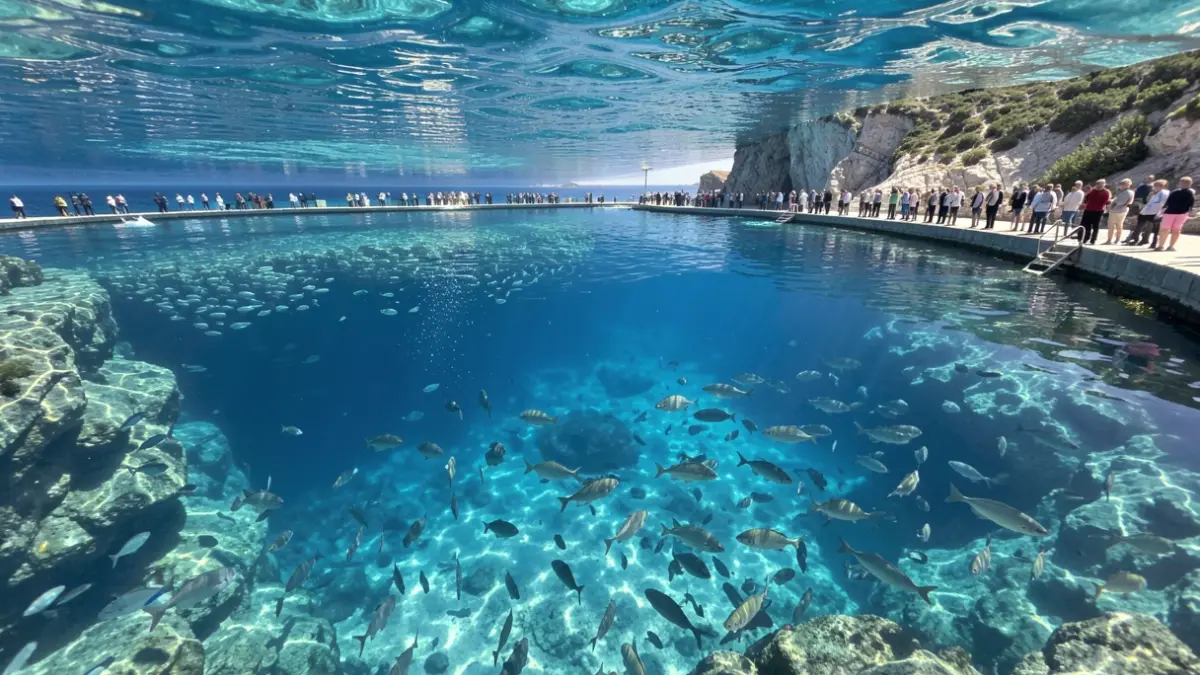
The King Dom Carlos Marine Nature Reserve in Portugal has the capacity to store between 128 and 177 million tons of carbon. This estimate was presented by the Portuguese Institute for Sea and Atmosphere (IPMA) at the 31st Conference of the Parties to the United Nations Framework Convention on Climate Change (COP31), held in Antalya, Turkey.
The Secretary of State for Fisheries and the Sea, Salvador Malheiro, emphasized the importance of protecting the ocean, stating that "the ocean cannot continue to be treated as a footnote to climate policy. Protecting it, better understanding its value, and involving the communities that depend on it are essential conditions for building more resilient, inclusive, and decarbonized economies."
The ocean plays a fundamental role in climate regulation by removing carbon dioxide from the atmosphere. This process occurs through the direct dissolution of the gas into the water and absorption by microscopic marine organisms. The carbon retained in the sea, including in coastal sediments, helps limit atmospheric carbon dioxide concentration, making the preservation of these ecosystems vital for the planet's natural capacity to regulate climate.
At COP31, Portugal also presented the Action Plan to Combat Ocean Acidification, expected to come into effect between late 2026 and early 2027. Additionally, a Memorandum of Understanding on maritime affairs was signed with the Union of Comoros, covering areas such as the blue economy, research, aquaculture, sustainable fisheries, combating illegal fishing, maritime security, coastal tourism, and ocean literacy.
Portugal also led an event on Ocean Equity, in collaboration with the United Arab Emirates, aiming to prepare a policy guidance document on equity in maritime policies. These initiatives are part of the strategy of the Interministerial Plan Portugal +Mar, presented by Prime Minister Luís Montenegro and Minister of Agriculture and Sea, José Manuel Fernandes, based on the pillars of More Protected Sea, More Intelligent Sea, and More Inclusive Sea.