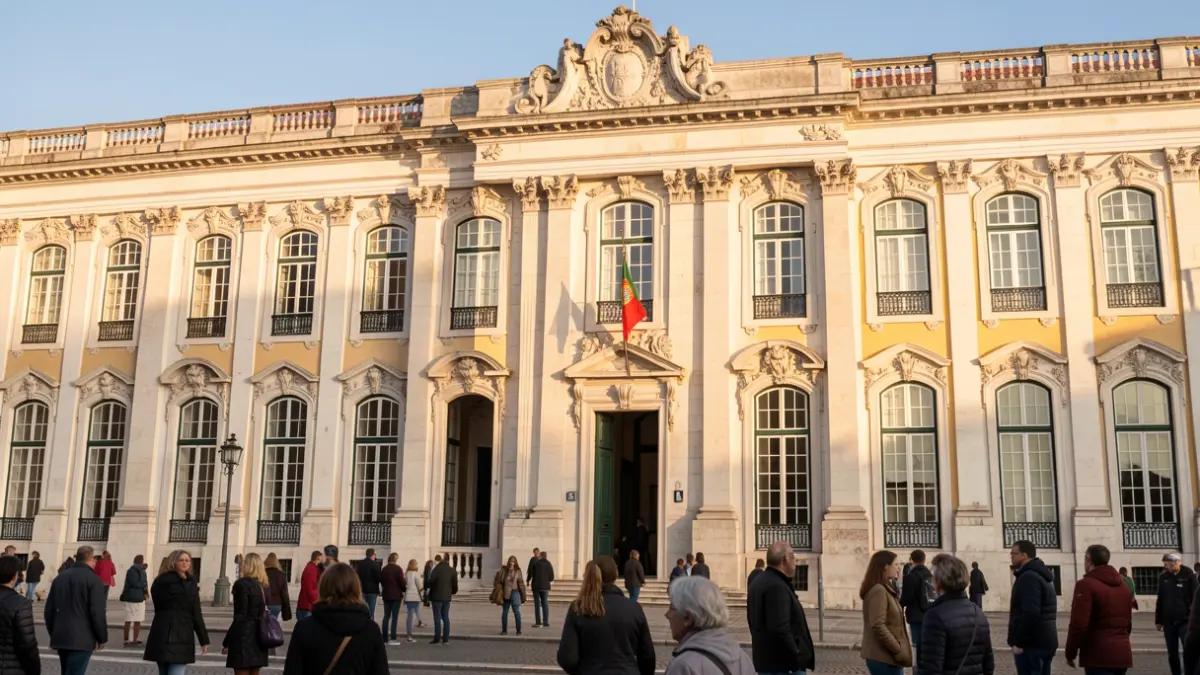
The reopening returns to visitors one of the main spaces for the preservation and dissemination of national artistic heritage, housing the most important public collection of ancient art in the country. "The National Museum of Ancient Art now opens its doors again, with renovated spaces and better conditions to conserve, present, and showcase its collections with greater dignity, quality, and safety," stated the Minister of Culture, Youth, and Sport, Margarida Balseiro Lopes. "The museum's value lies not only in the importance of the works it preserves but also in what they allow us to discover about ourselves, our history, and Portugal's relationship with the world," she added.
With an investment of approximately 9.3 million euros, largely financed by the Recovery and Resilience Plan, the intervention allowed for the restoration of the building's exterior, roofs, and air conditioning system, as well as the complete restoration of the Capela das Albertas and the museographic remodeling of the intermediate floor.
The new exhibition features around one thousand pieces and proposes a chronological journey exploring how travel, trade, and contact with other peoples influenced art and artistic production over the centuries. Among the novelties are pieces previously in the museum's reserves, some now exhibited for the first time, such as a recently acquired Japanese Namban bed and a set of Chinese wallpapers depicting the porcelain manufacturing cycle. "In this renovated space, we want each visitor to be able to understand the evolution of taste in Portugal over the centuries and across the many regions where the Portuguese traveled throughout their history," explained the MNAA director, Maria de Jesus Monge.
The future expansion of the facilities is another priority for the MNAA, aiming to create better conditions for its mission. "The Government has been creating the necessary conditions for the realization of this project, for which important steps have already been taken," stated the Minister of Culture, Youth, and Sport. In 2025, the State acquired three essential fractions for the museum's expansion, currently managed by Museus e Monumentos de Portugal.