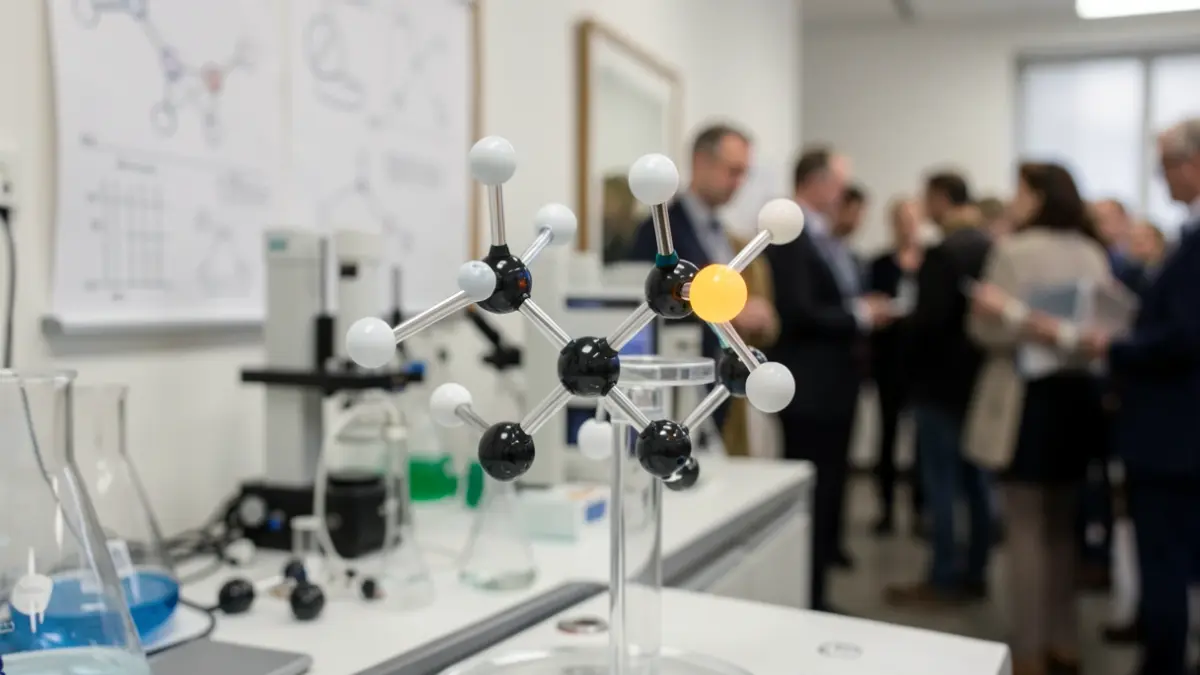
The distinction was granted for work in asymmetric organic synthesis, contributing to the understanding and control of chirality in chemical reactions. "The ability to prepare chirally pure molecules is essential for designing more selective, effective drugs with fewer adverse effects," stated the professor. The awarded work helps explain "how small differences in the spatial organization of molecules can have decisive consequences in their interaction with biological systems."
Alexandra Antunes clarified that many molecules are chiral, existing in two forms that differ in their atomic spatial organization, much like human hands. In the body, fundamental molecules like amino acids and proteins are homochiral, existing in only one mirror-image form, which dictates biological functions. The difficulty in replicating this process in the lab posed significant risks, especially in drug synthesis, where one form can be therapeutic and the other toxic.
Advances in organic synthesis enabled the production of homochiral molecules using catalysts, a development boosted by the 2001 Nobel Prize. Henri Kagan contributed by demonstrating that catalysts didn't need to be 100% homochiral, developing a mathematical model to predict this effect, which holds great economic potential for the pharmaceutical industry. Kenso Soai discovered a reaction where the product guides the selection and amplifies the preference for one mirror image, even without initial chiral reagents, serving as a model to study the origin of homochirality.
These discoveries impact both the fundamental understanding of homochirality and applied organic synthesis. Developing cheaper, more sustainable processes for preparing homochiral molecules will be crucial for medicinal chemistry, enabling more selective and effective drugs, as well as new functional materials and precise diagnostic methods. The prize also acknowledges the importance of fundamental research in organic chemistry.
Alexandra Antunes' work in medicinal chemistry directly relates to the laureates' discoveries, as preparing chirally pure molecules is essential for designing more selective and effective drugs. Research centers in Portugal, like Técnico, are significantly active in organic synthesis and drug development, areas where homochirality is determinant.