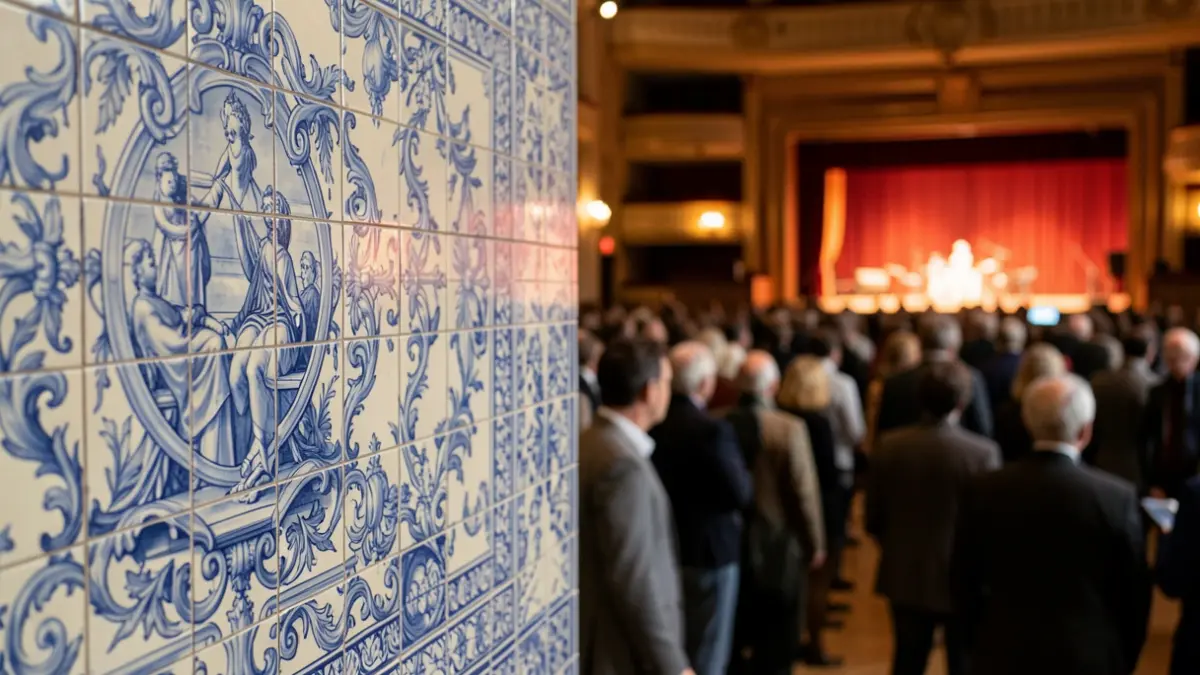
At the festival's opening session in Óbidos, Leitão Amaro stressed the importance of encouraging children and young people to read, rather than seeking "summaries" generated by artificial intelligence. The minister also expressed surprise at the country's "lack of shock" following the PISA study, which reveals a further decline in the reading, math, and science skills of 15-year-old students.
A proponent of "regulated" social media use and restricting mobile phones in schools, the minister criticized the publication of books not written by humans. Recalling José Tolentino de Mendonça's warning about the risk of AI "impoverishing imagination," Leitão Amaro highlighted that reading allows one to learn and encounter "different people and experiences." "We must fight for books made by humans with time," he challenged.
The minister recalled the enthusiasm of the former Mayor of Óbidos, Telmo Faria, for the festival's creation, which transformed the town into the "capital of books" and a UNESCO Creative City of Literature in 2015. Leitão Amaro considered FÓLIO an "excellent project" continued by mayors Humberto Marques and Filipe Daniel, stating it is "a pride that this story has been written for over a decade".
Filipe Daniel, the municipality's president, agreed that "there are decisions that change how a territory sees itself and how it comes to be seen," highlighting FÓLIO as a "differentiating bet, with national and international recognition" that demonstrates that "extraordinary achievements can be made outside major urban centers".
The municipality is once again offering 20-euro vouchers to all students at the Josefa de Óbidos School Group for book purchases at the literary festival. The mayor believes this measure has "transformative potential," as it "puts a book within reach of all students, investing in equal opportunities and the freedom for each to imagine and build their future".
FÓLIO, open to all, featured Portuguese Sign Language interpretation at its opening session and will offer the same support at its 13 author panels. Filipe Daniel explained that the theme "Beyond the Skin" aims to "recognize the person beyond appearance, the story beyond prejudice, and complexity beyond the easy answer," arguing that "a literary festival must preserve the space for thought, discovery, and respectful disagreement".
Ricardo Duque, Councillor for Culture, argues that FÓLIO should be a "space of true intellectual freedom," where ideas can be discussed and confronted. "We do not seek unanimity. We seek thought," he assured, advocating for listening and accepting differences for the "construction of free and responsible societies".
Joana Pinho, administrator of Ler Devagar and curator of FÓLIO Mais, observed that "in a time marked by so much violence, stopping to listen to the other can be an act of resistance." "Perhaps that is one of literature's most important tasks: to remind us that the world is not finished," she added.
The daughter of José Pinho, FÓLIO's mentor, questioned the focus on books while "people are fighting for their homes, their land, their freedom, fleeing war and having lost everything" and "there is an ongoing genocide." "What world are we writing on our paper skins? What stories do we choose to keep? What voices do we want to carry through time? What world do we want to leave written?" she asked.
In homage to José Pinho, Ricardo Duque announced the creation of the Galardão José Pinho, "aimed at distinguishing personalities or institutions that have contributed particularly relevantly to literature, artistic creation, thought, and the democratization of access to culture".
Zeferino Coelho will be the first recipient, on the festival's final day, for his "career, deeply linked to the affirmation of great Portuguese authors, including José Saramago." The ceremony will be attended by the President of the Republic, António José Seguro.
Ricardo Duque argued that "literature can constitute a true public development policy" and that "access to culture and knowledge should not depend on economic status," which is why FÓLIO offers free admission. "The most important works a community leaves are not just those built of stone. They are also those built in people," he added.
Pedro Rodrigues, president of Óbidos Criativa, recalled that FÓLIO "is part of a cultural strategy that Óbidos has been building," based on the conviction that "literature, culture, and creativity can effectively transform a territory." He highlighted the Strategic Plan Óbidos Creative City of Literature 2025-2035 and the Strategic Council of Literature and Knowledge.
Pedro Rodrigues commented that "it is necessary to think about the knowledge we produce and the audiences we form," and that "diversity is only truly wealth when we do not turn every difference into a division and every disagreement into an antagonism".
Maria Eduarda Marques, vice-president of the Fundação INATEL, emphasized the "spirit of cooperation that builds this festival," a partner of FÓLIO since 2016. "We foster democratization in access to art, ensure greater territorial cohesion, safeguard intangible cultural heritage, and support emerging artists".