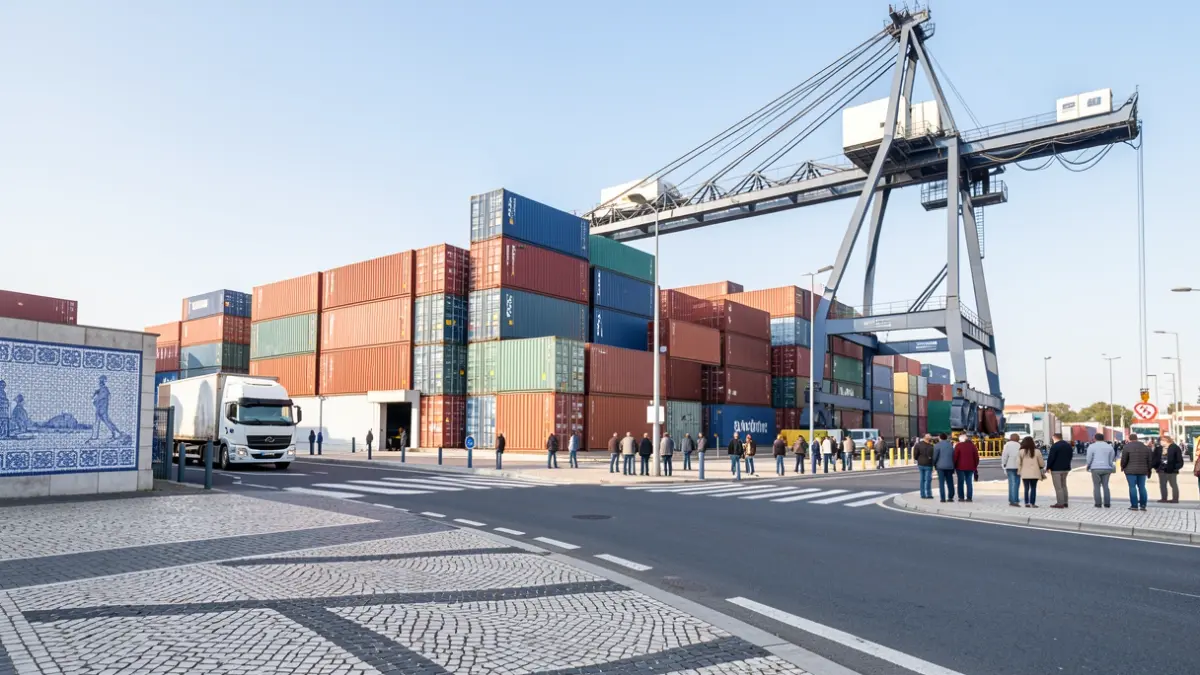
Located at the freight railway terminal, the Dry Port represents an investment of 4 million euros by the Administration of the Ports of Douro, Leixões, and Viana do Castelo (APDL). The Mayor of Guarda, Sérgio Costa, welcomed the inauguration, stating that the infrastructure positions Guarda as the "gateway to Europe and close to the Atlantic." The mayor thanked previous governments, APDL, and YILPORT, which will operate the Dry Port.
Sérgio Costa assured that the facility will not affect the tranquility of neighboring residential areas, thanks to dedicated schedules and corridors for heavy vehicles and the future Sequeira and Galegos variants. The mayor requested the Minister of Infrastructure and Housing, Miguel Pinto Luz, to approve the tender for the variant works and asked for studies for the IC7.
The Mayor also highlighted the importance of the IC7 for the district and, on behalf of the municipalities of Guarda and Sabugal, thanked for the approval of the protocol to requalify the EN233. Sérgio Costa considered it logical that the highest city be chosen to host a strategic business hub announced by the government.
The president of the Coordination and Regional Development Commission of the Center (CCDR), Ribau Esteves, emphasized the investment's added value for territorial cohesion and for establishing business areas.
Minister Miguel Pinto Luz considered the Guarda Dry Port an important piece in the development of the interior, giving Guarda a crucial role in the Atlantic logistics corridor. He stressed the need for companies and talent to generate wealth.
With a projected capacity to handle over 45,000 TEUs (twenty-foot equivalent units) per year and an estimated 10,000 truck movements annually, the Dry Port aims to facilitate goods transport, promoting coordination between rail and road transport and strengthening the link to the Port of Leixões.
The president of APDL, João Pedro Neves, highlighted that the infrastructure offers more advantageous logistics solutions, promoting investment, growth, intermodality, connectivity, digitalization, automation, and sustainable transport.