CCDR Alentejo, I.P. leads the DigitAldeas project, an initiative framed within the EUROACE Bauhaus Villages Strategic Plan. With a total eligible cost of €100,000.00, co-financed by the European Union (€75,000.00 from FEDER) and national/regional public support (€25,000.00), the project commenced on May 2, 2025, and is scheduled to conclude on December 31, 2028.
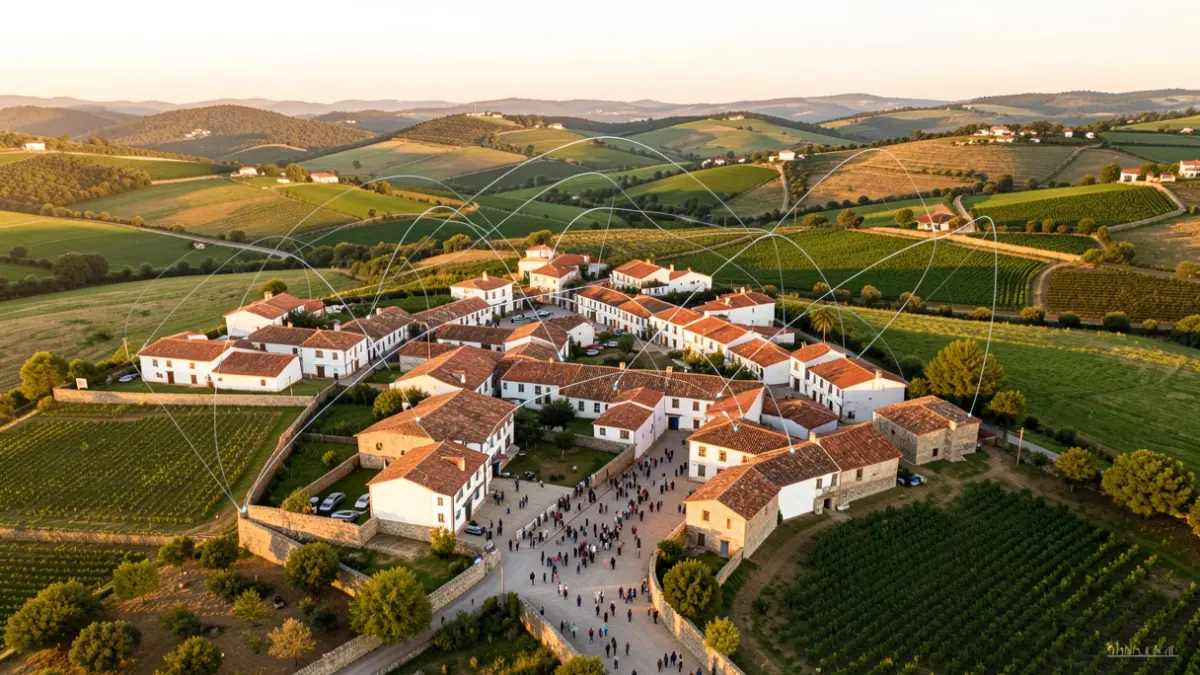
The primary objective of DigitAldeas is to foster integrated and inclusive social, economic, and environmental development, culture, natural heritage, sustainable tourism, and safety in non-urban areas. To achieve this, a collaborative, open, and dynamic digital model will be developed, integrating open geospatial data on environment, ecology, circular economy, urban planning, architecture, energy transition, digitalization, local economy, education, and creativity.
This territorial tool will enable the structured analysis of local dynamics, offering updated information and a key indicator system to interpret trends and evaluate scenarios. The project seeks to identify factors influencing rural development and define sustainable strategies that promote social cohesion and economic resilience.
A central focus will be the valorization of natural, cultural, and landscape heritage, combining technical analysis with participatory processes involving administrations, associations, businesses, and citizens. Workshops and best practice exchange days will be held to raise awareness of the benefits of sustainable development and prevent risks such as tourism over-exploitation.
The collaborative digital model aims to characterize, plan, and sustainably revitalize villages in the EUROACE Euro-region. It directly contributes to POCTEP OE 5.2 by promoting the digitalization of the cross-border rural territory and enhancing strategic planning capacity. It aligns with the principles of the New European Bauhaus (sustainability, aesthetics, and inclusion) and the Common Cross-Border Development Strategy (ECDT), addressing challenges like depopulation and energy poverty with replicable digital solutions.