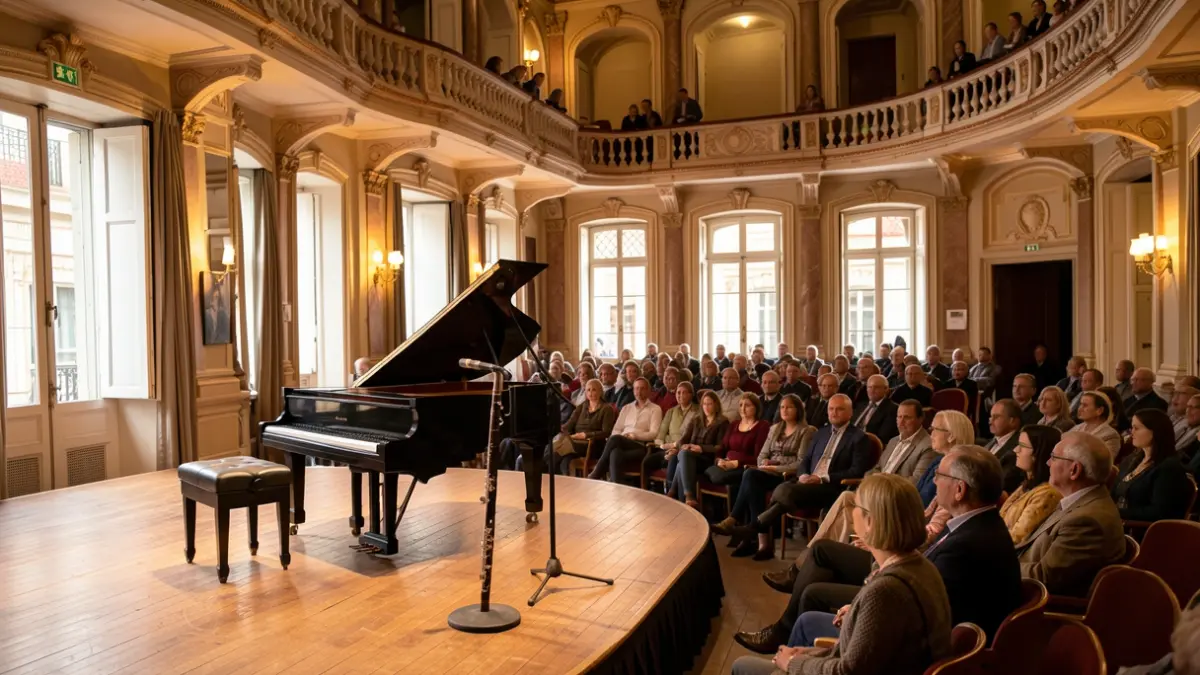
The ceremony was attended by the Minister of Culture, Youth and Sport, Margarida Balseiro Lopes, the Councillor for Culture of the Coimbra Municipal Chamber, Margarida Mendes Silva, the Chairman of the Board of Directors of Museus e Monumentos de Portugal, and the National Coordinator of the Portuguese Network of Museums, bringing together representatives from municipalities, foundations, and universities.
In Coimbra, the project represents an investment of 72,759.42 euros, partly funded by ProMuseus (43,410.75 euros) and the Municipality (29,348.67 euros). With an expected execution period of 12 months, the intervention is a partnership between the Municipal Museum of Coimbra and the National Museum of Machado de Castro, aiming to restore a historical connection between the two sites.
The "Refeitório Vivo" project seeks to bridge two distinct experiences: understanding Hodart's “Last Supper” and the refectory for which it was conceived. Complementary interpretive modules will be created to reveal how the artwork was originally integrated into the space.
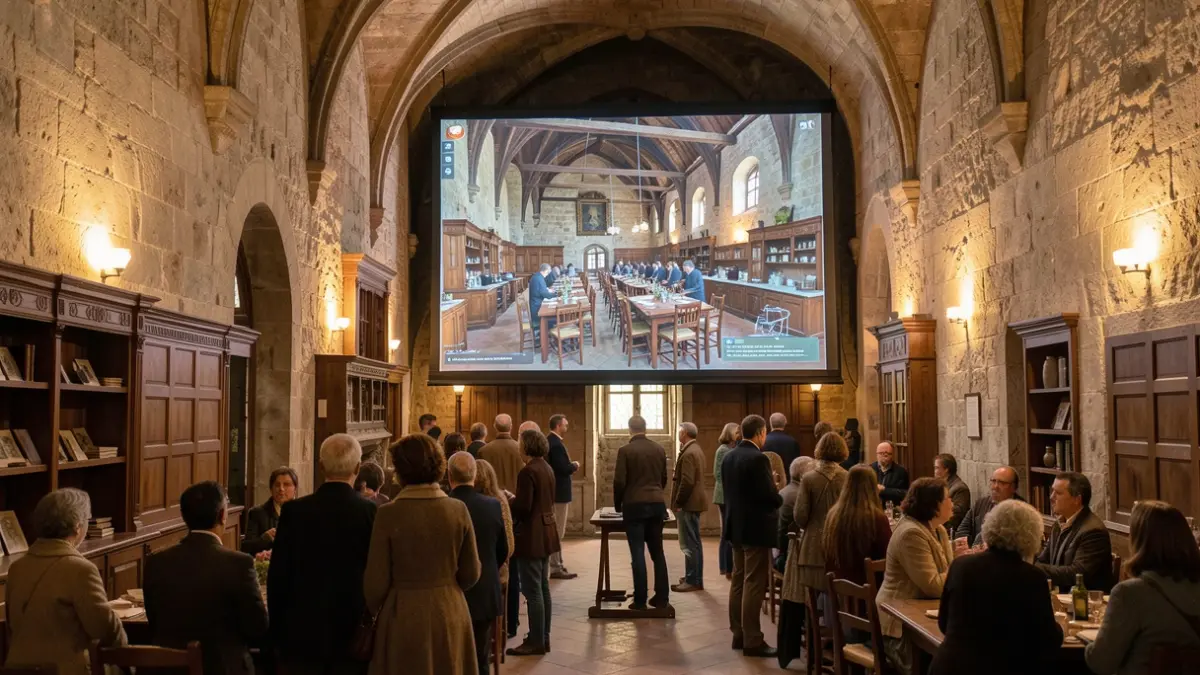
In the Sala da Cidade, visitors can use augmented reality, tablets, and a touch screen to explore a three-dimensional reconstruction of the former refectory, pantry, and kitchen of the Monastery of Santa Cruz. This experience will offer insights into the organization of the spaces, daily life, and dining habits of the Augustinian Canons.
It will also be possible to view a reconstruction of the former eastern chapel, now walled up, and understand how Hodart's sculptural ensemble might have been originally displayed there. At the National Museum of Machado de Castro, next to the “Last Supper,” a second digital module will allow visitors to discover the context for which the artwork was created, its characteristics, and its conservation and restoration journey.
The project aims to encourage visitor flow between the two museums, fostering a new cultural link between the lower and upper parts of Coimbra.
The project's realization benefits from the contribution of two research centers from the University of Coimbra: the Center for Social Studies (SANTACRUZ project) and the Center for Classical and Humanistic Studies (European project CONVIVIUM). The company Weplan will be responsible for graphic development, audiovisual production, and integration of digital content.
Accessibility is a central component, featuring audio description, subtitling in Portuguese, English, and Spanish, as well as interpretation in Portuguese Sign Language and International Sign Language, to reach audiences with diverse needs.