The entry into force of Decree-Law No. 108/2026, of May 29th, and Ordinance No. 320/2026/1, of July 31st, which revised the Legal Regime for Urbanization and Construction (RJUE), required a significant adaptation of urban planning procedures in Coimbra. The new regime has applied since October 1st to procedures initiated from that date and to previous ones still in the sanitation or preliminary assessment phase.
This national reform aims to simplify and make urban planning procedures more predictable, altering matters such as licensing, prior communication, prior information requests, deadlines, fee payments, and building use. Key changes include strengthening the applicant's responsibility in prior communication, reorganizing municipal assessment stages, adjusting deadlines to the complexity of operations, and expanding situations for self-assessed fees.
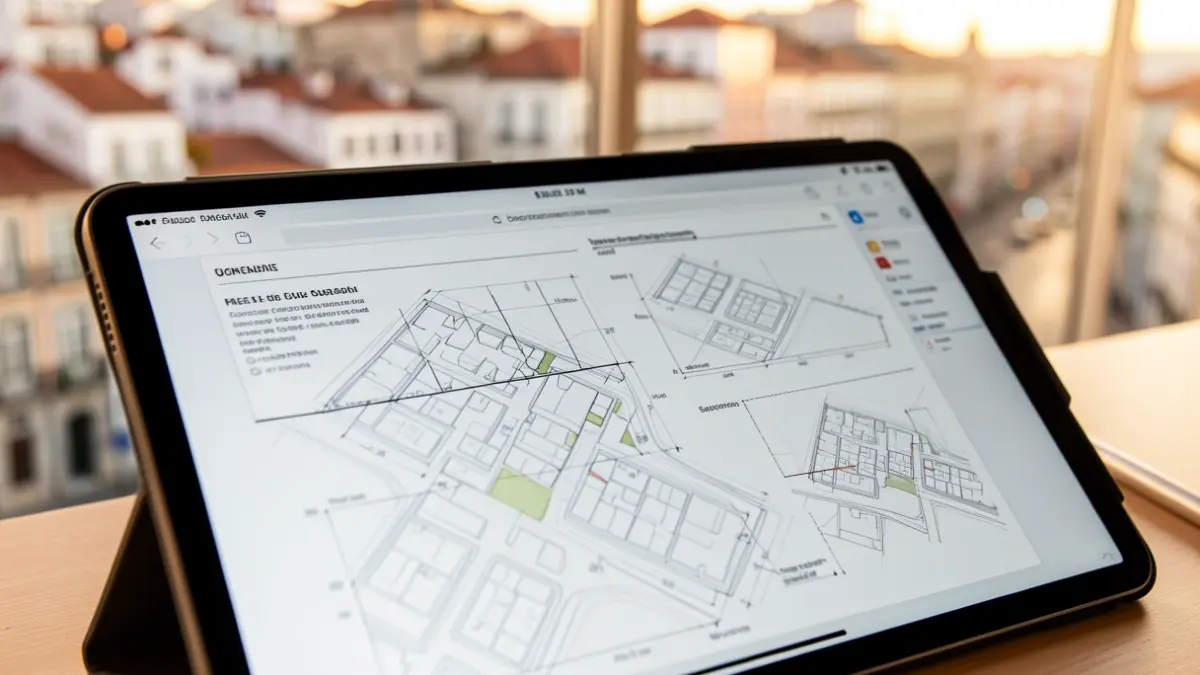
The scope of these legal changes necessitated a significant reformulation of dozens of forms and content. Ordinance No. 320/2026/1 has nationally standardized the main application and communication models, defining the required supporting elements and seeking to reduce divergent interpretations among municipalities. In Coimbra, this work involved analyzing and updating forms, documentary references, pages, instructions, and links on the municipal website, eliminating or replacing outdated models.
Coordination between the Urban Planning, Administrative Modernization, IT, and Communication services enabled the adaptation of procedures and systems. Documentation has been centralized in the Online Services since October 1st, consolidating access to municipal digital procedures in a single point. The transition to the new regime occurred without interruption of municipal channels, ensuring the updating of information and systems.
The RJUE revision aims to increase simplification and standardization of procedures, while ensuring greater legal certainty. The new Ordinance establishes mandatory use models, limiting the request for additional elements to those provided in the RJUE, special legislation, or when strictly necessary and justified by the municipality.
In parallel, the Coimbra City Council has launched two new proprietary online simulators: the Urban Operations Fee Simulator and the Parking Needs Simulator. The former allows for an advance estimate of financial costs associated with urban operations, increasing predictability and transparency. The latter supports the determination of parking requirements for urban planning projects.
Both digital tools are available online, aiming to simplify access to urban planning information and provide greater autonomy to citizens and professionals. These actions converge on the goal of making the relationship with Urban Planning services simpler, more predictable, transparent, and digitally accessible.