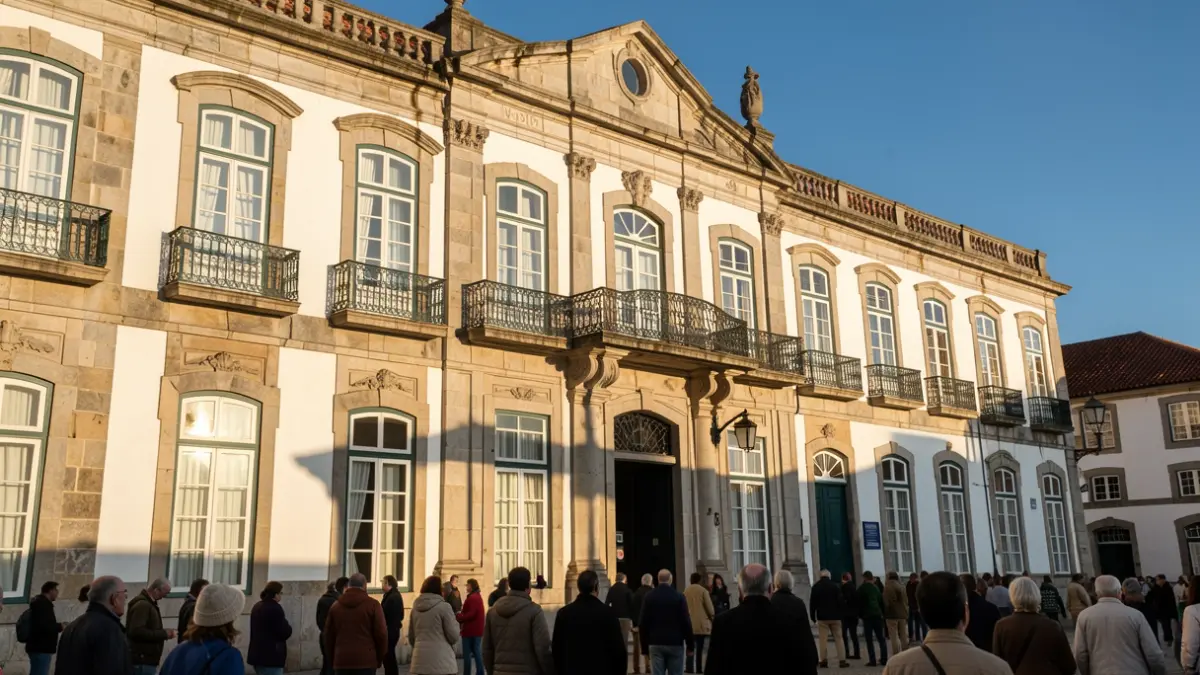
The Ponta Delgada Municipal Council approved, this morning, by majority, a protest vote concerning suspicions raised by councilors from the Ponta Delgada for All Movement (MPDLPT) about the organization of Ponta Delgada 2026 – Portuguese Capital of Culture. The resolution expresses concern about the potential consequences of the controversy on the initiative's credibility and private funding acquisition.
The document, presented by the Municipal Council President, Pedro Nascimento Cabral, during the ordinary Executive meeting, focuses on press releases and public statements by MPDLPT councilors, particularly referencing interventions by councilor Sónia Nicolau, related to the curatorship of the Literature area and the contracting of the Utopia Açores 2026 Literary Festival.
The proposal's justification argues that political scrutiny should be exercised with rigor and responsibility, especially when involving allegations that could affect the reputation of individuals and institutions. The vote emphasizes that transparency and accountability are fundamental principles, while also deeming it necessary to distinguish between political doubts, proven irregularities, and potential illicit acts.
The protest vote recalls the clarifications provided by the Commissioner of Ponta Delgada 2026, Katia Guerreiro, at the Municipal Assembly on September 30. Guerreiro revealed that a potential private funder, who had expressed an intention to support the initiative, was considering withdrawing that support following the controversies.
Given this possibility, the resolution expresses concern about the effects that the loss of funding could have on the realization of the planned program and on the confidence of the partners involved. The document warns that the controversy could affect available resources and relationships with supporting entities.
The approved vote acknowledges the cultural, institutional, and strategic relevance of Ponta Delgada 2026, reaffirming the need for transparency, rigorous management, accountability, and public scrutiny, coupled with responsibility in communicating information and suspicions. The document will be sent to various entities, including the Regional Government of the Azores.