The initiative, part of the Annual Activity Plan and held during the olive harvest season, provided children with insight into an important ethnographic and agro-industrial heritage of the municipality, linked to an agricultural activity deeply rooted in local traditions.
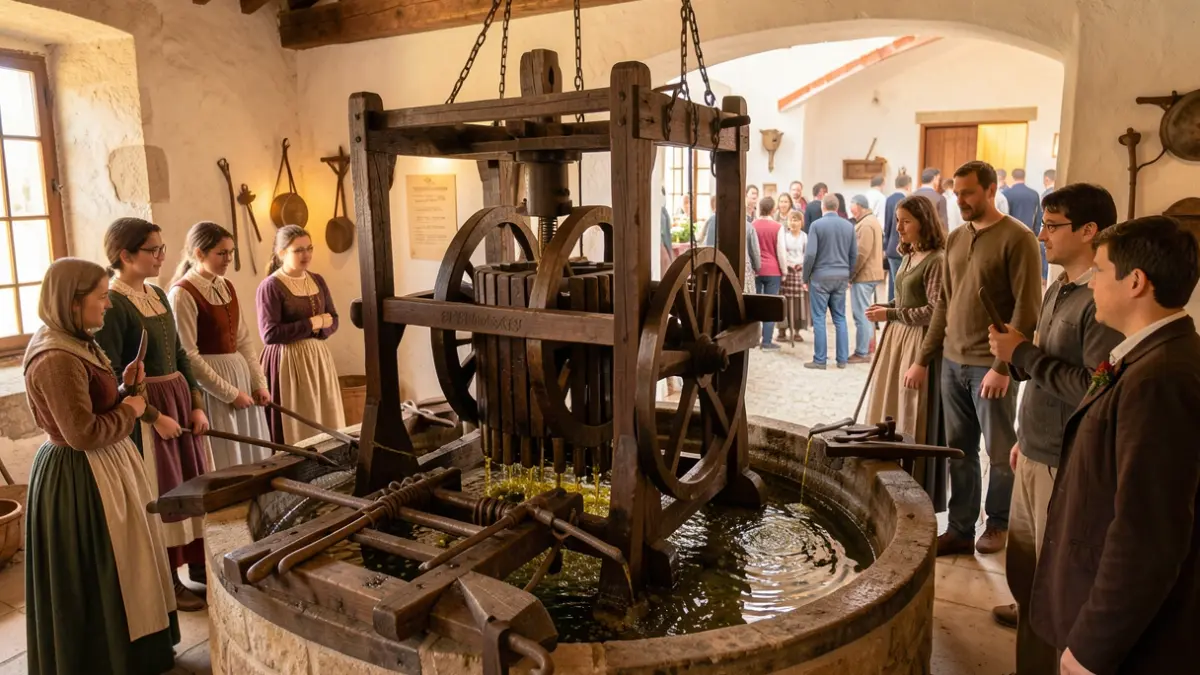
Students learned about the operation of a traditional artisanal olive oil press, based on animal traction and ancestral techniques. They encountered elements of the manufacturing process, including 'varas', 'pios', 'galgas' (millstones), 'seiras', and 'prensas', understanding historical methods and the evolution of this precious product's production.
The activity was led by Professor Mafalda Santos, head of the AEC, with collaboration from Municipal Museum Technicians, Marco Lopes and Paula Teles, who guided the visits and enriched the experience with information about the site's history and significance.
Classroom teachers also joined the initiative, accompanying their students and contributing to the educational enrichment of the experience.
The visit aimed to raise students' awareness of the importance of safeguarding and valuing local heritage, promoting direct contact with material remnants of the past and recognizing the knowledge, practices, and ways of life of previous generations.