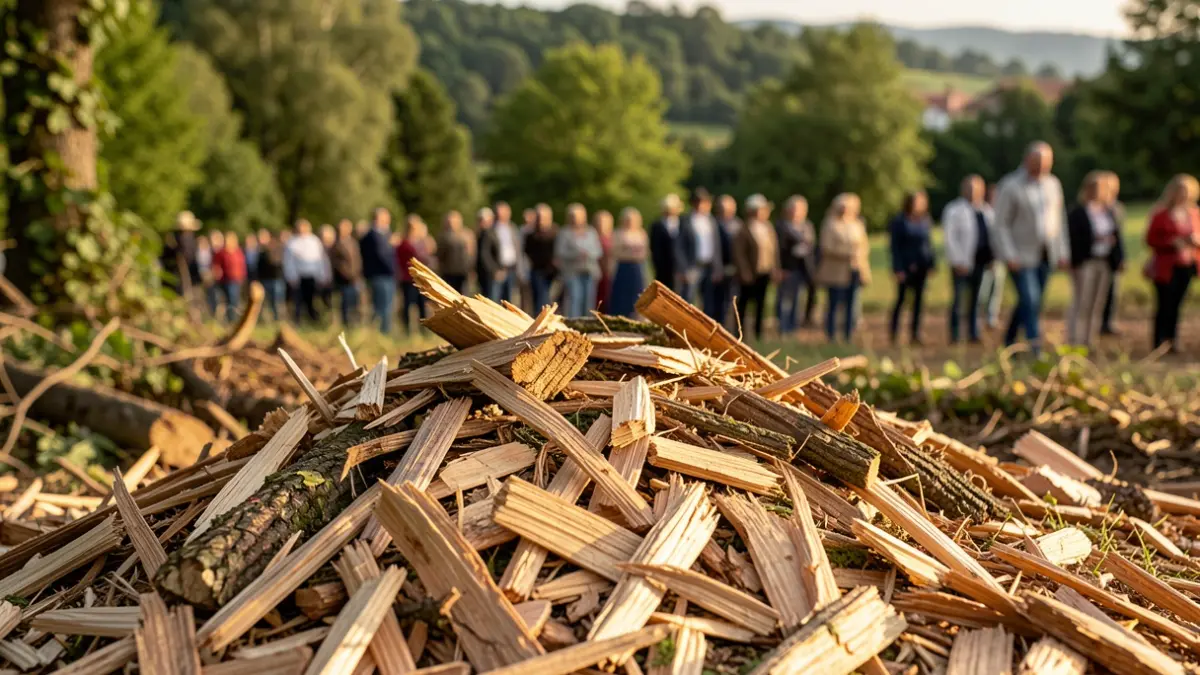
The Workshops on the Use of Bioenergy in Energy Communities, promoted by CIMAT as part of the Aldealix project, took place on November 10th in Chaves. The initiative brought together experts and policymakers to discuss the implementation of energy communities focused on forest biomass. The event included visits to facilities in Galicia, such as the wood chip center in Xinzo de Limia and the heating network installed in Infesta, allowing for observation of the practical functioning of these systems.
The Aldealix project seeks to develop energy communities that utilize locally produced biomass to meet heating needs in residential and public buildings through heat networks. The goal is to add value to woody materials with low economic utility, linking forest management with local energy production. Four pilot experiences are planned, two in Galicia and two in Northern Portugal, to assess the viability and impact of this model in rural communities.
This approach aims to reduce fuel accumulation in the landscape, decrease reliance on fossil fuels, and create economic activity related to the collection, preparation, transport, and use of biomass. CIMAT leads the production and dissemination of knowledge necessary for establishing and managing these communities in Portugal, covering legal frameworks, resource assessment, and supply chain analysis.
The project, initiated in 2023 and scheduled for completion in December 2026, is led by the Galician Agency for Rural Development and involves partners such as CIMAT, the Municipality of Vila Pouca de Aguiar, and the Municipality of Arcos de Valdevez. It is co-financed by the European Regional Development Fund through the Interreg VI-A Spain–Portugal (POCTEP) 2021–2027 program.