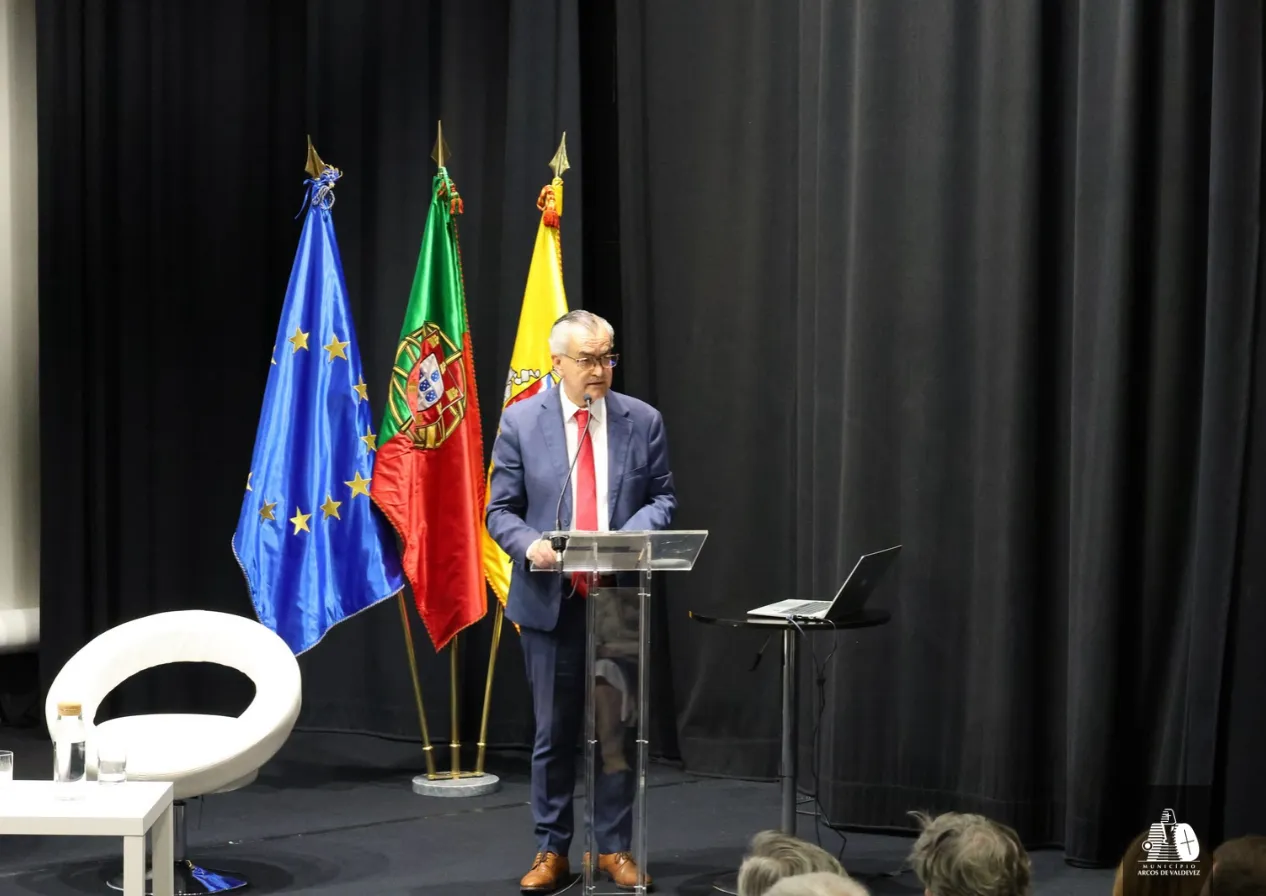
The Minister of Agriculture and Sea, José Manuel Fernandes, and the Secretary of State for the Environment, João Manuel Esteves, were present in Arcos de Valdevez last Monday, October 12th, for a meeting focused on extensive pastoralism. The event, which celebrated the International Year of Rangelands and Pastoralists, also included the participation of the Mayor, Olegário Gonçalves, and representatives from various entities, farmers, and shepherds.
At the opening session, Olegário Gonçalves highlighted the deep connection of extensive pastoralism to the identity, landscape, and life of the communities in Arcos de Valdevez. He emphasized its crucial role in land management, ecosystem conservation, and rural fire prevention. The mayor advocated for the need to improve conditions for producers, value local products, combine traditional knowledge with innovation, and create opportunities for young people, ensuring the continuity of this activity. He reiterated the Municipality's commitment to supporting initiatives that revitalize parishes and promote territorial sustainability, stating that "tradition and innovation can, and must, go hand in hand".
The Minister of Agriculture and Sea highlighted the support program for extensive pastoralism, which has an annual budget of 30 million euros, totaling 150 million over five years, including installation grants of 30 thousand euros for new shepherds. For his part, the Secretary of State for the Environment emphasized the vital role of shepherds and livestock producers in nature conservation, landscape preservation, and fire prevention.
The program included two debate panels, the presentation of the Green Paper on Extensive Livestock Farming, and a visit to a farm in Soajo. During the proceedings, challenges such as valuing the environmental services provided by shepherds and the difficulties faced by young people wishing to start in the sector were discussed.
The organization of this meeting reinforced the importance of Arcos de Valdevez in valuing extensive pastoralism, an activity considered fundamental for the rural economy, the preservation of natural and landscape heritage, and the vitality of local communities.