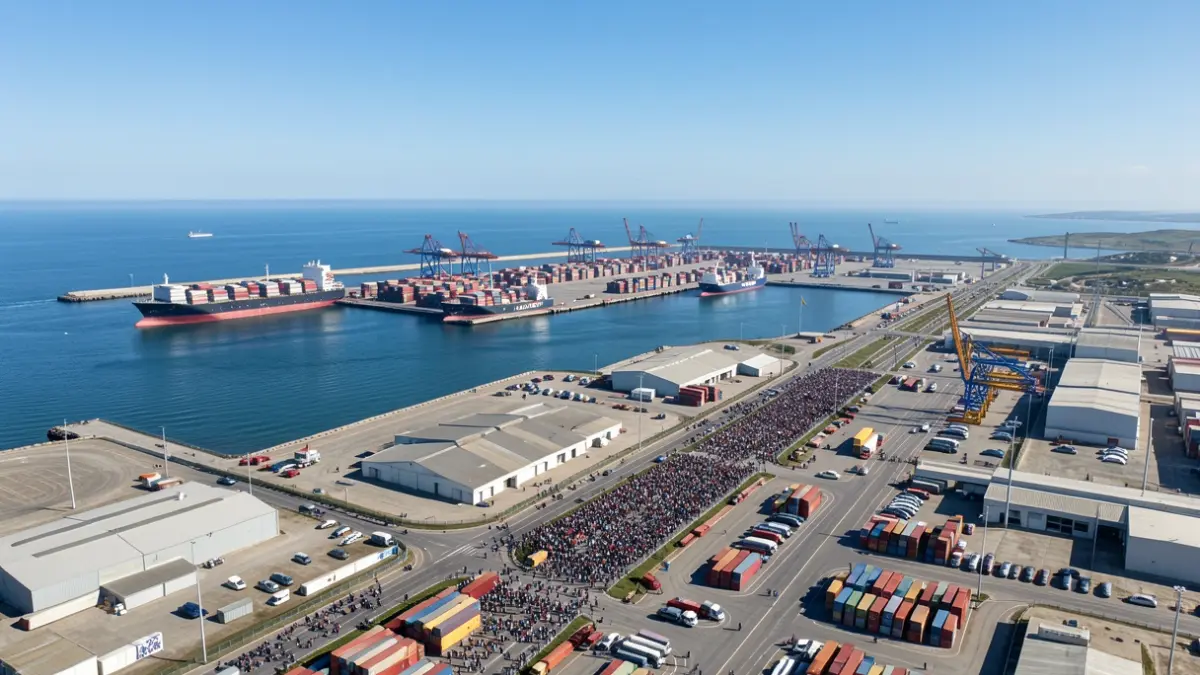
This ambition was presented by the Chairman of the Board of Directors of APS – Administration of the Ports of Sines and the Algarve, Pedro do Ó Ramos, during the I Iberian Customs Forum, held in Lisbon from November 12 to 14. The objective is to consolidate Sines as one of the main Atlantic gateways to the Iberian market, leveraging its strategic location, port capacity, and operational efficiency.
Among the highlighted priorities is the creation of a customs free zone in Sines, a proposal that will be discussed with the Government and aims to attract companies and investment, fostering new activities in warehousing, processing, and distribution of goods. The realization of this project seeks to enhance the port's logistics offering and competitiveness.
The development of rail accessibility is another strategic pillar. The new rail link to Spain, currently undergoing certification, is expected to reduce travel time by approximately three and a half hours and allow for freight trains of 750 meters in length, increasing the competitiveness of the logistics corridor connecting Sines, Extremadura, and Madrid.
In customs matters, the new Customs Office of Sines will become operational in January 2027, ceasing to function as a delegation of the Customs Office of Setúbal. This change aims to strengthen the response capacity of customs services and streamline port operations.
The growth strategy also relies on enhancing available logistics areas, both within the port and in the surrounding industrial and logistics zone, seeking to attract new companies and activities that boost Sines' maritime and land connectivity. In a context of increasing competition among European logistics platforms, the Port of Sines aims to establish itself as a strategic infrastructure for the national economy and a benchmark logistics hub for the Iberian Peninsula.