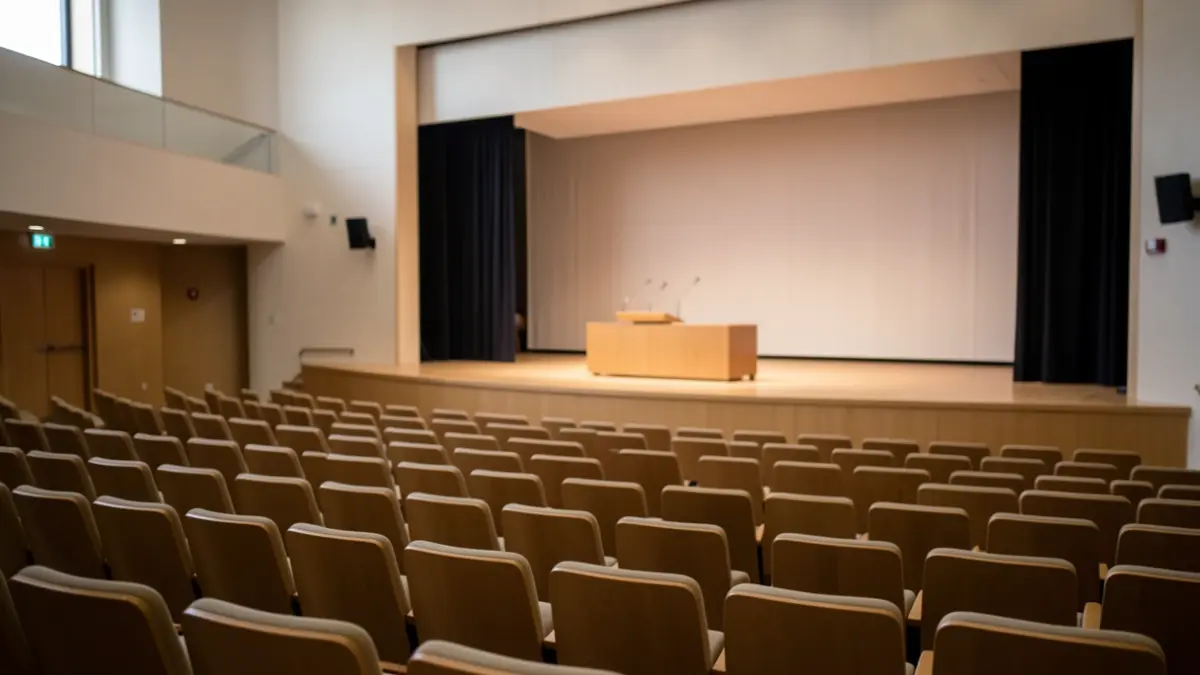
The Auditorium of the Santarém District Hospital hosted, this Tuesday, October 27th, the Occupational Therapy Seminar, promoted by ULS Lezíria. The event, themed “Participation Matters”, was part of the World Occupational Therapy Day commemorations.
At the opening session, Cristina Souto Santos, coordinator of Occupational Therapy at ULS Lezíria, highlighted the significance of the work carried out by these professionals. "As occupational therapists, we work daily to empower people to participate in the activities and contexts that give meaning to their lives, regardless of the limitations or challenges they may face," she stated.
Cátia Jesus, a member of the Board of the Portuguese Association of Occupational Therapists, emphasized the need to strengthen the integration of these professionals within the National Health Service, considering the chosen slogan to be the essence of the profession. "Participation matters, in its noblest, most current, and transformative sense," she affirmed.
Cristina Reis, senior technician director of Diagnostic and Therapeutic Senior Technicians (TSDT), valued the profession as a fundamental area for promoting health and inclusion throughout the life cycle, acknowledging the organizing team's commitment.
The importance of coordination between different care levels was also addressed by Ana Alexandre Calado, clinical director for Primary Healthcare at ULS Lezíria, who advocated for closer collaboration between hospital teams, primary care, and community resources to ensure continuity of patient goals upon returning home.
Pedro Marques, president of the Board of Administration of ULS Lezíria, framed the role of Occupational Therapy in integrated care and value creation in health. "Integrated care will only be truly achieved at ULS when we manage to transform treatment into autonomy and clinical response into participation," he stated, viewing Occupational Therapy as a strategic bridge between hospital, primary care, home, and community.
The scientific program included three thematic panels: “Growing, Belonging, and Participating”, “Achieving, Rehabilitating, and Participating”, and “Aging, Remembering, and Participating”, covering areas such as mental health, physical rehabilitation, assistive technologies, aging, and community intervention.