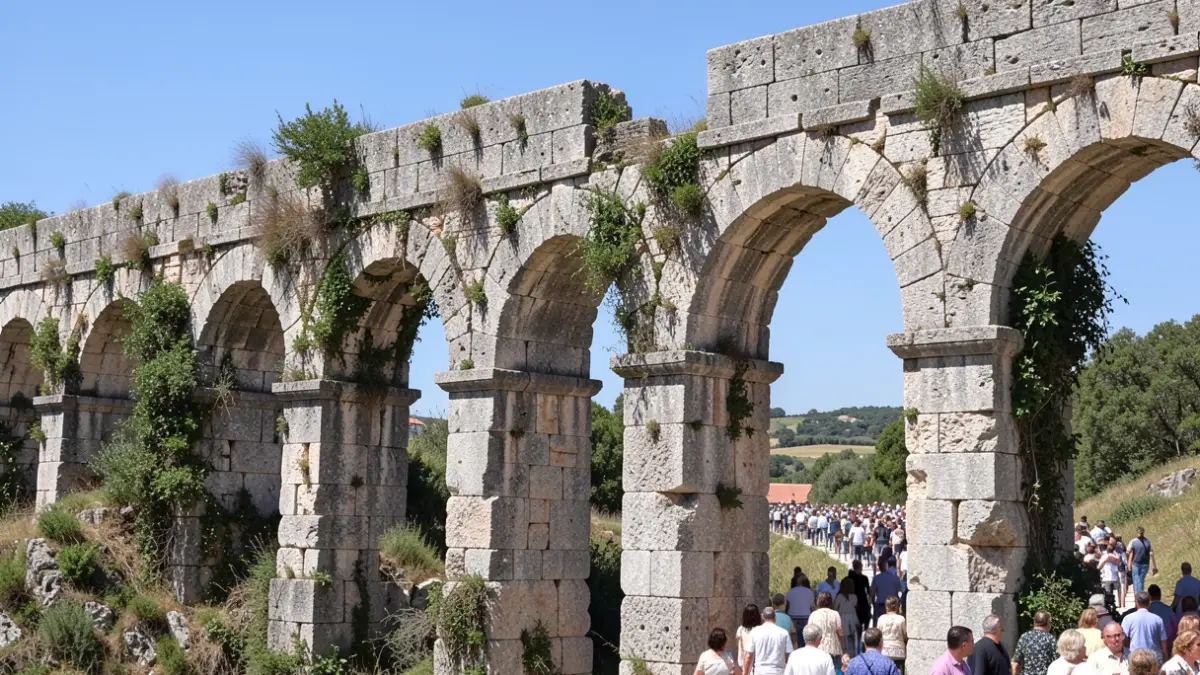
The tender follows the completion of the recovery project, which defined the necessary interventions to ensure the structure's stability and conservation. With approximately 380 meters visible, the aqueduct has shown the need for intervention in its most vulnerable areas.
Following the aqueduct's transfer to municipal heritage, finalized in December 2025, the Municipality commissioned a technical assessment by the University of Minho. The report, concluded in July 2026, identified several issues, including cracks in arches and pillars, missing stones, and voids in the masonry, recommending urgent intervention.
“"This aqueduct is part of Bustelo's landscape and identity. About a year ago, we took responsibility for its conservation. With the project completed, we are now launching the tender to restore the structure and preserve this historical heritage for future generations."
The project includes the controlled removal of vegetation, localized dismantling and reassembly of the most fragile sections, replacement of missing stones, and repair of cracks and joints. Consolidation of the masonry with lime-based mortar and reduction of water presence near the structure are also planned.
Built between 1665 and 1668, on the initiative of Frei Manuel Pessoa, the Bustelo Aqueduct was part of the water supply system for the Monastery of São Miguel de Bustelo, still preserving its granite arcades today.