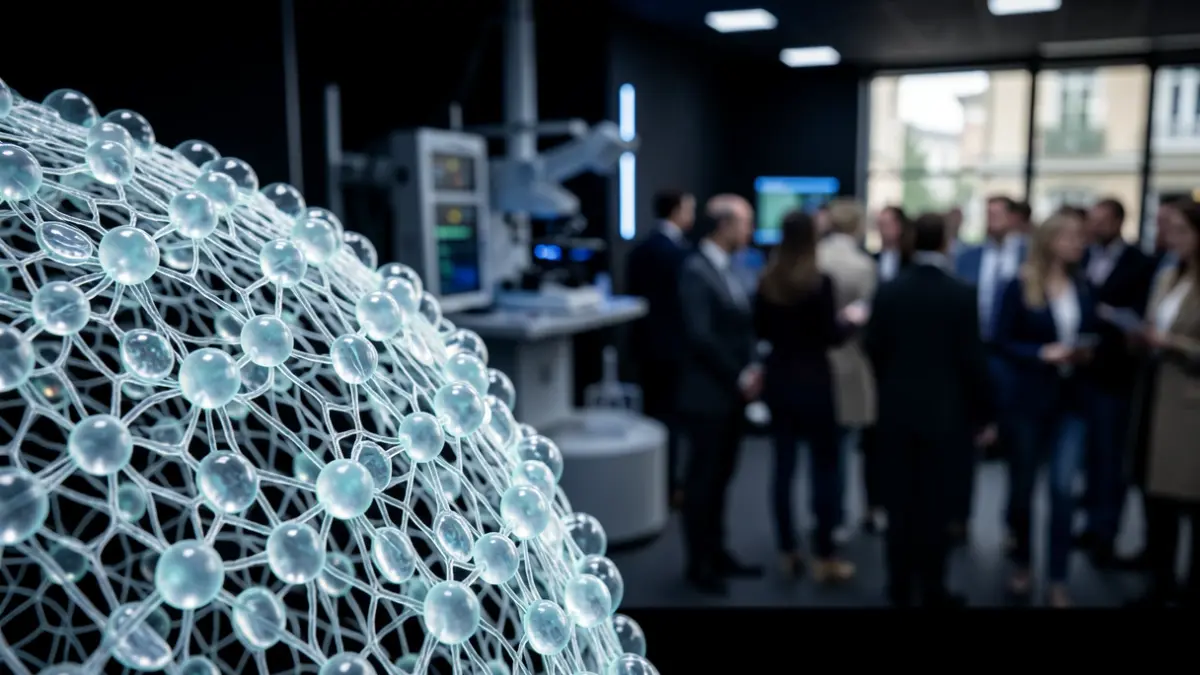
Scientists from the Faculty of Sciences of the University of Porto (FCUP) and the CBMA – Centre for Molecular and Environmental Biology of the University of Minho have developed a hybrid hydrogel with potential for the treatment of melanoma, the most serious form of skin cancer. In Portugal, between one thousand and 1500 new cases emerge annually.
This material consists of spherical nanocapsules incorporating doxorubicin, an anticancer drug, and a mesh-like polymer that controls the drug's release. "We have developed a controlled drug release system that allows it to be gradually released at the application site, maintaining its activity and potentially reducing exposure to healthy tissues," explain Isabel Oliveira and Eduardo Marques, researchers at the Centre for Research in Chemistry of the University of Porto (CIQUP) and lecturers at FCUP.
The hydrogel is designed for localized application on the skin, and may be explored in the future as a complement to other therapeutic approaches, particularly after surgery. Controlled release could reduce some chemotherapy side effects.
The material shows good biocompatibility, and the nanocapsules are pH-sensitive, facilitating drug release in more acidic tumor environments. It is also temperature-sensitive: at room temperature, it is a solution, but upon contact with the skin, it rapidly transitions to a gel state, remaining at the application site.
Rui Machado, the study's first author and a PhD student in Chemistry at FCUP, highlighted the challenge of combining the components without compromising their individual properties, ensuring a stable and effective material.
FCUP researchers developed the hydrogel, which was tested by the CBMA team using 2D and 3D cultures of melanoma cells. Andreia Gomes and Bruna Silva, CBMA researchers, found that the hydrogel allows drug release into tumor cells, maintaining its anticancer activity and increasing the amount of drug delivered to cells compared to isolated components.
The results of this work, developed over two years, were published in the journal ACS Applied Bio Materials. The scientists now intend to proceed with in vivo studies to evaluate the hydrogel's interaction with the organism and continue exploring its therapeutic potential.