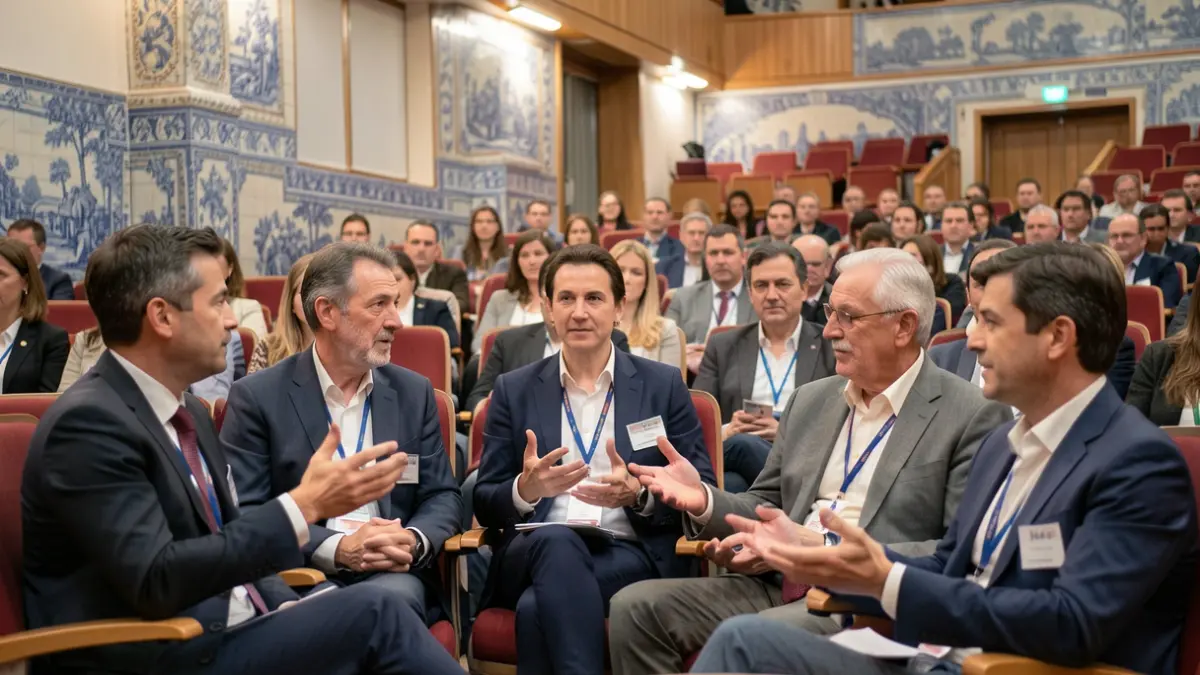
The meeting “Building the New Generation of Contracts”, promoted by TML – Transportes Metropolitanos de Lisboa at the Pavilhão do Conhecimento auditorium in Lisbon, brought together various entities to reflect on the future of Carris Metropolitana and the evolution of public road passenger transport service contracts. The event was attended by representatives from the Government, the Lisbon Metropolitan Area (AML), transport authorities, municipalities, operators, and sector specialists, who analyzed the operation's journey, shared learnings, and discussed the challenges and opportunities for the next generation of contracts.
Since its inception, Carris Metropolitana has been driving significant transformation in the mobility of the Lisbon metropolitan area, with continuous growth in service and transported passengers. Ana Teresa Vicente, Vice-President of the AML Metropolitan Council and Mayor of Palmela, highlighted the impact of this change, noting a “brutal growth in the number of people transported” and the importance of preparing the system for demographic evolution and territorial mobility needs.
Ana Oliveira, Director of the Operational Management Department at TML, presented the challenges of managing the operation, forecasting that by 2026 the brand will exceed 100 million kilometers traveled and reach over 200 million passengers transported. This evolution requires “planning a constantly evolving network”, strengthening monitoring capacity, and transforming operational data into useful, coherent, and accessible information for passengers. TML has been developing technological tools to track operations and improve user information, emphasizing the importance of collaboration among all parties, flexibility, technological robustness, and financial balance.
The first panel focused on monitoring, information, and their impact on passenger experience. Pedro Pinto de Jesus, Board Member of TML, highlighted solutions such as the Offer Manager (GO) and data integration APIs. Rui Lopo, Chairman of Carris’s Board of Directors, and Gonçalo Correia, Professor at Instituto Superior Técnico, discussed the use of artificial intelligence, on-demand transport solutions, digital twins, and energy transition, with Rui Lopo emphasizing that “what matters is the quality of the service delivered”. Pedro Pinto de Jesus added that the challenge now is to ensure “regularity, reliability, and comfort”.
João Confraria, Professor at the Universidade Católica Portuguesa, presented methods for price updates and balancing revenue and costs, while Hugo Oliveira, from the Mobility and Transport Authority (AMT), addressed guidelines for second-generation contracts, with priorities including integrated planning across transport modes, evidence-based management, proactive real-time monitoring, contract adaptability, and a focus on user experience.
The second panel addressed the construction of new contractual and remuneration models, with Maria Manuel Simões, Director of TML's Legal Department, delving into risk-sharing issues. Current contracts end in 2029, but preparation for the next generation is already underway since 2026, aiming to consolidate achievements and respond to operational, technological, financial, and environmental challenges.
In her closing remarks, Secretary of State for Mobility, Cristina Pinto Dias, framed the evolution as a “new mobility system, more than just contracts”. She highlighted that while the first generation helped structure a previously dispersed market, the second should place the passenger even more at the center of decisions, promoting service quality. “The customer doesn't need to understand concessions or transport authorities; they just want to know which mode to use, when, and at what price,” she stated, arguing that “the system's complexity must be with us, not with the passenger.” The initiative reinforced the importance of cooperation in preparing a more integrated, efficient, and reliable public transport service.