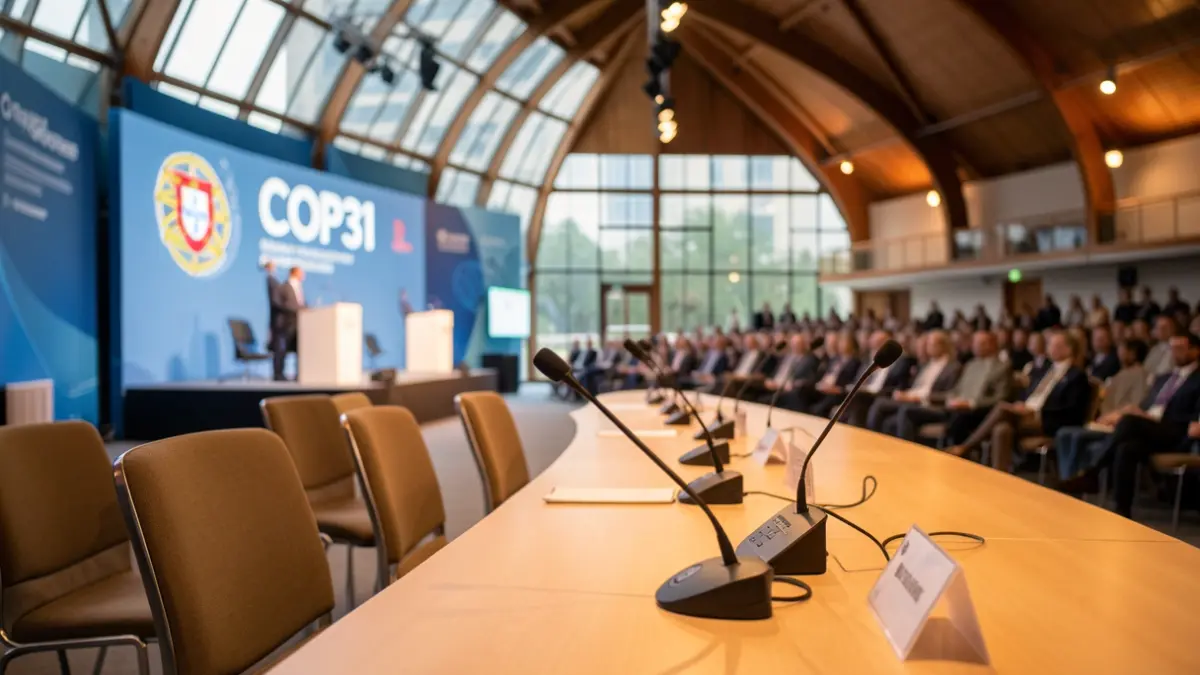
The initiative, part of the thematic agenda on Energy and Transport, gathered experts and decision-makers to discuss the role of knowledge ecosystems in achieving carbon neutrality objectives. The central moment was the intervention by Dario Liguti, Director of the Energy, Housing and Land Management Division of the United Nations Economic Commission for Europe (UNECE).
Dario Liguti highlighted the importance of articulation between science, innovation, public policies, and integrated resource management to transform climate commitments into concrete results. He emphasized the strategic role of cooperation between governments, scientific institutions, and the private sector in building knowledge systems that support effective decisions in the energy transition and decarbonization.
The session, organized by LNEG in coordination with bodies from the Ministry of Environment and Energy, reinforced the institution's position as a liaison between scientific knowledge production and evidence-based public policy definition. The panel was part of the official program for the Energy and Transport Day at the Portugal Pavilion.
Under the motto “AdaptAção”, Portugal's participation in COP31 aims to showcase concrete solutions to accelerate the climate transition. The central message from the LNEG session was clear: without effective knowledge integration, the implementation of climate policies will continue to be one of the biggest challenges in achieving global carbon neutrality goals.
Dario Liguti's participation lent a particularly relevant international dimension, reinforcing the importance of the work developed by multilateral organizations in creating cooperation and knowledge-sharing platforms to accelerate the commitments made under the Paris Agreement and the 2030 Agenda for Sustainable Development.