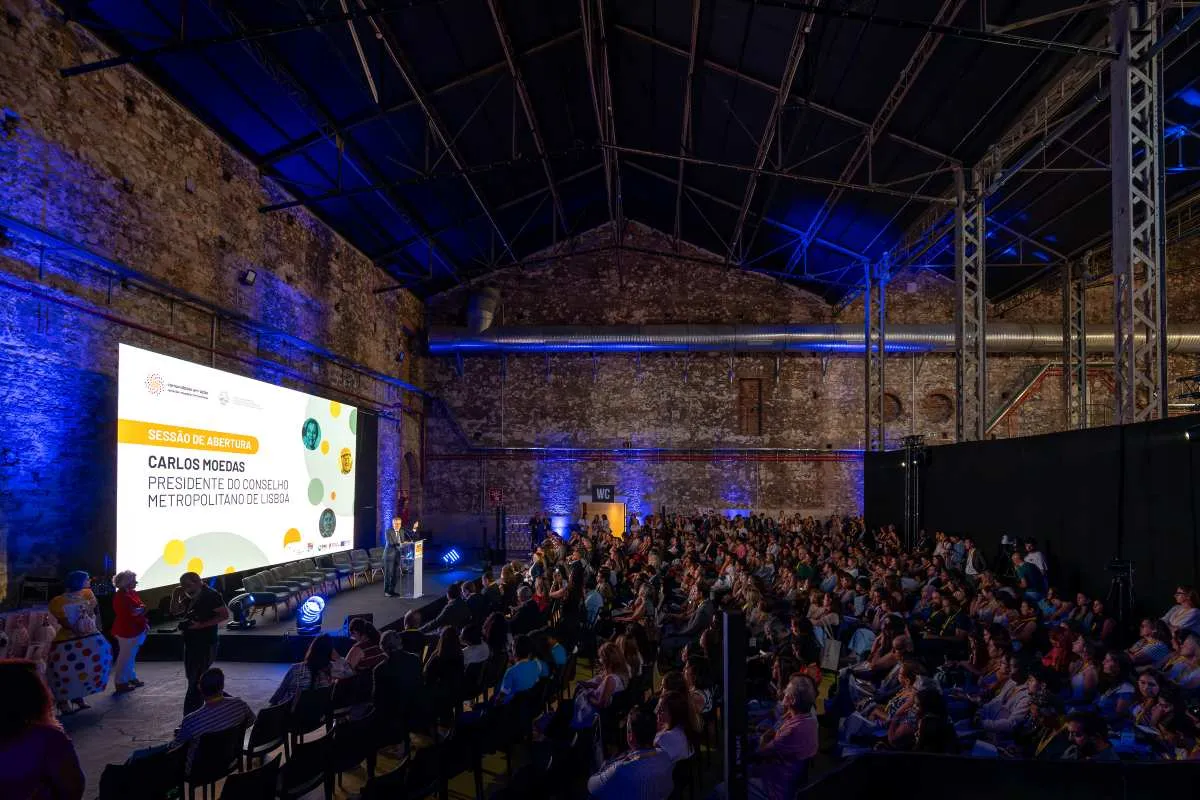
The meeting “Lisboa e Porto: Duas Metrópoles, Transformar Territórios” (Lisbon and Porto: Two Metropolises, Transforming Territories), held on October 15 at LX Factory in Lisbon, featured project presentations, testimonials, and debates on the work carried out to improve living conditions for populations in disadvantaged areas, within the framework of the Recovery and Resilience Plan (PRR).
The initiative served not only to mark the end of an investment cycle but also as a platform to share experiences, acknowledge the involvement in projects, and reflect on the continuity of social cohesion policies. The event included an institutional session, two roundtables — “People at the Center” and “Consolidating Results, Expanding the Future” —, cultural moments, and a project showcase.
In the Lisbon Metropolitan Area, the Comunidades em Ação (Communities in Action) program invested approximately €121.5 million in about 650 social inclusion and socio-territorial regeneration projects, with an estimated impact on over 350,000 people across the region's 18 municipalities. Initiatives covered public facility upgrades, education, health, culture, employment, and social support, addressing issues affecting the most vulnerable populations.
In the Porto Metropolitan Area, the Action Plan for Disadvantaged Communities involved a similar investment of around €121.5 million, promoting territorial and supramunicipal interventions, as well as initiatives in health, active aging, education, training, culture, community participation, and digital inclusion across its 17 municipalities.
The joint reflection highlighted that, despite the achieved results, social and territorial challenges persist, underscoring the importance of continuing to find solutions for the most vulnerable populations. The metropolitan cooperation between Lisbon and Porto was reinforced as essential for addressing challenges that transcend administrative borders.
Both metropolitan regions consider transforming territories a continuous commitment, aiming for more inclusive, cohesive, and future-ready communities, building on established experiences and collaborations.