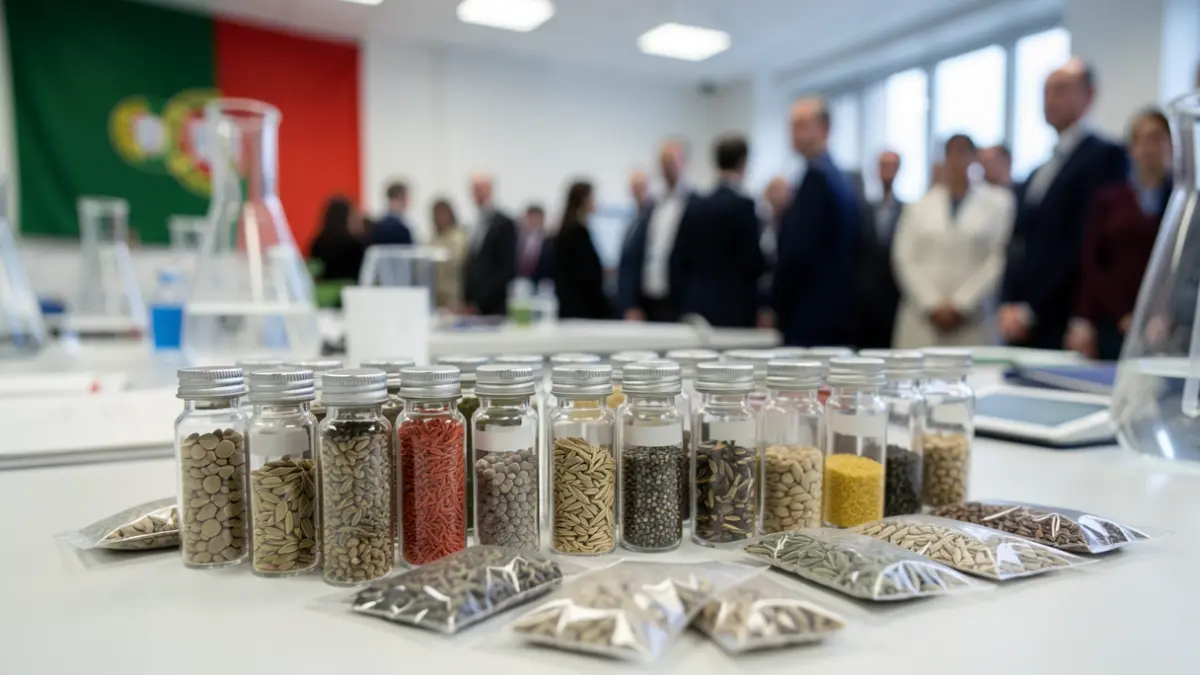
The mission to safeguard national agricultural diversity is one of the priorities of the National Institute for Agrarian and Veterinary Research (INIAV). Through the Portuguese Plant Germplasm Bank (BPGV), INIAV ensures the preservation of genetic varieties and resources essential for food, agriculture, and adaptation to climate change, guaranteeing that these heritages are safeguarded for future generations.
RTP accompanied the fifth delivery of Portuguese seeds to the Svalbard Global Seed Vault in Norway, which serves as the world's largest seed security reserve. In this mission, new samples of species such as chickpeas and black-eyed peas were deposited, strengthening the protection of a genetic heritage considered a strategic resource for the future.
The Svalbard Seed Vault, nicknamed the "Doomsday Vault", houses seed collections from dozens of countries, serving as a last line of safeguard against wars, natural disasters, pests, diseases, or the impacts of climate change.
The RTP report highlights the work carried out by INIAV, through the BPGV, in protecting the genetic diversity of the plants that sustain human food.