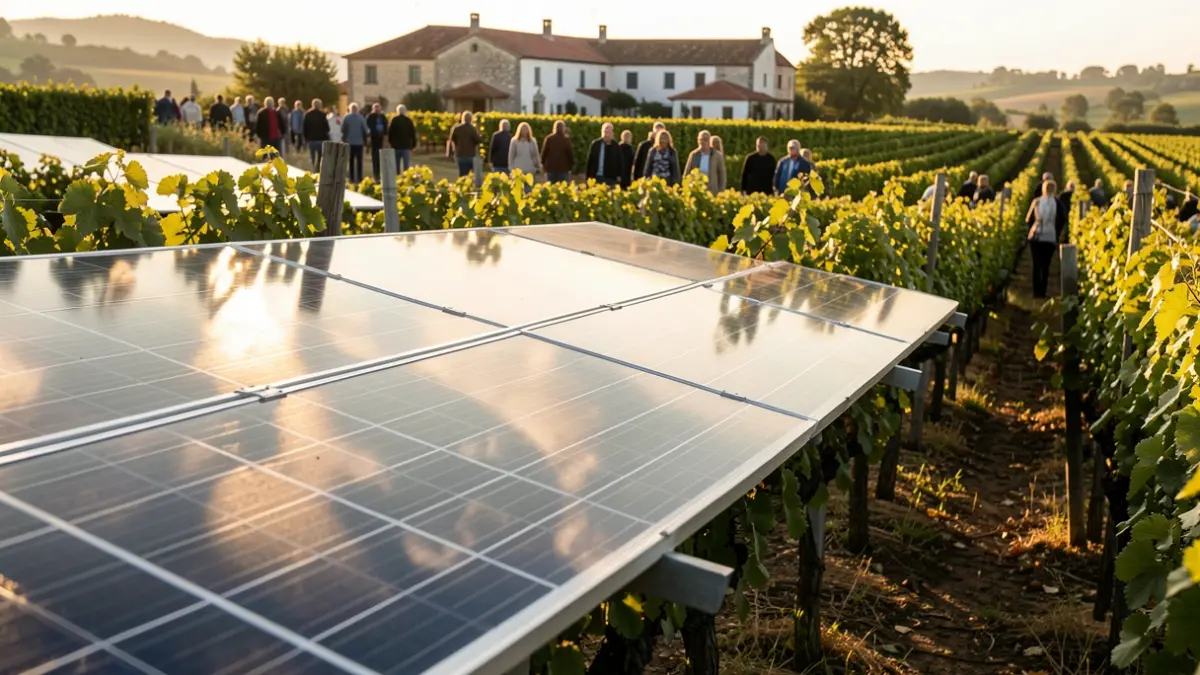
The "Luz da Tapada" project, a result of collaboration with GALP, explores the theme of agrivoltaics applied to vineyards, testing the reconciliation of viticultural and energy production on the same land. Pilot plots with white grape varieties, such as Viosinho and Encruzado, were installed in the Institute's Tapada vineyard.
Preliminary results indicate a reduction in solar radiation and leaf temperatures, as well as a decrease in bunch sunburn. These changes in the vineyard's microclimate translate into significant advantages for resilience to climate change, particularly in reducing water and thermal stress, combined with green energy production.
The harvest under the panels, which in 2025 occurred a few days later than in the control plot, shows a delay in ripening. This effect, by counteracting the anticipation of harvests caused by climate change, allows for slower ripening and harvesting during lower temperature periods, which can benefit grape composition and harvest/winemaking logistics.
The grapes for "Luz da Tapada" develop under microclimatic conditions different from conventional vineyards, benefiting from the panels' protection. This shading can result in longer and more differentiated ripening, giving the wine distinct characteristics such as greater freshness and aromatic potential.
The Superior Agronomy Institute (ISA), with its long tradition in viticultural research, aims with this project to answer questions about the impacts of agrivoltaics on vine vigor, grape and wine production, and quality, assisting potential users in decision-making regarding the adoption of this technology.