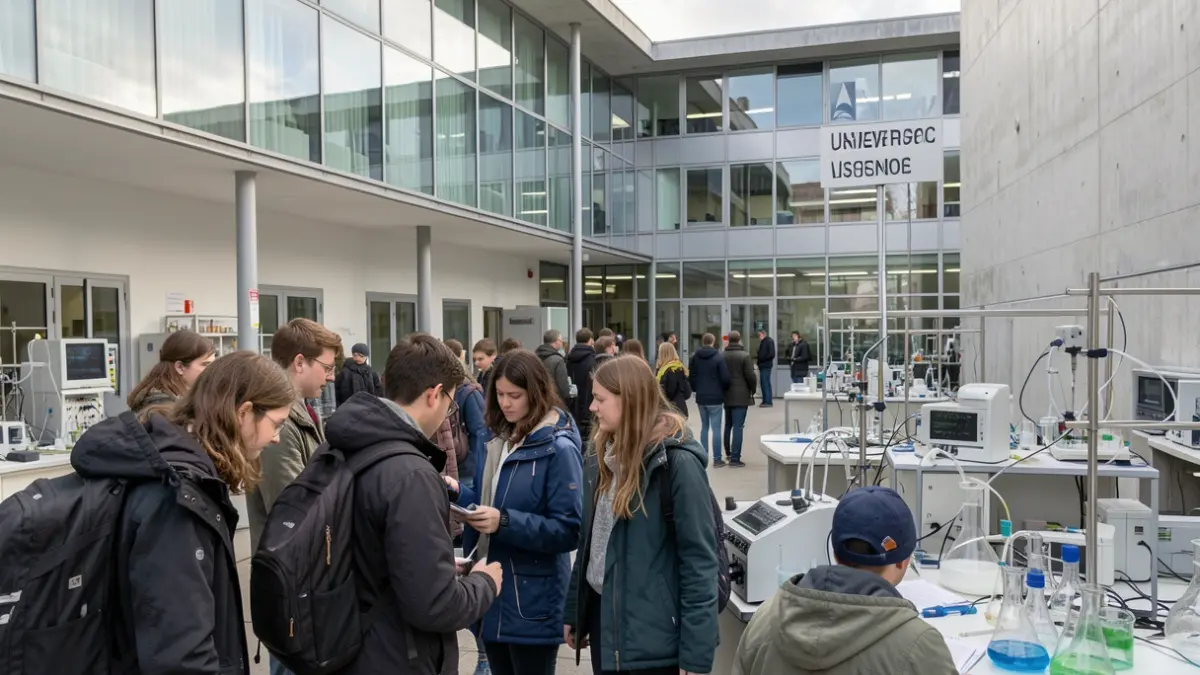
The visit is part of an annual initiative that takes students from the Faroe Islands to visit European universities, aiming to help them discover possibilities for their academic future. "Every year we travel around Europe and one of the main things we do is visit universities, because one day these young people will enter an academic path," explained Peter Eysturskarö, the professor who accompanied the group.
During the reception for the students, the sub-director of Sciences ULisboa, José Afonso, presented the Faculty, highlighting its strong focus on fundamental science and the understanding of the natural world. "We have a very strong focus on fundamental science. We want to know about natural things, understand how they work and comprehend them," he explained.
José Afonso also emphasized the international dimension of the research carried out at CIÊNCIAS, particularly in space sciences, and the link between fundamental research and technology. "We build instruments that go to telescopes," he underlined, referring to the work developed at the Faculty in scientific instrumentation for large international observatories, such as MOONS, a new spectrograph installed at the Very Large Telescope (VLT) in Chile.
The students had the opportunity to learn about a Faculty that seeks to understand the Universe at its different scales and contribute to the advancement of knowledge. Professor Peter Eysturskarö joked about the climatic difference: "We are used to a lot of rain, so you have warm rain and we have cold rain."