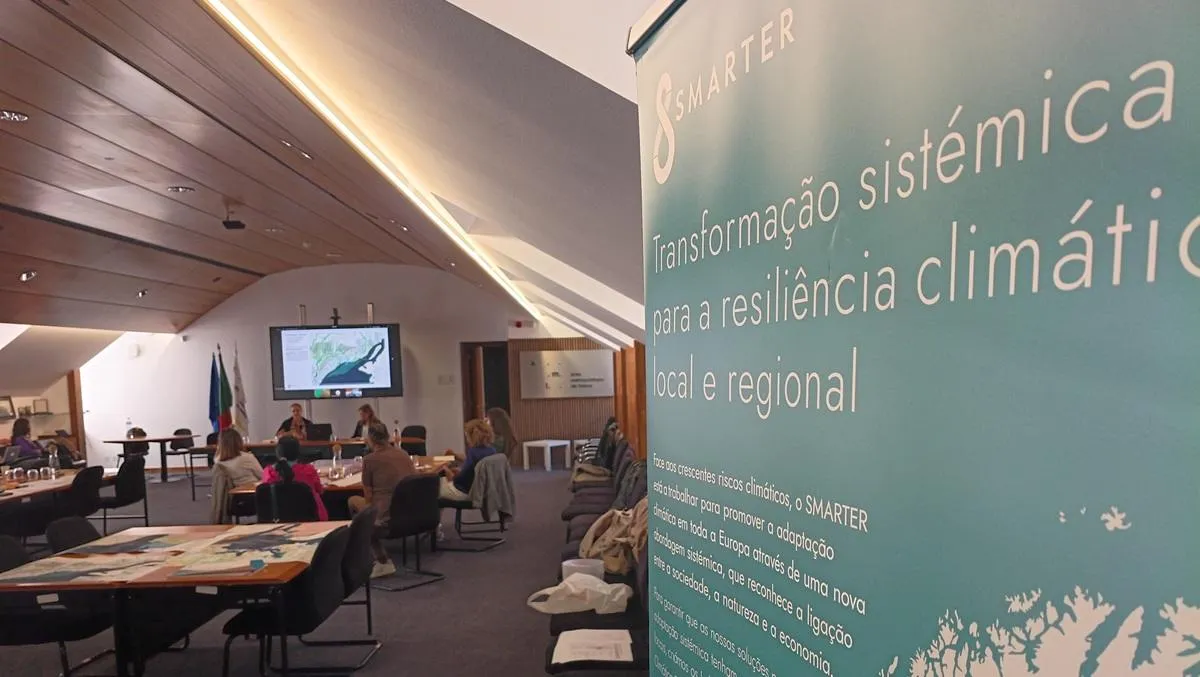
The workshop “Co-design of the Roadmap for the Resilience of the Tejo Estuary 2050”, held at the end of October, was attended by municipalities such as Vila Franca de Xira, Almada, and Seixal, as well as entities like the Nature and Forest Conservation Institute and the Portuguese Environment Agency. The meeting continued work initiated in June, focused on identifying adaptation strategies.
One of the main challenges addressed was the rise in average sea level and its impacts on riverside areas. Different future scenarios were presented for Lisbon and the involved municipalities, allowing for the exploration of territorial evolution, discussion of opportunities, obstacles, and the replication of adaptation solutions.
The objective was to move from strategy discussion to the identification of concrete actions. Participants analyzed adaptation pathways, identified nature-based solutions and complementary measures, and defined dimensions for public policies, governance, and funding. A preliminary timeline for actions between 2026 and 2050 was developed.
AML and Nova FCSH are Portuguese partners in the European project SMARTER, funded by the Horizon Europe program. This project aims to enhance territories' response capacity to climate change through integrated approaches. Within this project, the Climate Adaptation Laboratory of the Lisbon Metropolitan Area is being developed.