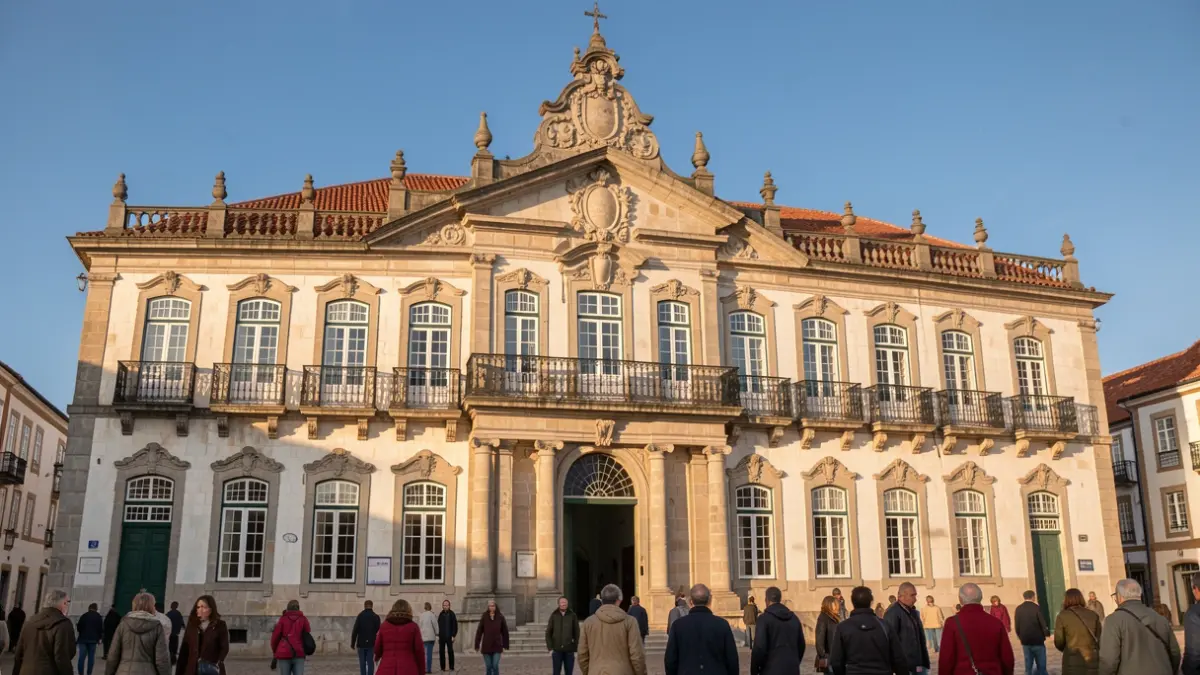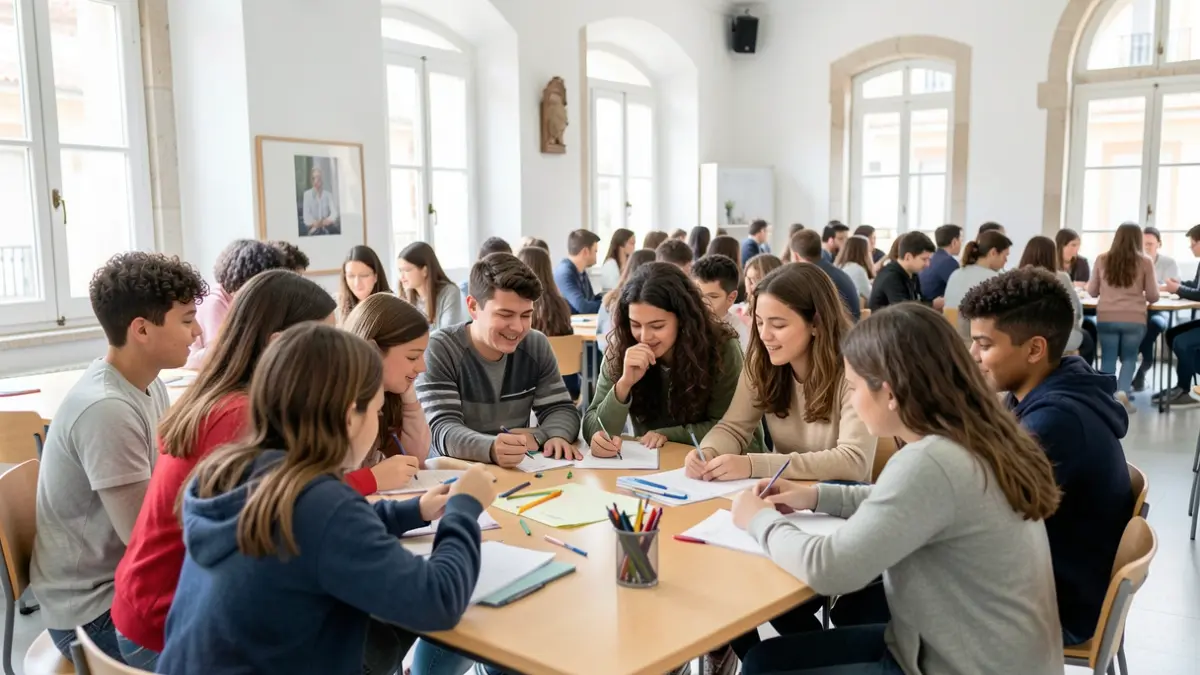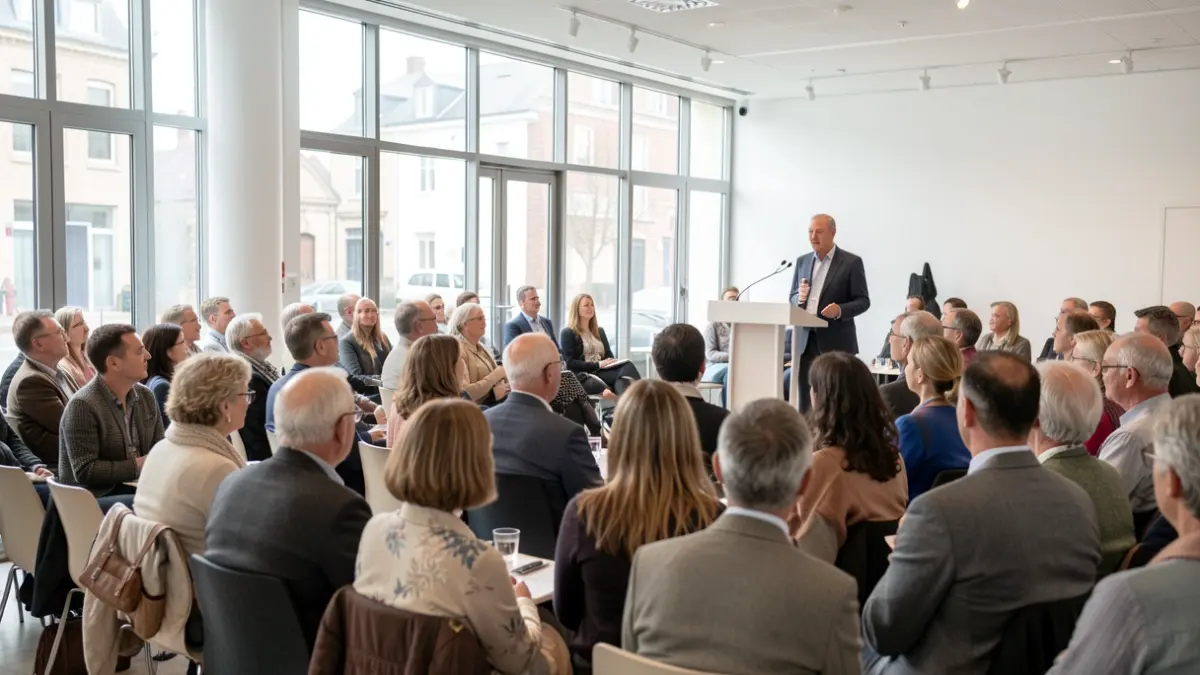
School inclusion is a project that goes beyond merely receiving all students, focusing on ensuring that each one has their place and voice, enabling them to progress. This vision was shared by José Santos, director of the Agrupamento de Escolas Josefa de Óbidos (AEJO), at the opening of the International Education Seminar “Inclusion as a project of humanity,” held on October 10 and 11 at Praça da Criatividade, in Óbidos, as part of the FÓLIO – International Literary Festival of Óbidos.
José Santos emphasized that true inclusion begins with how we look at and listen to others, with the willingness to understand the unknown, and with the recognition that individual differences should not diminish anyone's worth. "Inclusion requires time, availability, knowledge, resources, and, above all, an enormous capacity to put ourselves in the other's place," he declared.
The director advocates that inclusive education should empower students to build a world where everyone's existence is unquestionable. He mentioned that the Mayor of Óbidos, Filipe Daniel, shares this enthusiasm for education and inclusion, highlighting that in Óbidos, education is viewed as a central dimension for the territory's development, not just a service to be provided.
José Santos expressed hope that students will remember those who believed in them, offered second chances, and understood their stories, rather than giving up. "That, indeed, is education," he concluded.
Filipe Daniel, in turn, explained that the seminar originated from the deep conviction that schools need to rediscover their humanity, in a time marked by the tension between technology and human urgency, and by the world's acceleration versus the need for spaces of encounter. "Inclusion, understood as a project of humanity, is precisely where these tensions become fertile," he observed.
This year's FÓLIO theme, “Beyond the skin,” invites us to look beyond surfaces and labels, promoting a dive into the essential of human relationships and the educational community. Filipe Daniel pointed out that Óbidos celebrates not only literature but also humanity, considering education a profoundly human act of care and presence.
Cristina Santos, director of the Centro de Formação das Associações de Escolas Centro-Oeste, praised the municipality of Óbidos for being "at the forefront" and willing to contribute in the area of education since the transfer of competencies to local authorities. "When institutions manage to work in alignment, those on the ground find their lives easier," she stated, highlighting the challenge of transforming diversity into equality.
Cristina Santos detailed that continuous training includes spaces for reflection and debate on inclusion, focused on individual responsibility, and technical capacity building. She gave examples such as welcoming immigrants and overcoming language barriers through Portuguese as a Non-Native Language classes, emphasizing that partnerships facilitate the coordination of responses.