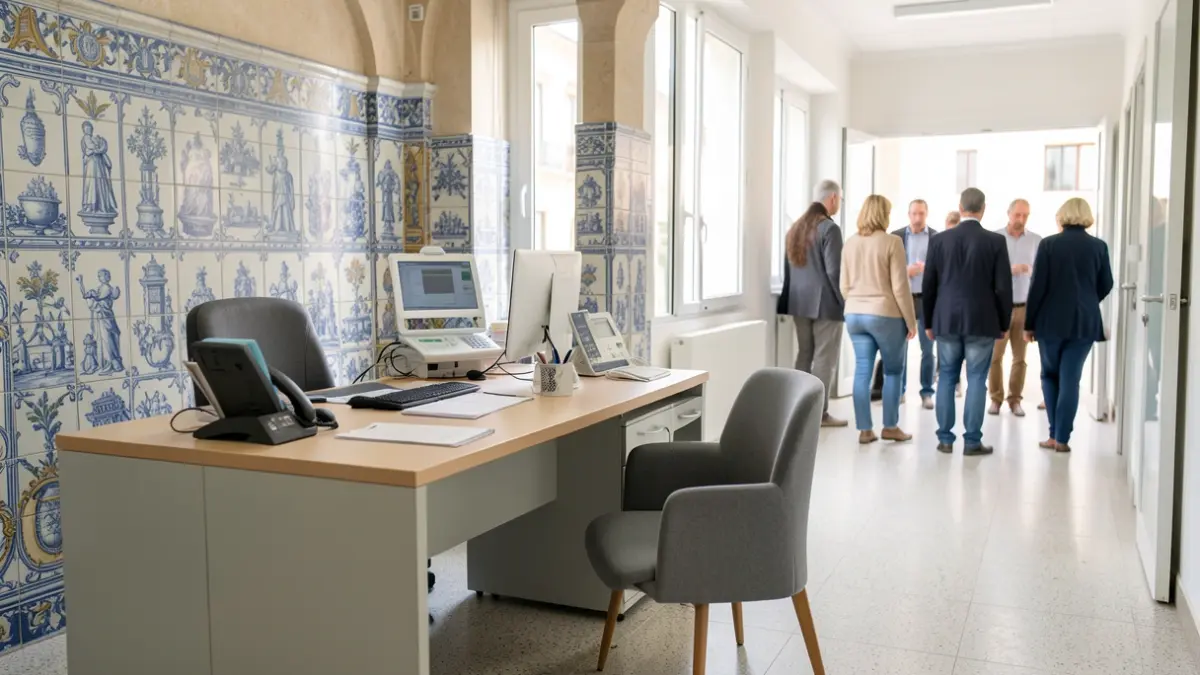
The initiative, promoted by the Acute Pain Unit of ULS Lezíria, took place at the Casa do Brasil in Santarém, under the theme “Knowing Pain, Dispelling Myths, Improving Lives”. The opening session featured interventions by Ana Ricardo, Director of the Operating Block and coordinator of the Acute Pain Unit, Teresa Rodrigues, Clinical Director of Hospital Healthcare at ULS Lezíria, and Teresa Ferreira, councilor of the Santarém Municipal Council responsible for Health.
Ana Ricardo thanked the participants and highlighted the work of the organizing committee and healthcare professionals in patient care. Teresa Ferreira congratulated the organization for the initiative, emphasizing the importance of combating preconceived ideas about pain. “To care better, we must first understand; we need rigorous information to dispel wrong ideas and knowledge so that each person can recognize the signs, seek help, and participate knowingly in decisions regarding their health,” stated the councilor.
Teresa Rodrigues emphasized the need for a multidisciplinary and person-centered approach, reminding that pain, while universal, is an individual experience. “Pain is not always visible, it does not always translate into objective signs or changes that exams can demonstrate. But that does not make it any less real or less deserving of our attention,” she noted.
The clinical director added that pain management requires scientific knowledge, technical competence, communication, empathy, and teamwork, coordinating hospital, primary, and community care. “Treating pain is not just about reducing a numerical scale. It means helping a person to walk again, to sleep, to work, to care for themselves, to regain confidence in their own body, or simply to live with more comfort and dignity,” she reinforced.
Throughout the day, various sessions addressed the different dimensions of pain, with presentations from professionals in several health areas. Complementary perspectives on prevention, assessment, and treatment were explored, valuing both pharmacological and non-pharmacological approaches.
The initiative served to bring health professionals and the community closer, promote the sharing of experiences, and reinforce the importance of recognizing pain as a fundamental dimension of healthcare.