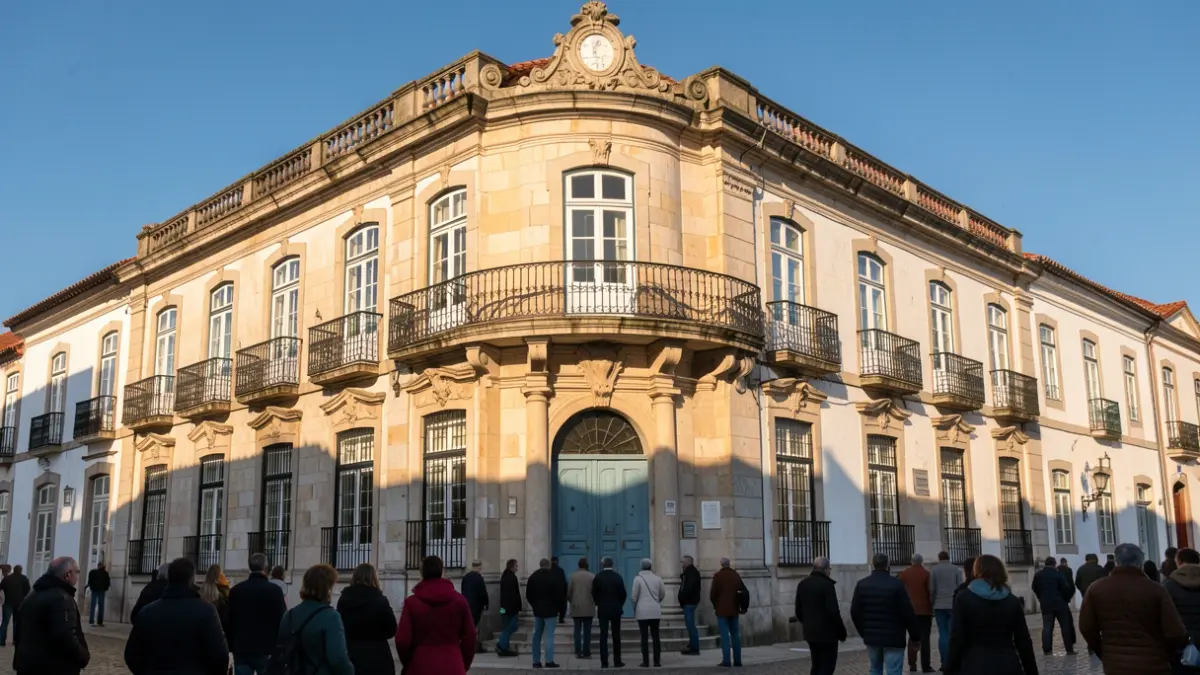
The initiative, which took place on November 9, 2026, brought together representatives from various higher education institutions to reflect on the social dimension of higher education and the challenges of European citizenship. The event was held at ISEC Lisbon.
MEP Hélder Sousa Silva addressed the European Parliament's vision for the European Education Area, university cooperation, and the importance of investing in skills, teachers, and young people, emphasizing that «Education cannot be left behind: it is essential for a more competitive, secure, and inclusive Europe».
Isabel Baltazar, Coordinator of the UNESCO Chair «The Educating and Transforming City», presented best practices in promoting European citizenship in higher education. Filipa Santos, from the European Parliament Liaison Office in Portugal, introduced the Unidos.eu initiative, focused on European civic participation and engaging citizens, especially university students, in democratic life.
It was highlighted that European citizenship transcends knowledge of institutions and rights, and should translate into active participation, critical thinking, and dialogue.
The group work focused on the social dimension of internationalization and the transition from European commitment to institutional practice. Issues such as inclusion in mobility and student involvement in the European project were discussed.
Four main recommendations were presented for higher education institutions: integrating European citizenship into the curriculum, strengthening student voice and participation, promoting inclusive internationalization, and institutionalizing and evaluating best practices, integrating citizenship into the institutions' strategy.