The new infrastructure, promoted by APDL – Administration of the Ports of Douro, Leixões and Viana do Castelo, represents an investment exceeding four million euros and aims to create a true inland extension of the Port of Leixões, strengthening the logistics axis towards Vilar Formoso and Spain, and in turn towards Europe.
The inauguration ceremony was attended by the Minister of Infrastructure and Housing, Miguel Pinto Luz, the Mayor of Guarda, Sérgio Costa, the President of APDL, João Pedro Neves, and the President of CCDR Centro, José Ribau Esteves. The Guarda Dry Port will allow the Port of Leixões to extend its gateway for entry and exit to the country's interior.
Envisioned in the Portos 5+ strategy, the Guarda Dry Port relocates functions traditionally concentrated within the port, focusing on intermodality between road and rail. This initiative aligns with international decarbonization goals and strengthens integration into the Atlantic Corridor.
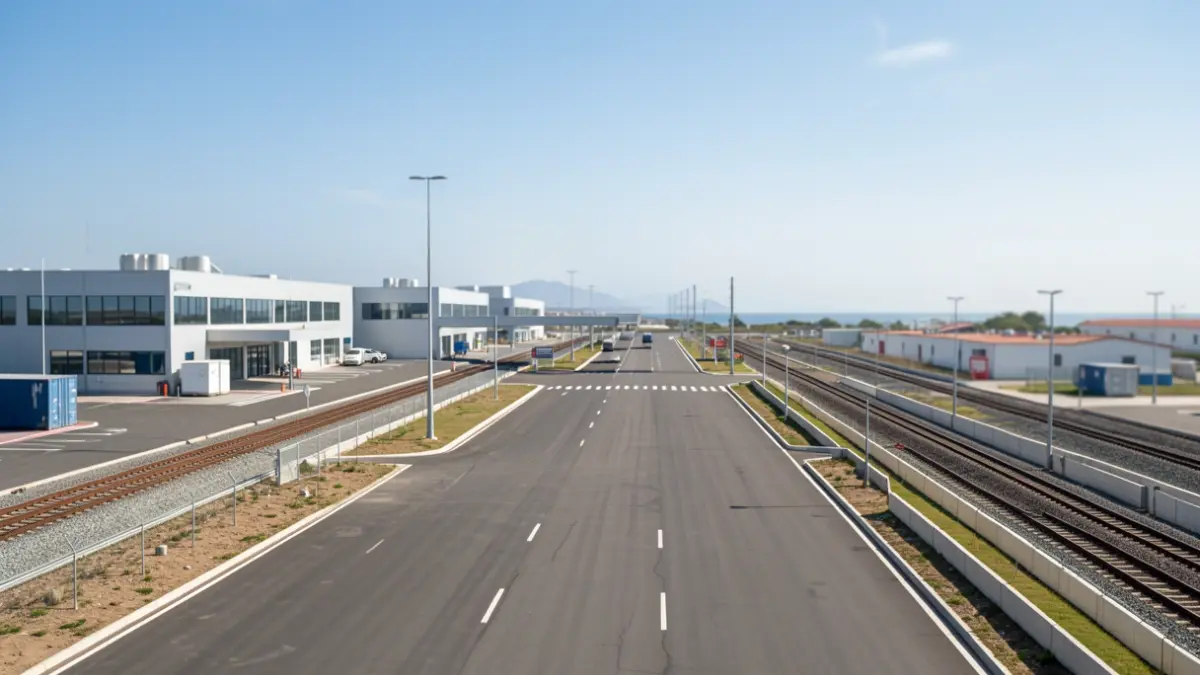
With an investment of 4 million euros, the infrastructure features approximately 30,000 m² of paved area and a projected capacity to handle 47,040 TEU per year. It also includes railway lines prepared to receive freight trains up to 750 meters long.
Guarda will now serve as a hub for the concentration and distribution of cargo linked to Leixões, assuming a new centrality in national logistics and enhancing its penetration into the Iberian market.
“"We are in Guarda, but in the territory of the Port of Leixões. A competitive port does not end at the quay, it extends across the territory. The logistics hinterland serving the Port of Leixões has expanded, countering the known difficulties of expansion due to its geographical location. And that's why it can only expand this way. It's curious that the Port of Leixões, through its geographical inability for local expansion, can help and contribute to this territorial cohesion."