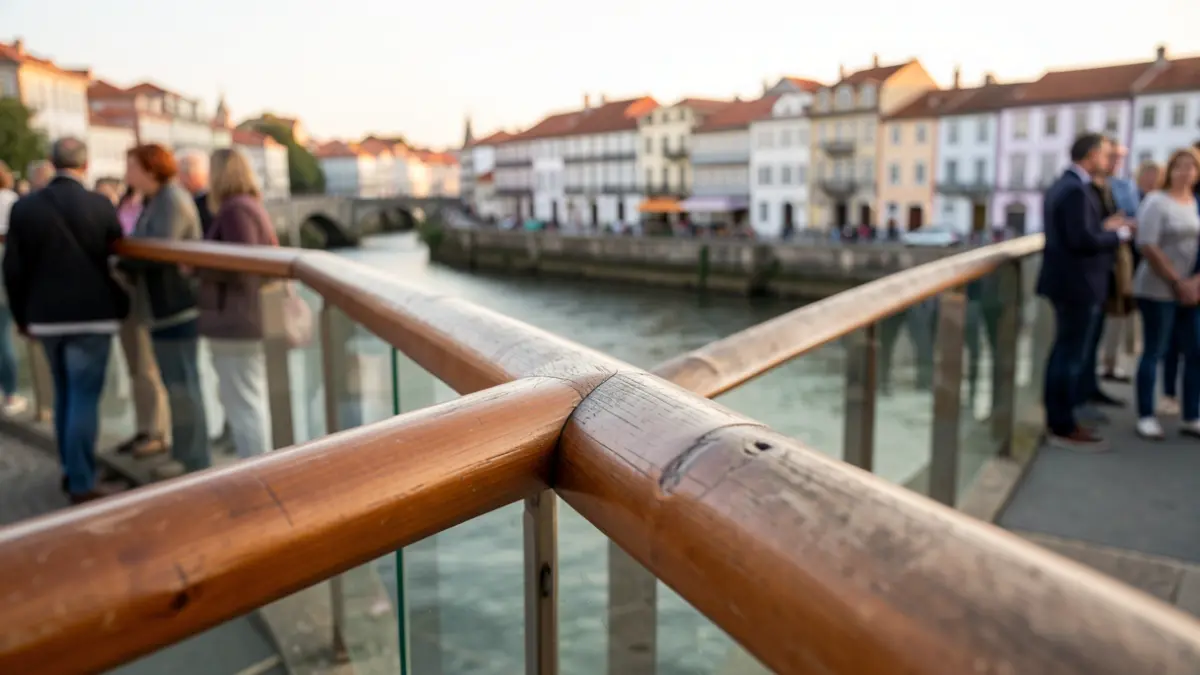
The collaboration between the three local authorities allowed for the extension of the initially planned intervention, also proceeding with the cleaning of the bridge's glass elements and the removal of graffiti, aiming to return this public space to the city in better conditions of use and presentation. The operation highlights the importance of coordination between the Municipality and the parishes in maintaining and enhancing public spaces, enabling the pooling of resources and leveraging an already scheduled technical intervention to carry out other necessary work on site.
The Pedro e Inês Bridge had been closed to pedestrian traffic since early October for two coordinated interventions: structural monitoring tests and conservation work on the wooden elements. The Municipal Chamber opted to coincide the two operations, concentrating the work that required the bridge's closure into a single period, thereby reducing the impact on users.
The conservation project included interventions on the wooden pavement and handrails, specifically the replacement of damaged or degraded elements, correction of fixings, cleaning, and application of conservation treatments. In parallel, tests were carried out to assess the structure's behavior and the functioning of the damping equipment installed on the bridge.
As part of the infrastructure's enhancement, the Municipality of Coimbra is also commissioning new glass elements to replace those that have been recurrently vandalized.