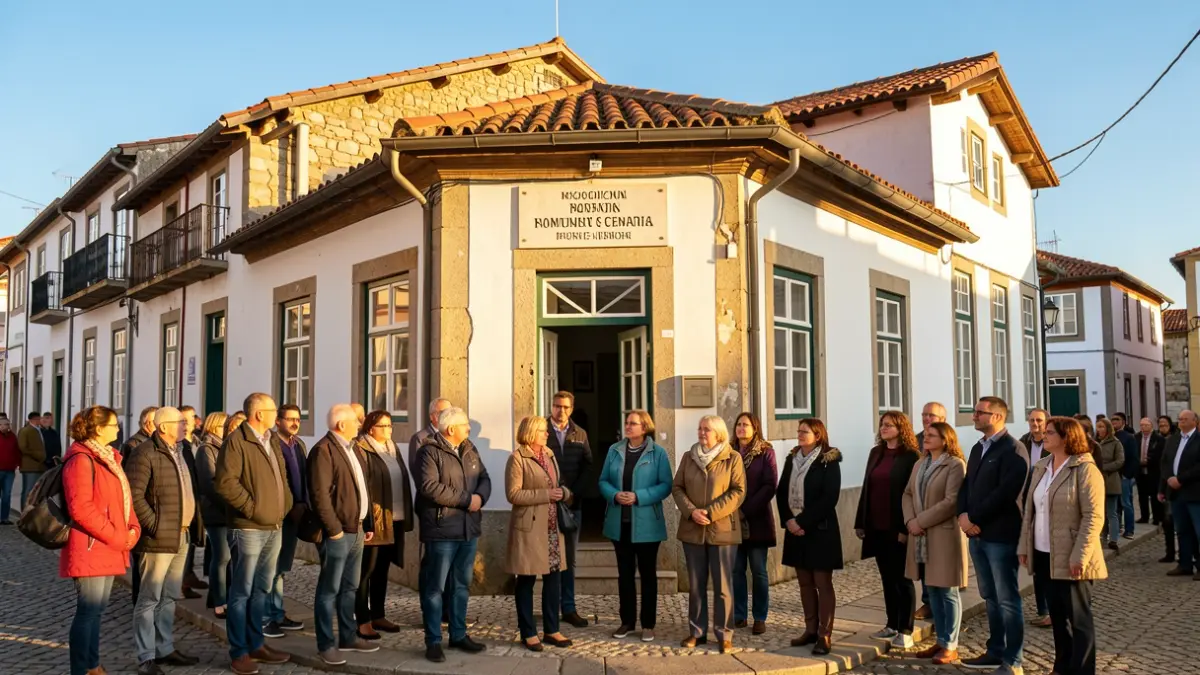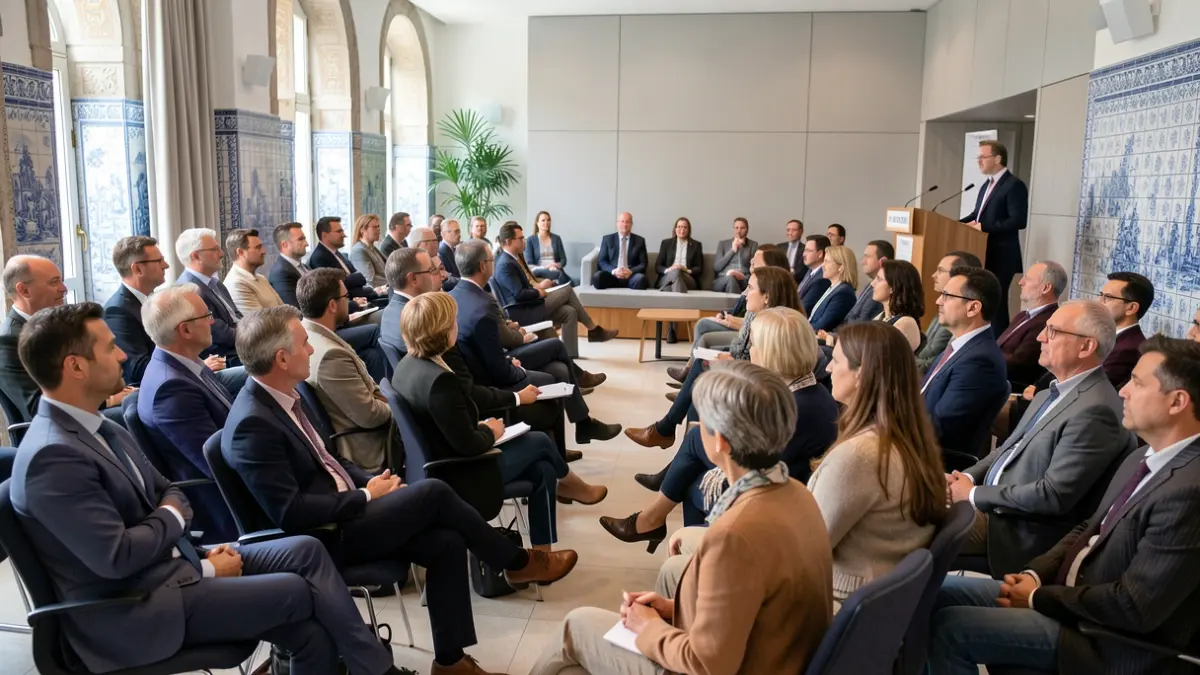
The conference, held in Coimbra, marked the highlight of an international mission within the framework of the International Urban and Regional Cooperation (IURC), a program funded by the European Union. The event promoted cooperation and knowledge transfer between cities and regions facing common urban challenges.
The network led by Coimbra also includes Adelaide, Christchurch, Granada, and Jeonju, bringing together territories with different contexts. Hamburg participated in discussions on the digital transformation of cities.
At the closing session, Ana Abrunhosa, president of the Coimbra Municipal Council, argued that technology is only valuable when it improves citizens' lives. "A city is not smart by accumulating technology. It is smart when it can use knowledge, innovation, and creativity to solve people's concrete problems, when it makes life easier, more sustainable, more inclusive, and happier," she stated.
Ana Abrunhosa highlighted the current challenges facing cities, such as the climate emergency, demographic aging, social and territorial inequalities, changes in mobility, the digital transition, and the need for greater resilience. She emphasized that international cooperation is central to finding and experimenting with new solutions, as "when one city shares its successes, it accelerates the progress of others; when it shares its difficulties, it helps other cities avoid the same obstacles".
Coimbra leads the Community of Practice of the Human Smart Living Lab Network, aiming to foster the exchange of experiences and learning among cities. Miguel Antunes, vice-president of the Coimbra Municipal Council, opened the conference, followed by Rita Fernandes (Coimbra Intelligence Centre) and Sandra Marin Herbert (Knowledge Transfer Manager of the IURC program).
Partner cities presented their experiences: Jeonju (South Korea) addressed participatory governance; Granada presented its Smart Living Lab applied to the Geopark; Adelaide (Australia) shared work on urban cooling; and Christchurch (New Zealand) presented its experience as a living lab. Coimbra presented "Coimbra: The City as a Living Lab – Co-creating Urban Innovation with People", by Miguel Antunes.
During the mission, international partners also had the opportunity to learn about projects developed in Coimbra and the region in the areas of the blue economy, environmental sustainability, climate resilience, innovation, and entrepreneurship.
Ana Abrunhosa stressed that people are the differentiating element of urban innovation. "When we talk about urban innovation, sustainability, regeneration, or mobility, we are above all talking about citizenship," she stated, advocating for the involvement of people in creating a public space lived by all.
The #CoimbraCityLab project aims to deepen the use of the city as a real-world experimentation laboratory. The Mondego river and its banks are the first territory chosen by Coimbra to apply this methodology, addressing issues related to biodiversity, environment, mobility, accessibility, public space, leisure, and economic activity.
The approach involves identifying problems and engaging citizens, institutions, and scientific knowledge in building and testing solutions. Ana Abrunhosa concluded: "No city truly changes when a street, a building, or a square changes. A city transforms when it manages to mobilize its people to believe in a common future".