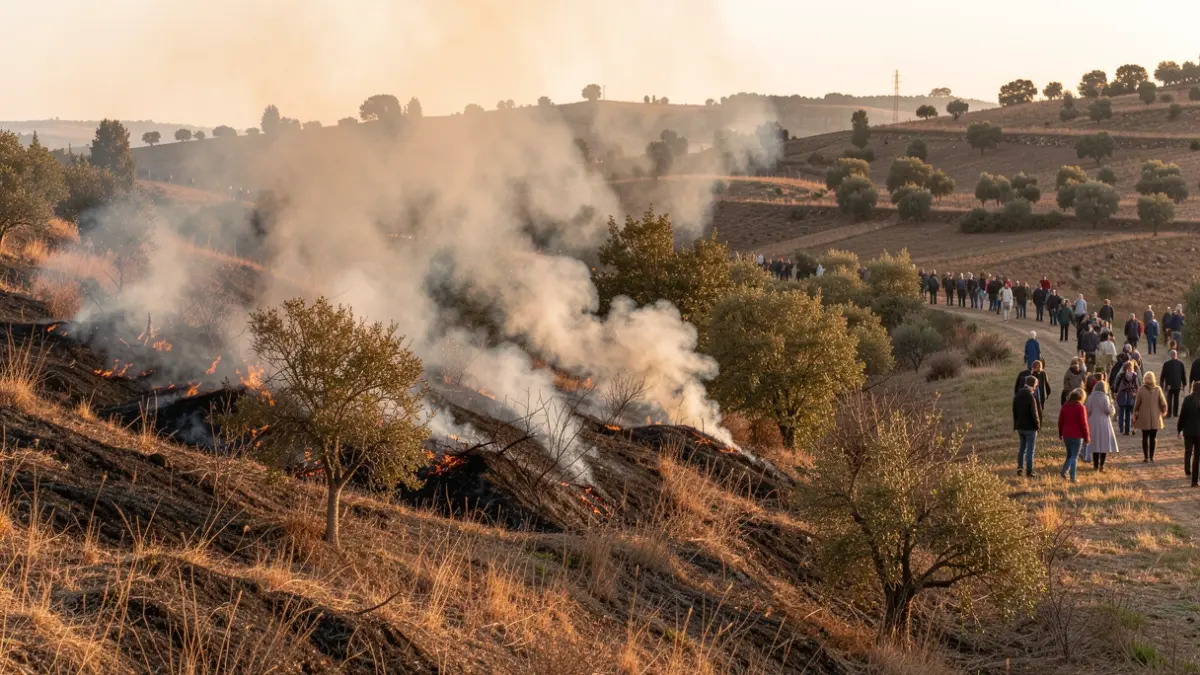
The initiative, coordinated by the Municipal Civil Protection Service, aimed primarily to reduce the load of vegetal fuel in strategic areas, decrease fire risk, and create better conditions for pasture regeneration for extensive grazing. The intervention was planned and executed by specialized technicians, using fire judiciously and in a controlled manner to eliminate older, woody undergrowth and reduce the continuity of combustible vegetation, thereby helping to limit the spread of potential forest fires.
Beyond civil protection benefits, controlled burning also plays a significant role in enhancing agro-livestock activities and preserving ecosystems. Vegetation renewal promotes the emergence of new pasture areas, offering better feeding conditions for the goats, horses, and cattle that roam the mountains. The intervention also contributes to creating a more diverse habitat mosaic, benefiting biodiversity and hunting conditions by providing shelter and food areas for game species.
Intervened areas remain eligible for agricultural support, unlike areas affected by rural fires. This authorized land management practice safeguards access to community aid and the income of livestock producers.
The operation involved the Municipal Executive, Baldios Commissions, local Hunting Associations, and various specialized entities and teams, including the Municipal Civil Protection Service, Technical Forest Office, Volunteer Firefighters of Vieira do Minho, CIM do Ave Sappers Brigade, Mondim de Basto Sappers teams, the National Republican Guard – UEPS/CIPS, the Special Civil Protection Force, the Sub-regional Command for Emergency and Civil Protection of Ave, Municipal Civil Protection Services of Mondim de Basto, Fafe, Póvoa de Lanhoso, Penela, and Vizela, AFOCELCA, technicians from the LIFE Maronesa project, and Firefighters from Galicia.
This initiative, financed under a project, is particularly relevant for Vieira do Minho, one of the few municipalities in Northern Portugal to carry out this type of intervention, reinforcing its commitment to active and sustainable management of forests and rural spaces.