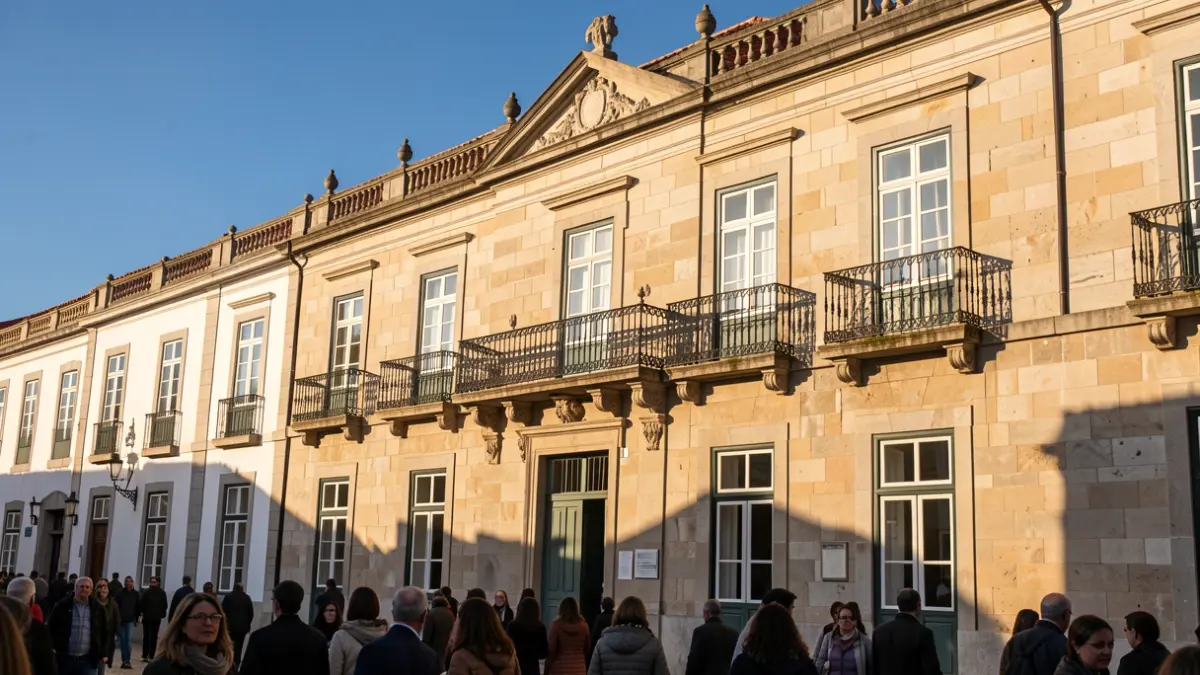
The Municipal Assembly of Guimarães gave its approval to the new Municipal Master Plan (PDM) in a vote that saw no opposition. Mayor Ricardo Araújo hailed the approval as a "decisive milestone" that "gives future back to Guimarães," praising the "rigorous work" of the municipality's technical team.
Araújo described the PDM as an "ambitious, responsible, and balanced instrument" that allocates more land for housing, designates new areas for economic development, and reserves solutions for mobility. According to the mayor, the plan is crucial for "attracting investment, retaining talent, and improving the quality of life" for residents.
The Mayor publicly thanked the "exceptional work, dedication, and rigor" of the technical team, coordinated by Councillor Constantino Veiga, who oversees Urbanism. He highlighted their "listening capacity, competence, and exemplary commitment" in creating a plan that is "truly participatory and people-focused."
The new strategic land-use planning instrument significantly increases urban land available for housing construction and designates new areas for business accommodation. It also reserves space for five key mobility routes within the municipality.
The PDM's development, which took approximately 11 months, saw the public participation acceptance rate rise from 14% to about 50%, incorporating half of the proposals submitted by citizens. The municipality will see a 20% increase in urban land, with an additional 1150 hectares classified, doubling the availability compared to the previous proposal to boost housing supply. In rural clusters, construction capacity could triple.
Regarding economic development, the PDM allocates around 161 new hectares for business accommodation and industrial expansion, aiming to enhance territorial competitiveness and attract investment and talent. The plan also includes the creation of 31 Operational Planning and Management Units, divided among housing, economic activities, and strategic projects.
The new PDM incorporates accessibility and mobility solutions, such as the connection of the A11 motorway to Avepark with a new ring road north of Taipas, the link between Nespereira and Polvoreira, Mesão Frio to Fermentões, access from the roundabout on Avenida D. João IV to the highway exit in Urgezes, and the extension of the top of Avenida D. João IV to Costa.
The approval was supported by votes from the PSD, CDS, Chega, and Iniciativa Liberal parties, with abstentions from the PS and CDU, and no votes against. The document will now be published in the Diário da República to formally enter into force.