The award acknowledges the application of digital engineering and innovative solutions in the development of the metropolitan network expansion. Developed by Ayesa Engineering, in collaboration with Metro do Porto, the project won among over 300 entries from 53 countries.
The recognized plan includes four new links: Gondomar II, São Mamede, Maia II, and ISMAI–Muro–Trofa. For the municipality of Trofa, this distinction is particularly relevant for acknowledging the work on a project that integrates the long-awaited link to the Porto Metro network.
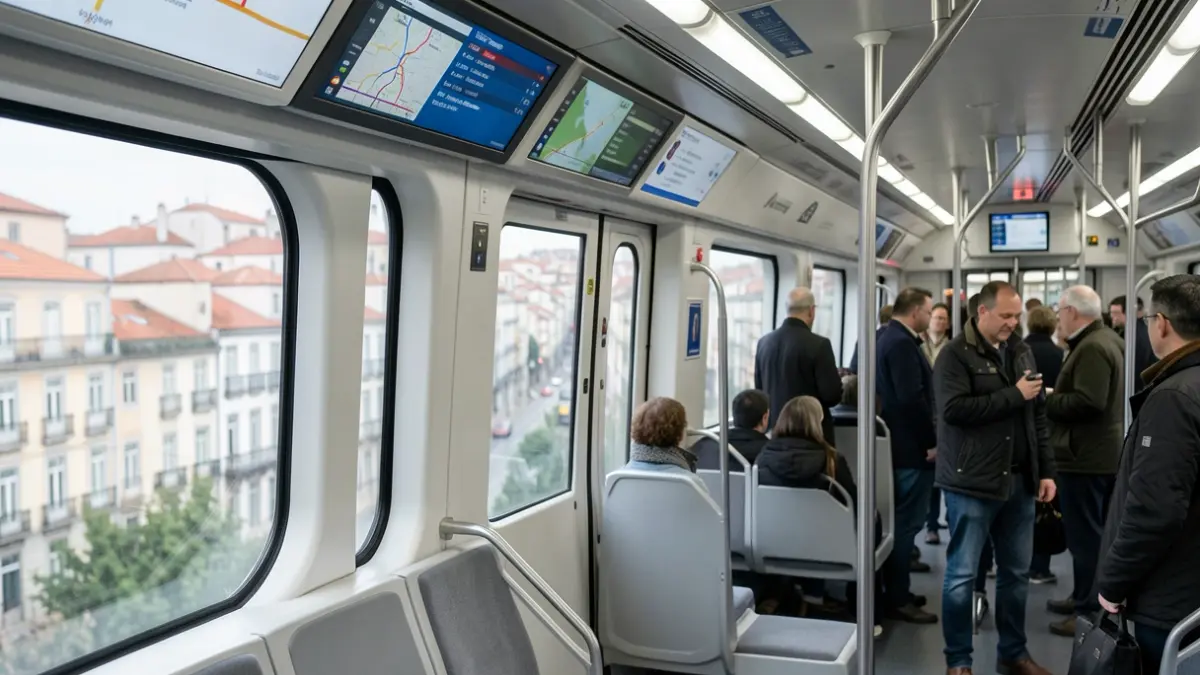
The Trofa Line will span approximately ten kilometers, between ISMAI and Paradela/Interface Trofa. The solution involves Metro circulation between ISMAI and Muro, and a BRT (metroBus) link between Muro and Paradela/Interface Trofa.
With an authorized investment of 184 million euros, plus VAT, the construction will be financed through the Environmental Fund and European funds under the Sustainable Program 2030.
“"This distinction confirms the technical quality and innovative capacity of a project that is crucial for the future of mobility in our Municipality and the entire region."
The Mayor of Trofa, Sérgio Araújo, added that the Metro link to Trofa is a long-standing ambition and a persistent commitment, reinforcing confidence with international recognition, while maintaining the goal of seeing the work advance rapidly.
Araújo also highlighted that the project is structuring for Trofa, not only in terms of mobility but also territorial cohesion, environmental sustainability, and quality of life.
The development of Metro 3.0 utilized BIM methodologies, advanced geotechnical analysis, three-dimensional geological modeling, artificial intelligence, and digital twin tools. These solutions allowed for a reduction of approximately 4500 cubic meters in the required concrete volume and avoided the emission of about 1.5 million kilograms of carbon dioxide.
The international distinction recognizes the technical innovation and sustainability of the project, reinforcing its strategic importance for the future link of Trofa to the metropolitan transport network.