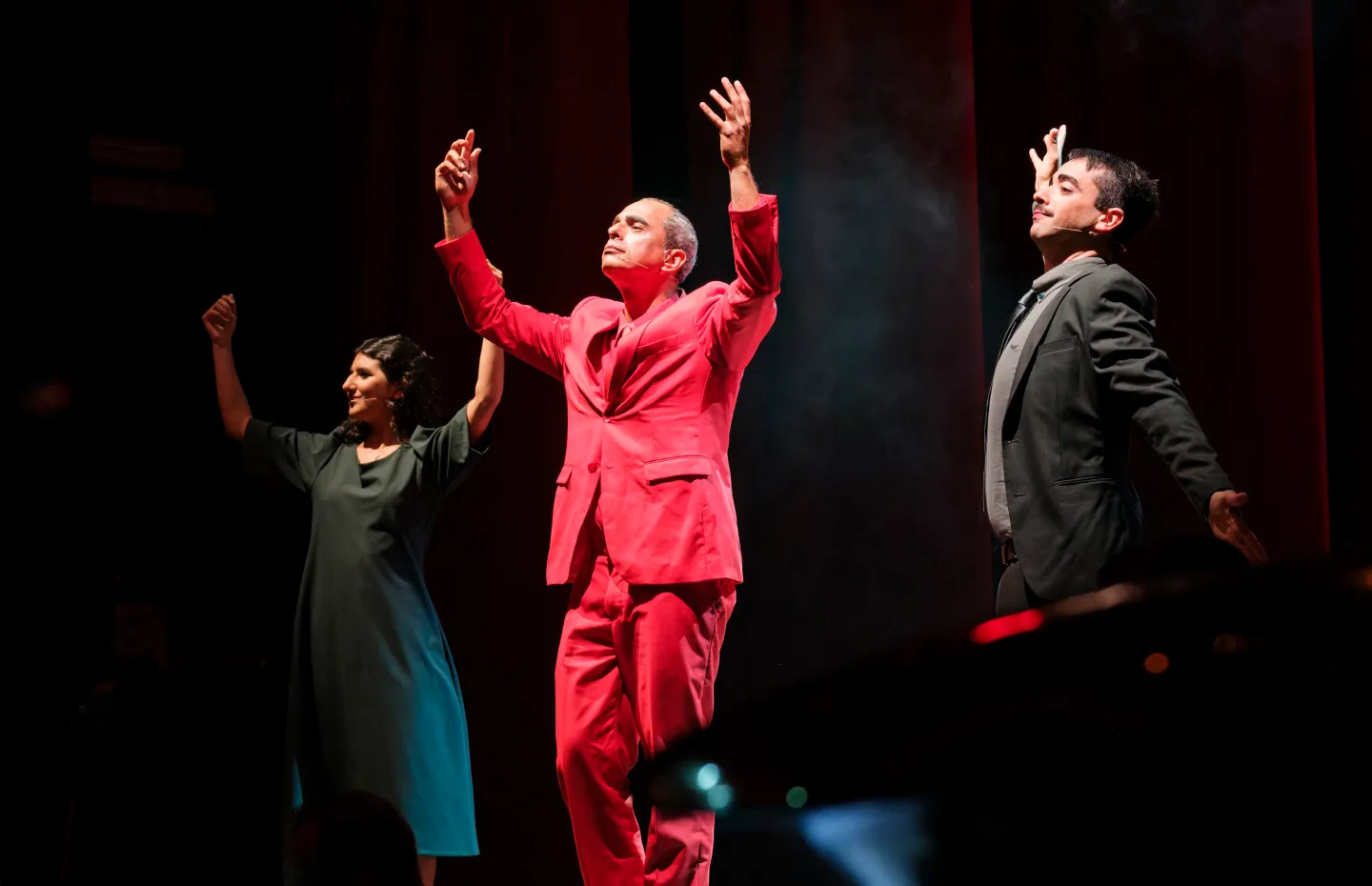
The work, based on an original libretto by Eça de Queirós and Jaime Batalha Reis, with original music by Augusto Machado and new composition by Rodrigo Neves, featured musical direction by Paulo Veiga and adaptation, plastic conception, and staging by Gonçalo Guerreiro. The performance rescued a valuable piece of Portuguese literary and musical heritage from oblivion.
Through laughter and irony, the audience was invited to reflect on the present with lucidity and find paths to social healing, uniting instrumental and sung music. The narrative used mockery to call for collective hope and the active defense of the social, political, economic, and cultural achievements of the Revolution of April 25, 1974.
Before the performance, the auditorium of the Cine-Teatro hosted a special conversation with researcher Irene Fialho, responsible for discovering the unpublished manuscript in the National Library Archives, providing fundamental historical and literary context about "A Morte do Diabo".
The President of the Municipal Chamber of Póvoa de Varzim, Andrea Silva, made a point of being present at this culturally significant moment, representing the municipality.