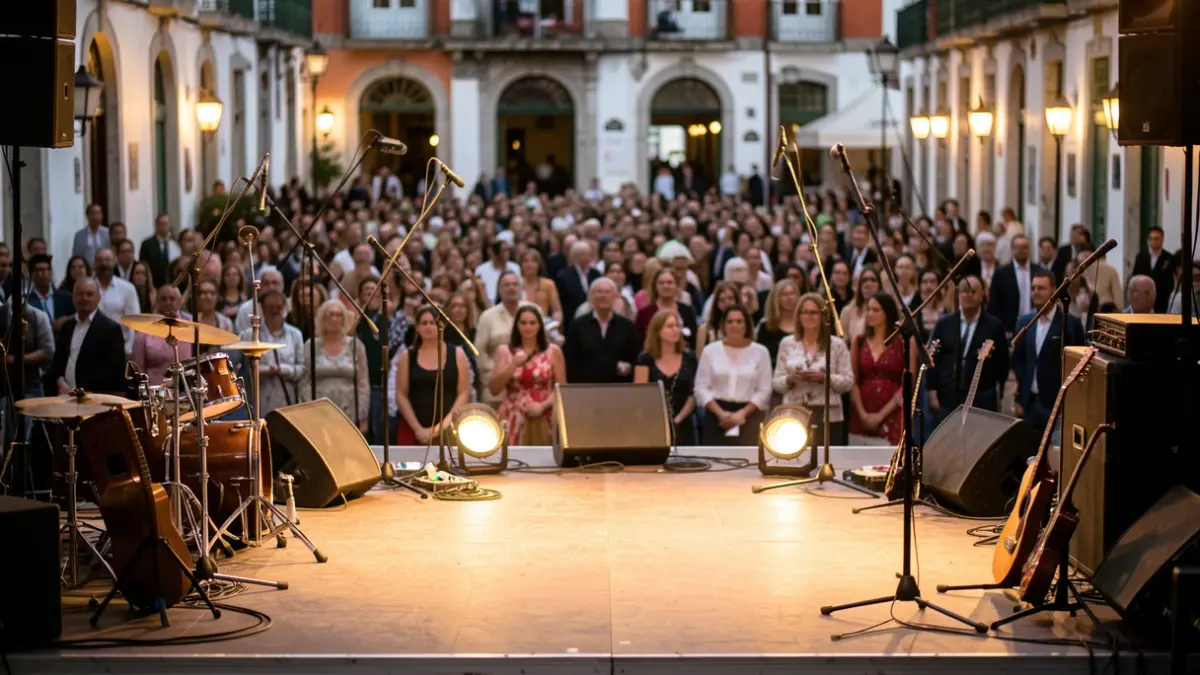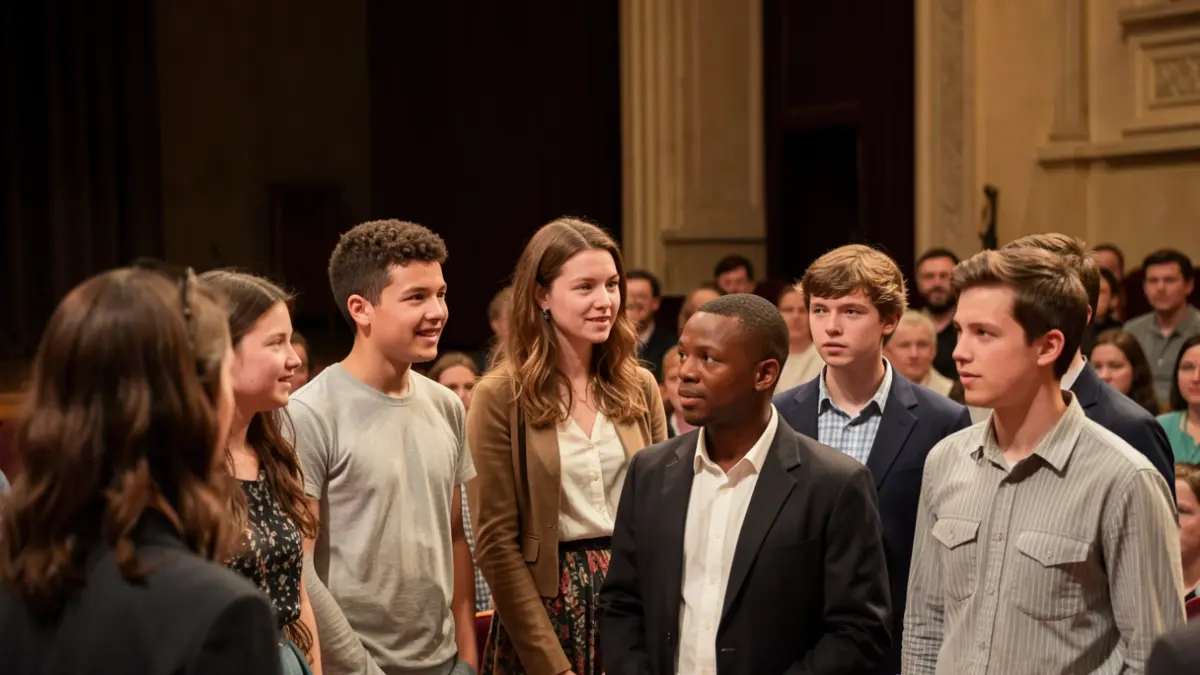
The Amarante Cineteatro was filled on Thursday morning, November 19, 2026, to welcome over 300 students from the Externato de Vila Meã, Escola Secundária de Amarante, and Colégio de São Gonçalo for the school presentation of "Sumário: Auto da Barca do Inferno". The performance, commissioned by the Teatro Nacional D. Maria II to the company Razões Pessoais, transports the young student Leonardo into Gil Vicente's universe and brings the 16th-century author into the current school context.
Following the performance, which included a discussion with the student audience, reactions gathered from students, teachers, and actors revealed a shared interpretation of each participant's role in school and the relevance of Gil Vicente five centuries later. Student Noah Bongard, from the 9th grade at Escola Secundária de Amarante, found the theatrical experience "very interesting" and "bold," highlighting the contemporary nature of Gil Vicente's social critique and how the staging bridged the gap to youthful daily life.
Jorge Coutinho, a Portuguese teacher at Escola Secundária de Amarante for about 30 years, emphasized that the play accurately reflects what happens in classrooms, where archaic language can be an initial attitudinal barrier. "We have to step out of our comfort zone a bit and try to adapt the language to today's world, but at the same time allow it, without ever losing sight of the text," he stated. He also warned about the decline of critical thinking among young people, advocating for the school's role in teaching information filtering and independent thought.
Bernardo Gavina, the actor playing Leonardo and also a drama teacher, explained that the performance was created to tour schools until March 2027. "The play uses the school context as an excuse to talk about things that are not just about teachers and students; it talks about what it means to live in society," he said. The main message, according to Gavina, is that communion between students and teachers can resolve many school-related issues, emphasizing that transformation begins with the human relationship.
A public session is scheduled for this Friday, November 20, at 9:30 PM, at the Amarante Cineteatro, extending the invitation to families and residents of the municipality.