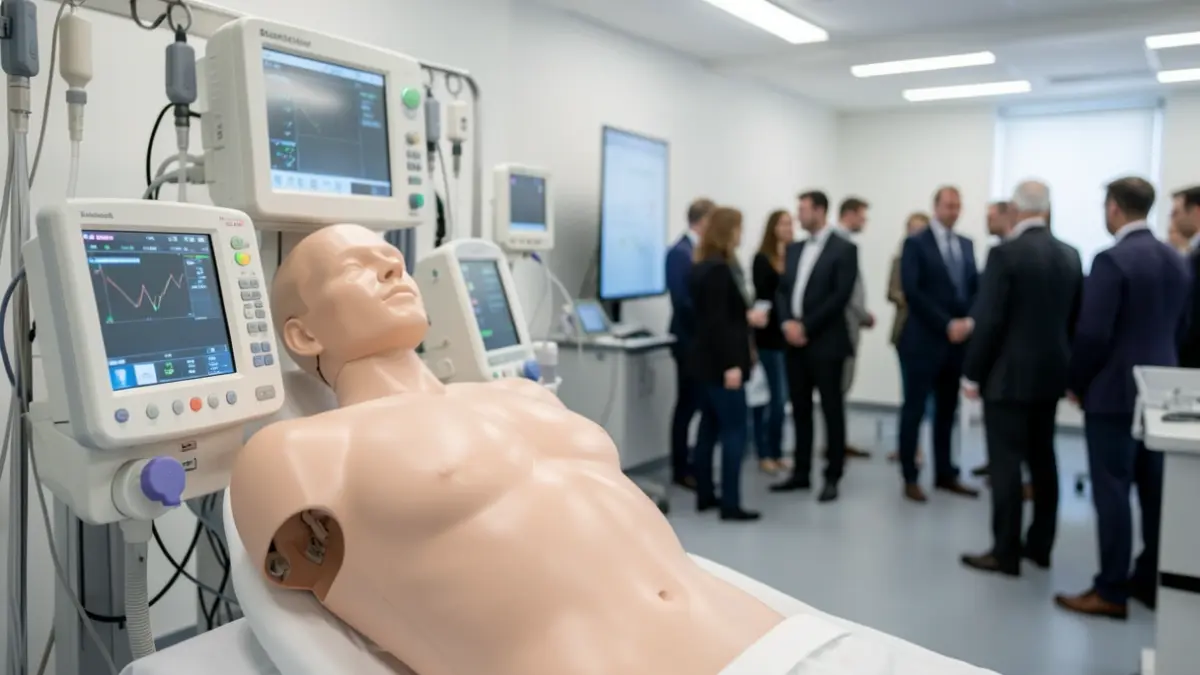
The first project focused on 'Competency Assessment in Pediatric Emergencies through In Situ Simulation', presenting the results of training developed with teams from the Pediatric Emergency Service, using realistic simulation. Coordinated by the Pediatric Emergency Unit, represented by SESARAM pediatrician Cristina Freitas, and with the collaboration of the National System for Early Intervention in Childhood (SMNIP), the work involved 38 healthcare professionals (18 doctors, 15 nurses, and five operational assistants) to assess technical and non-technical skills and improve team response in pediatric emergencies.
The second work, led by Norberto Ribeiro, professor at the School of Nursing - University of Madeira, dealt with 'High-fidelity Simulation as a Pedagogical Strategy for Pre-graduate Nursing Training'. This study, involving students, professors, and newly graduated nurses, highlighted the fundamental role of simulation in professional training, providing learning experiences close to clinical reality and contributing to the development of technical, relational, and communication skills, as well as strengthening critical thinking, clinical reasoning, and decision-making.
The mark of the SESARAM Clinical Simulation Centre was also present at the closing plenary session, dedicated to the theme 'What Should Healthcare Simulation Look Like in 2030? If we were building healthcare education from scratch in 2030, what would it look like?'. This session was moderated by Regina Rodrigues, coordinator of the CSCM.
The International Congress of the Portuguese Society of Simulation, under the theme 'Simulation Building Health for 2030', brought together the national and international community involved in Health Sciences to promote the sharing of knowledge, experiences, and best practices in the field of Health Simulation.